Roof Tiles Lifting in Wind: Why It Happens and the Fix
By the Professional Roofers team
Updated 2026 · Independent cost guide
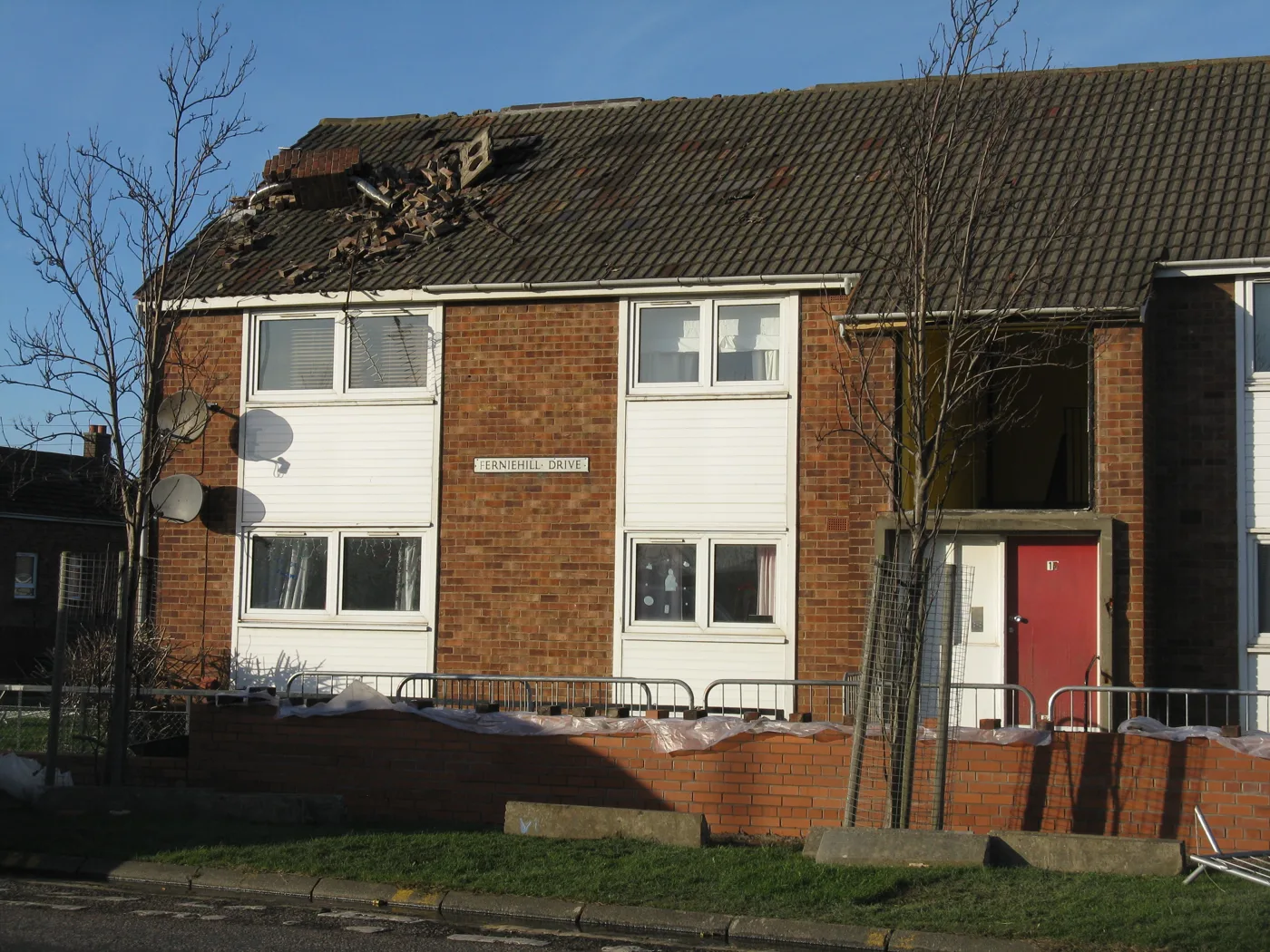
Roof tiles lifting in wind is a sign that something which should be holding them down has stopped doing it, or was never there. On most British roofs it comes down to one of four things: courses that were never nailed, nails that have rusted through, a verge or ridge held only by old mortar, or underlay billowing up beneath the tiles. A tile that rattles or sits proud in a gale today is often the tile you find in the garden after the next one.
This page explains why wind lifts tiles at all, where on a roof it happens first, how to work out which of the four causes you have from the ground, and what the repair looks like under the current code of practice, BS 5534. It also covers the insurance question, because a lifted tile after a named storm and a lifted tile after a breezy Tuesday are treated very differently.
Why wind pulls tiles up rather than pushing them down
It feels as though wind should press a roof down. On most of a pitched roof it does the opposite. Air speeding over the ridge and round the edges of the building creates suction on the surface, the same effect that lifts an aircraft wing. At the same time, wind getting under the tiles through the eaves and gaps raises the pressure beneath them. Low pressure above and higher pressure below is what lifts a tile off its batten.
That suction is not spread evenly. It is strongest at the edges and corners: the verges at the gable ends, the eaves, the ridge, and the hips. That is why BS 5534 treats these as perimeter zones and asks for more fixings there, and why a roof with a weakness almost always shows it at a verge or along the top courses first.
How much suction a roof sees depends on where it is. A house on an exposed hilltop or the coast is loaded far harder than one in a sheltered town street, and BS 5534 requires the fixing specification for new work to be calculated from the wind loads at that particular site.
The four usual causes
1. Courses that were never nailed
Before the 2014 revision of BS 5534, it was normal on an interlocking concrete tile roof to nail only every second, third or fourth course and rely on the weight of the tiles and the interlock to hold the rest. On a sheltered site that often worked for decades. In a strong gust, an unfixed tile can lift at its tail, rock on its nibs and settle back, which is the rattling or “chattering” you hear from the loft. Repeat that enough times and it walks down the roof or flips off.
Since the 2014 revision, every single lap tile has to be mechanically fixed. Your roof is not illegal for predating that, but it explains why an older roof loses tiles that a new one would hold. Our page on BS 5534 tile fixing requirements sets out the current rules in full.
2. Nails that have rusted through
If tiles that used to be nailed have started lifting, look at the age of the roof. Plain galvanised nails are commonly reckoned to give twenty to thirty years before corrosion becomes a problem, and once the shanks have rusted through there is nothing holding the tile but its own weight. This is nail sickness, and its pattern is distinctive: tiles lift or slip in different places after each gale, across a whole slope, and the tiles themselves are undamaged.
3. A verge or ridge held only by mortar
Many older roofs have gable verges finished with a strip of mortar under the edge tiles, and ridge tiles bedded in sand and cement with no mechanical fixing at all. When that mortar cracks and loosens, as it does with frost and age, the verge tiles and ridge tiles are held by nothing. These are exactly the places where suction is strongest, so they go first. BS 5534 no longer accepts mortar alone as the thing holding ridge and hip tiles down; they must be mechanically fixed even where they are bedded. Modern work usually uses a dry verge and dry ridge system instead.
4. Underlay billowing under the tiles
Under the tiles is the underlay, the membrane or felt laid over the rafters. If it has been laid slack, has torn, or is a lightweight modern membrane that was never tested for the wind zone, gusts entering at the eaves can inflate it like a sail. The billowing membrane pushes up on the underside of the tiles and adds to the suction above. You may see the membrane flapping from inside the loft on a windy day. The 2018 amendment to BS 5534 added wind uplift testing for underlays for this reason. See our pages on roofing underlay and replacing underlay without a full re-roof.
How to tell which one you have
You can learn a lot without going on the roof, which you should not do in any case.
| What you see or hear | Most likely cause |
|---|---|
| Tiles lifting or missing along a gable edge, mortar crumbs on the ground | Mortar-only verge |
| A ridge tile rocking, gaps in the ridge mortar, ridge tiles on the lawn | Mortar-only or failed ridge |
| Rattling from many places across a slope, tiles slipping a few at a time after each gale | Nail sickness, or unfixed courses on an older roof |
| A single tile or small patch at the same spot repeatedly | A broken nib or a missing fixing on that tile, or a local batten fault |
| Membrane flapping or bulging when seen from the loft | Slack or torn underlay |
| Tiles sitting visibly proud of their neighbours in calm weather | Tile has already shifted off its batten; treat as urgent |
Binoculars from the street or a neighbour’s upstairs window will show proud tiles, open joints and damaged verge mortar. In the loft, on a windy afternoon with a torch, look and listen: daylight round the tiles, tiles moving, or membrane lifting all point you towards the cause. Do not put weight on the ceiling joists between rafters.
What the fix looks like
The right repair depends on which of the four causes you have, and it is worth knowing which one the roofer thinks it is before you agree a price.
Verge. The usual repair is to strip the old mortar and fit a dry verge system, mechanically fixing the edge tiles. Dry verge systems on new work should conform to BS 8612 and be installed to the manufacturer’s instructions. On a listed building or in a conservation area, a mortar verge may need to be kept for appearance, in which case the tiles beneath should still be mechanically fixed.
Ridge and hips. Either rebed and mechanically fix each ridge tile, or replace the mortar with a dry ridge system. Simply re-pointing the old mortar does not fix anything that was loose. See ridge tile repair costs and hip tile repair costs.
Unfixed courses on a sound roof. A roofer can lift the tiles in the problem area and refix them with nails and the clips the tile manufacturer specifies for that tile. A generic clip on a branded tile may not give the tested resistance, so ask which clip they are using. On a small, sheltered roof this can be a fair repair; on a large or exposed one the labour starts to approach a partial re-roof.
Nail sickness. Refixing a few tiles here and there treats the symptom. If the nails have failed across a slope, the lasting fix is to strip and relay that slope on new battens and underlay with stainless, copper or aluminium alloy fixings, often reusing the sound tiles. Our nail sickness page goes through when patching stops making sense.
Underlay. Torn or slack underlay can only be replaced properly by stripping the tiles above it. If the rest of the roof is in good order, this may be done slope by slope.
What not to do. Avoid sealing tiles down with mastic or a spray-on foam from inside the loft. Spray foam can trap moisture against the timbers and has caused trouble for owners trying to sell or remortgage; see spray foam roof insulation and mortgages. Spray coatings sold to “lock” tiles together are not a substitute for fixings either; see are roof coatings worth it.
Will insurance pay for tiles lifted by wind?
Buildings insurance covers storm damage, but not wear and tear, and lifting tiles sit right on that line.
Insurers broadly use the Association of British Insurers description of a storm: violent weather with gusts of at least 55mph, rain of at least 25mm an hour, snow at least 30cm deep in 24 hours, or hail heavy enough to damage hard surfaces. Many insurers check the recorded wind speed near your home on the date of the claim. If the nearest weather station recorded 45mph, expect questions.
The Financial Ombudsman Service looks at three questions in storm complaints: were there storm conditions on or around the date, is the damage the kind a storm typically causes, and was the storm the main cause. That last one is where lifting tiles often fall down. If the loss adjuster finds rusted nails, crumbling verge mortar or tiles that were never fixed, the insurer is likely to say the storm only exposed an existing weakness. The Ombudsman has also said recorded wind speed is not the only test, because local gusts can be stronger than the nearest station shows, so a refusal on wind speed alone can be worth challenging.
Practical points if you claim:
- Photograph the damage from the ground and the loft before anything is moved, and keep any tiles that came down.
- Note the date and time, and save a weather record for your area for that day.
- Emergency weatherproofing, such as a tarpaulin, is usually allowed and expected; keep the invoice.
- Ask the roofer to write down the cause they found. A report saying “verge mortar failed through age” will not help a claim, but it is better to know now than after the adjuster visits.
More on the process is in storm damage roof repair.
When it is urgent
Call a roofer the same day if tiles are visibly out of line, a ridge tile is rocking, or you can see daylight from the loft. A single lifted tile lets rain onto the underlay and battens; a missing ridge tile lets water straight into the top of the roof. Keep people and cars away from the side of the house under a loose verge or ridge in high winds, as a falling ridge tile is heavy enough to cause real injury. See emergency roof repair for what a roofer can do in the first visit.
Frequently asked questions
Is it normal for roof tiles to move in the wind? No. A properly fixed tile should not move at all. Rattling or lifting means a tile is unfixed, its nail has failed, or something beneath it is pushing it up. It is worth getting looked at before the next gale.
Which part of the roof loses tiles first in a storm? The edges and corners: verges, eaves, ridge and hips. Wind suction is strongest there, which is why BS 5534 asks for extra fixings in these perimeter zones.
Do I have to bring an older roof up to BS 5534? Not just because it is older. BS 5534 is a code of practice, not a law, and it applies to new work. When you have a slope re-roofed, or tiles relaid, the new work should follow it, which means every tile mechanically fixed.
What wind speed do insurers count as a storm? Most follow the ABI description, which includes gusts of at least 55mph. Insurers often check local weather records for your claim date, but the Financial Ombudsman has said recorded speed is not the only test.
Can I stick lifting tiles down with sealant? It is not a lasting fix and can make a proper repair harder. Sealant does not provide the mechanical fixing BS 5534 expects, and spray foam applied from the loft can cause moisture and mortgage problems.
How do I stop tiles lifting for good? Fix the cause: a dry verge or dry ridge where mortar has failed, nails and the manufacturer’s clips on unfixed tiles, and a re-roof of the slope where the nails have rusted through.
Want costs like this each month?
Join the Roofline brief for current UK prices and quote-reading tips.
More from Professional Roofers
How Much Does a New Roof Cost in the UK in 2026?
What a new roof really costs in the UK in 2026, broken down by house size, material and the hidden extras, plus how to check you are being quoted fairly.
Chimney Repointing and Repair Cost UK (2026)
What chimney repointing cost is in the UK in 2026, why scaffolding drives the price, and how repointing compares to rebuilding, flashing and pot repairs.
Roof Inspection and Survey Cost UK: What's Checked and the Price
Roof inspection cost UK 2026: what a ground, ladder or drone survey checks, typical prices for each, and when a written roof report is worth paying for.