Replace Roof Felt Without Removing Tiles? The Honest Answer
By the Professional Roofers team
Updated 2026 · Independent cost guide
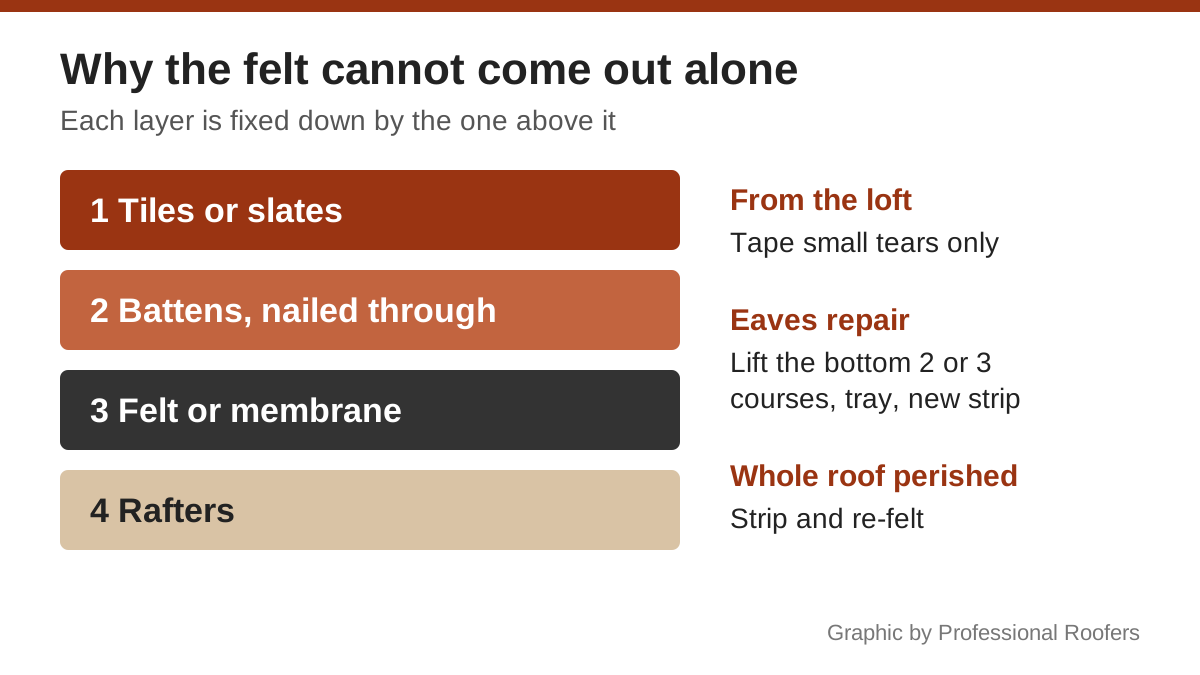
Can you replace roof felt without removing tiles? Not properly, and any roofer who says otherwise is selling you a patch. The reason is mechanical rather than a matter of opinion: the felt (or membrane) lies over the rafters, the tile battens are nailed down on top of it, and the tiles hang on the battens. To lift the felt you have to take off the battens, and to take off the battens you have to take off the tiles. What you can do from inside the loft is limited to small repairs, and the most common failure, rotten felt at the eaves, can be fixed by lifting just the bottom couple of rows of tiles rather than the whole roof.
This page sets out what works, what does not, and when a strip and re-felt is the honest answer.
How the layers fit together
From the outside in, a typical UK pitched roof built from the 1940s onwards has:
- Tiles or slates, hooked or nailed onto
- Battens, horizontal timber strips nailed through the underlay into
- The underlay: black bitumen felt on older roofs, a lighter plastic breathable membrane on newer ones, draped over
- The rafters, with the loft or the room below underneath.
The underlay is a second line of defence. Tiles shed almost all the rain; the underlay catches the wind-driven rain, snow and dust that gets past them and carries it down into the gutter. That only works because each run of underlay overlaps the run below it, like the tiles themselves, so water always flows over a joint and never into it. Our roof underlay and membranes page covers the types in more detail.
That overlap is what defeats any “from the inside” replacement. A sheet fitted under the rafters cannot overlap anything on the outside, and it cannot reach the gutter.
Why roof felt fails
Felt rarely fails evenly across a roof. The usual pattern:
- At the eaves. The strip of felt that pokes out over the fascia into the gutter gets full sun. Standard bitumen felt is not UV resistant, so it goes brittle and breaks off. Unsupported felt also sags between the rafters into a trough that holds water. Either way, water runs behind the gutter and rots the fascia. It is one of the most common underlay faults on houses from the felt era.
- Where it touches the tiles. Felt pulled tight against the back of the tiles wicks water through.
- Around chimneys, valleys and roof windows, where it was cut and dressed by hand.
- With age. Old bitumen felt dries out, cracks and tears, and in the loft you see it hanging in strips between the rafters.
Torn felt in the loft does not always mean a leak. If the tiles are sound, very little water reaches the underlay at all. Whether it matters depends on where it is torn and whether you can see staining on the timbers below.
What you can do from inside the loft
Tape small tears. Breathable membranes can be repaired with a compatible membrane repair tape, which most membrane makers sell. On old bitumen felt, tape and sealants stick poorly to a dusty, brittle surface and are a short-term fix at best.
Leave it alone. For a small tear high up the roof, with no staining on the rafters below, the honest advice is often to leave it and look again after the next spell of heavy rain.
What not to do:
- Do not staple a new membrane between or under the rafters. It looks like a new underlay from the loft, but water that gets past the tiles runs down it and stops at the wall plate, soaking the timber and the top of the wall instead of reaching the gutter. It also closes off the air space under the tiles that keeps the battens dry.
- Do not spray foam the underside of the roof. Sprayed foam insulation has been sold as a way to “seal” a roof with failed felt. It hides the timbers, can trap moisture against them, and has caused real trouble when houses are sold: a BBC investigation found several major lenders that will not lend on homes with spray foam, and others assess it case by case. The Property Care Association now runs a protocol and a register of trained assessors for surveying it, which tells you how big the problem has become.
- Do not pack insulation up against the felt. Stuffing insulation between the rafters right up to the underlay blocks ventilation and invites condensation, especially with old non-breathable felt. Our loft condensation page explains why.
The eaves-only repair: the one that fixes most problems
If the trouble is at the bottom of the roof, which it usually is, you do not need a new roof. A roofer can:
- Remove the bottom two or three courses of tiles and the battens they hang on.
- Cut back the perished felt to sound material.
- Fit a rigid eaves support tray over the fascia so the new underlay cannot sag.
- Slide a new strip of UV-resistant underlay up underneath the existing felt, so the old felt overlaps the new, and dress the bottom edge into the gutter.
- Re-batten and re-fix the tiles.
It is a small job by roofing standards, and on many houses it can be done from a tower or roof ladders rather than full scaffolding. We cover the details, and how to diagnose it from a ladder, on our eaves underlay support tray page.
The same principle allows other part repairs. Around a chimney or roof window, the roofer opens up the tiles in that area only and laps new membrane under the old above and over the old below. What makes it a proper repair is that the water always runs from old to new and new to old across overlaps, never into a cut edge.
Unfelted roofs: often fine as they are
Many Victorian and Edwardian roofs were never felted. Look up into the loft of an older terrace and you may see the underside of the slates or tiles directly, sometimes with lime mortar pointing between them (called torching). That is how they were designed. A well-maintained unfelted roof keeps the rain out; it is the slates, nails and battens that need watching. Adding felt to such a roof means stripping it, and it is only worth doing when the slates or battens need replacing anyway.
When a strip and re-felt is the honest answer
A local repair is a waste of money when the underlay is only one of several things at the end of their life. Signs it is time to strip and re-felt (or re-roof):
- The felt crumbles to the touch across the whole roof, not just at the eaves.
- Battens are rotten, split or sagging.
- Slates are slipping because the nails have rusted through (nail sickness).
- Concrete tiles are worn, porous or covered in moss that holds water.
- You have more than one leak in different places.
In those cases, the tiles come off anyway, so replacing the underlay and battens at the same time is far cheaper than doing it later. Reusable clay tiles and natural slates can usually go back on; worn concrete tiles usually should not. See our new roof cost page for what the job involves.
Ventilation and paperwork when the roof is stripped
Re-felting is the moment to get ventilation right. Old bitumen felt is effectively airtight, so roofs that had it relied on gaps at the eaves and ridge. A modern vapour-permeable (breathable) membrane lets moisture escape through it, and some are certified for use with reduced ventilation, but only as their certificate allows. The loft still needs a clear path for air at the eaves if it has insulation on the ceiling. Our roof ventilation page explains what to ask for.
There is paperwork too. In England, stripping and re-covering a roof can count as renovating a “thermal element” under the Building Regulations, which means the insulation may need to be brought up to the current standard when more than half the roof area is renovated. Your roofer should either notify building control or be registered with a competent person scheme that lets them self-certify. The rules are in Approved Document L. Ask about this before work starts, because a missing certificate shows up when you sell.
Frequently asked questions
Can you replace roof felt without removing the tiles? Not as a proper replacement. The battens that hold the tiles are nailed down on top of the felt, so the tiles and battens have to come off to lift it. Small tears can be taped from inside, and the eaves can be repaired by lifting only the bottom few courses.
Can you put a membrane under the rafters from inside the loft? You can staple one up, but it does not do the job of an underlay. It cannot overlap anything outside or drain into the gutter, so any water that reaches it runs onto the wall plate. It can also block ventilation.
Is torn roof felt a problem? Not always. If the tiles are sound and there is no staining on the timbers below the tear, it may not be letting water in. Tears at the eaves and around chimneys are more likely to matter than tears high up the roof.
Is it OK to have a roof without felt? Yes, if it was built that way and is well maintained. Many Victorian and Edwardian roofs were never felted. Adding felt is only worth doing when the slates or battens need replacing.
How long does roof felt last? Old bitumen felt often lasts decades under tiles, but the exposed strip at the eaves fails far sooner because sunlight breaks it down. Modern breathable membranes are protected from UV once covered, and at the eaves should be UV resistant or covered by a tray.
Should I use spray foam to fix failed roof felt? No. It hides the condition of the timbers, can trap moisture, and some major lenders refuse to lend on homes that have it, which can make a house hard to sell.
Sources
- Approved Document L: conservation of fuel and power (GOV.UK)
- NHBC Standards, chapter 7.2, pitched roofs (underlay at eaves)
- Property Care Association, sprayed foam insulation protocol and assessor register
- BBC reporting on mortgage lenders’ policies on spray foam insulation
Want costs like this each month?
Join the Roofline brief for current UK prices and quote-reading tips.
More from Professional Roofers
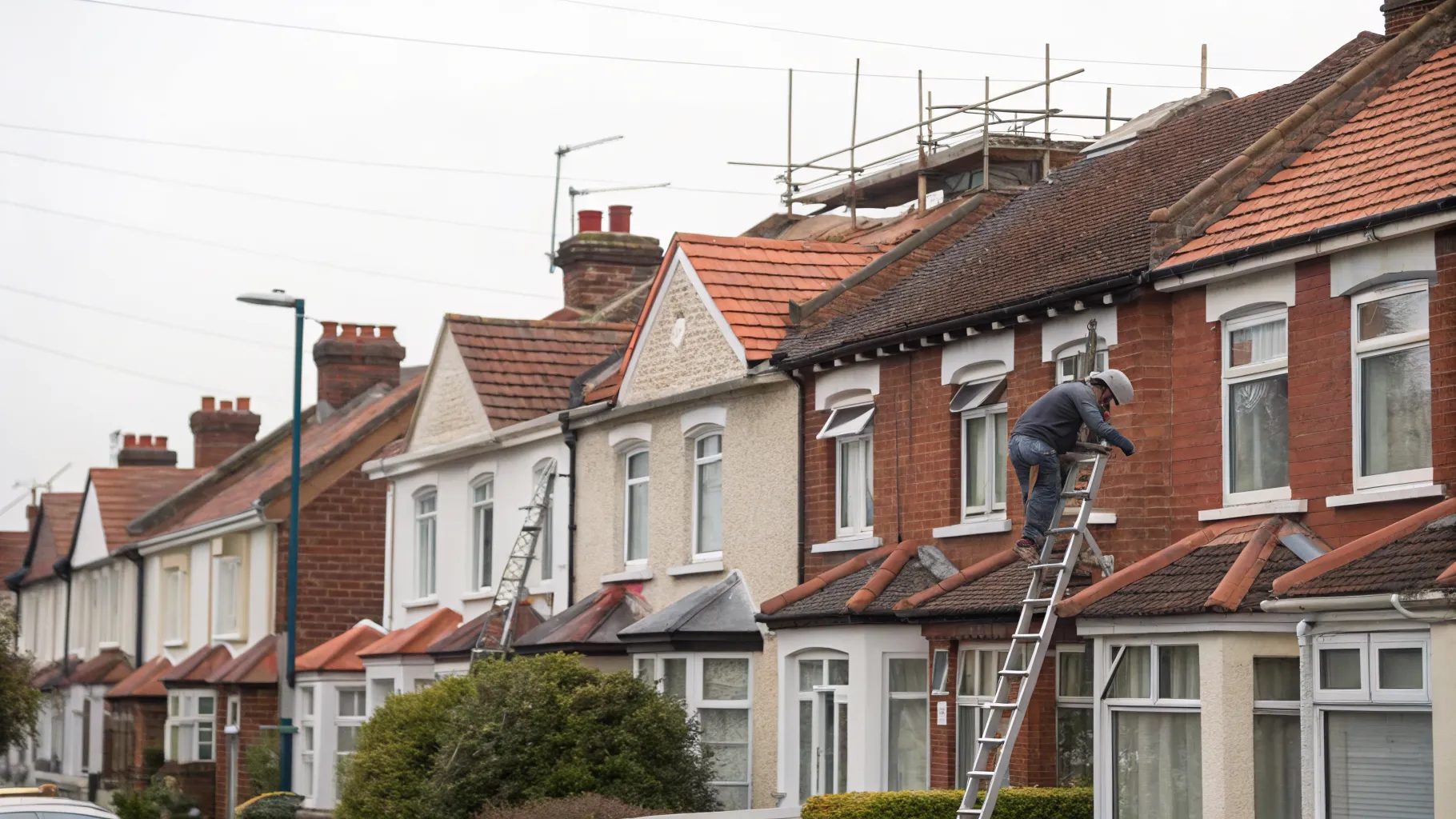
How Much Does a New Roof Cost in the UK in 2026?
What a new roof really costs in the UK in 2026, broken down by house size, material and the hidden extras, plus how to check you are being quoted fairly.
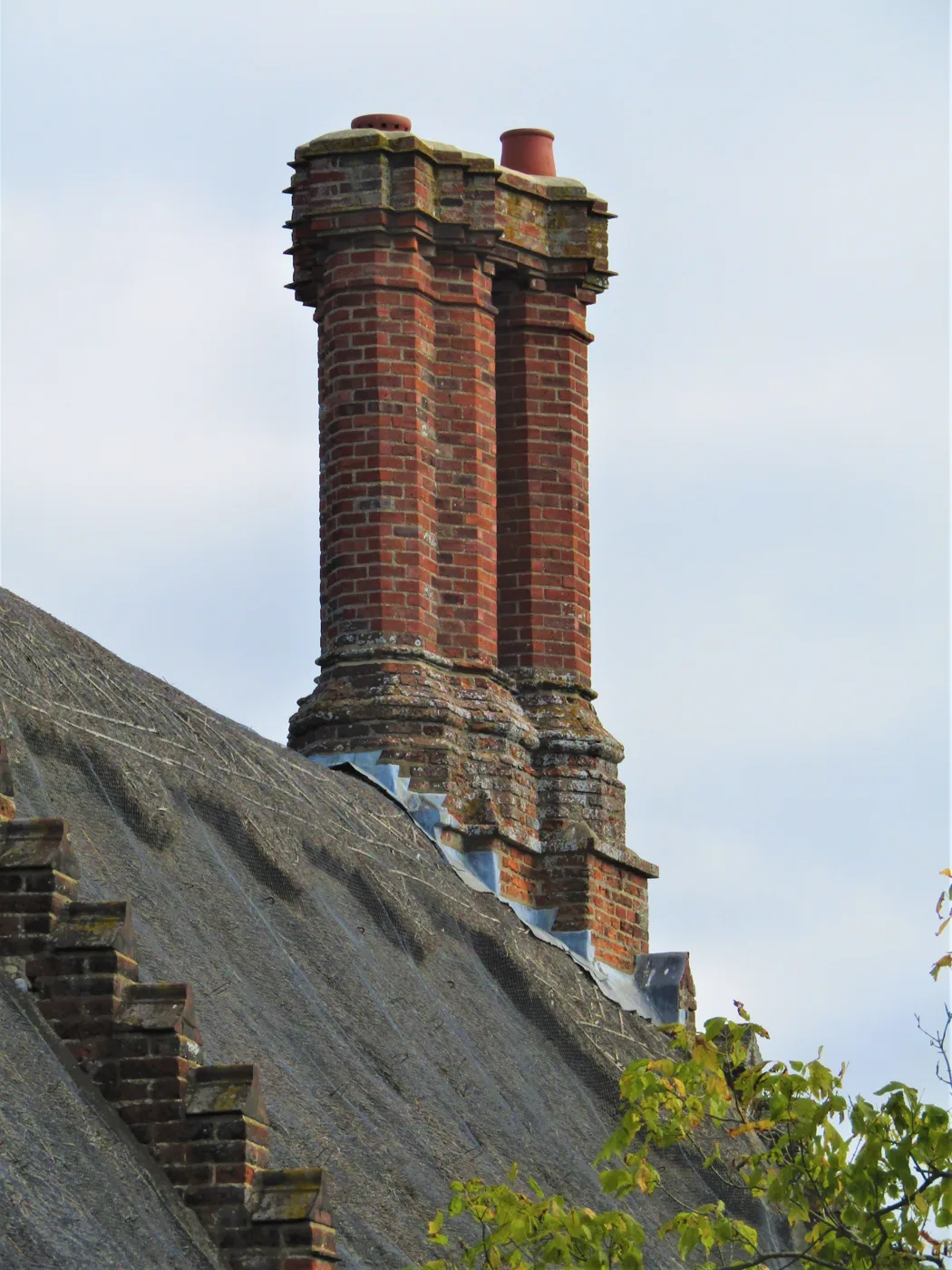
Chimney Repointing and Repair Cost UK (2026)
What chimney repointing cost is in the UK in 2026, why scaffolding drives the price, and how repointing compares to rebuilding, flashing and pot repairs.
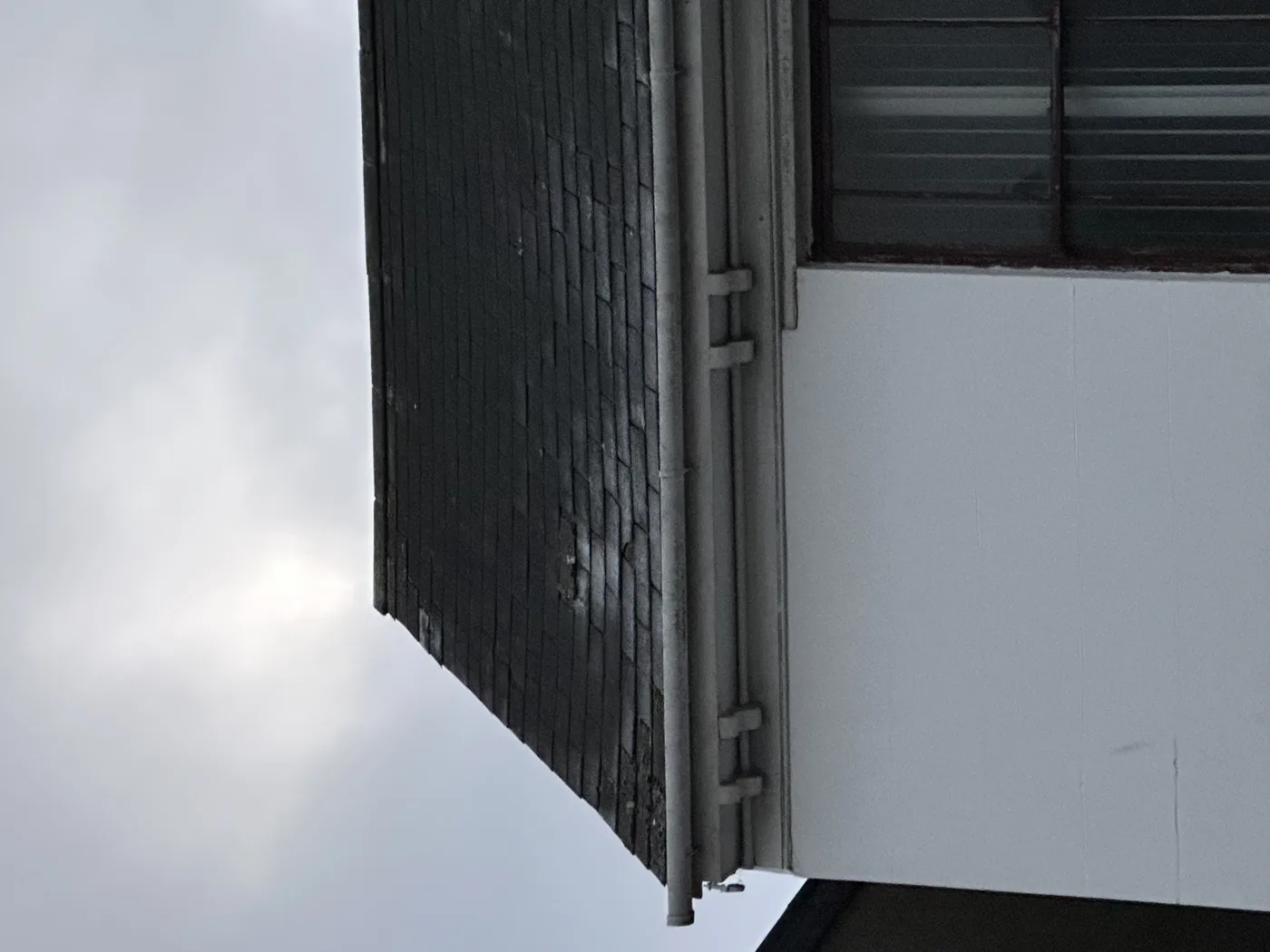
Roof Inspection and Survey Cost UK: What's Checked and the Price
Roof inspection cost UK 2026: what a ground, ladder or drone survey checks, typical prices for each, and when a written roof report is worth paying for.