Roof Coating Spray on Tiles: Worth It? Usually Not
By the Professional Roofers team
Updated 2026 · Independent cost guide
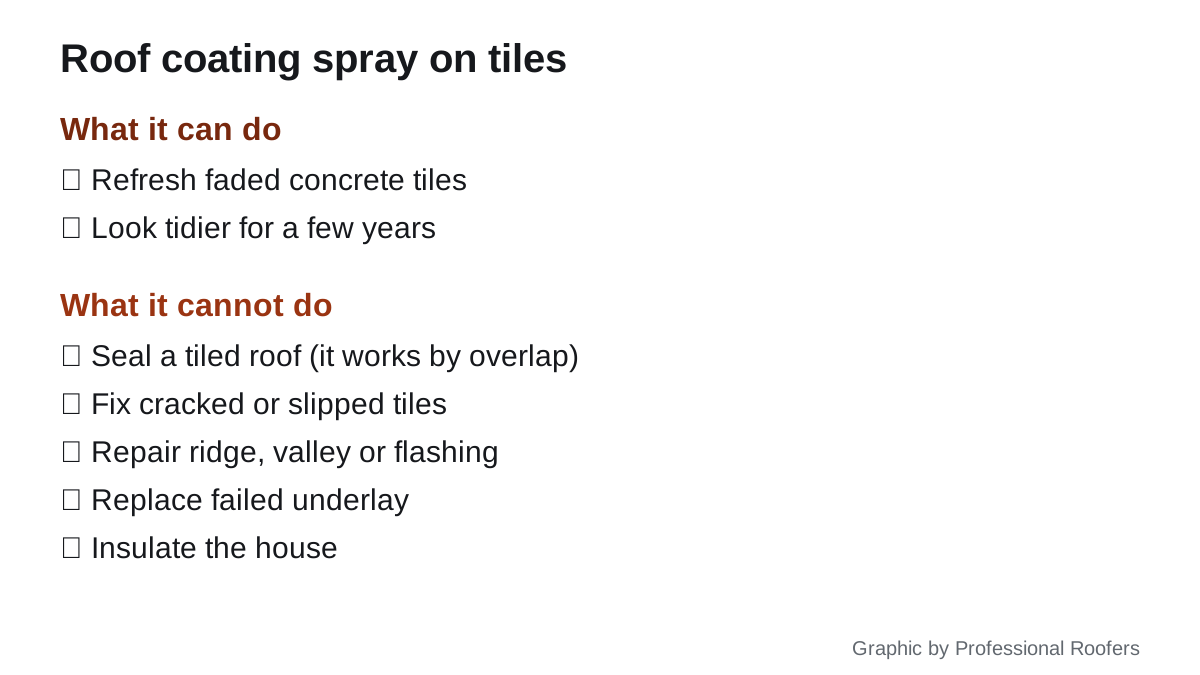
A roof coating spray on a pitched tiled roof is mostly a cosmetic job sold as a repair. It can make faded concrete tiles look new for a few years. What it cannot do is stop a leak, fix a cracked or slipped tile, replace failing ridge mortar, or insulate your house, and those are the claims it is usually sold on. Roof coatings are also one of the most common jobs pushed by cold callers, which is why Trading Standards teams around the UK keep issuing warnings about them.
This page explains what these coatings actually are, why a tiled roof does not need sealing, when a coating might be reasonable, and what your rights are if someone sold you one on the doorstep.
What a roof coating actually is
The products go by many names: roof coating, roof sealant, tile paint, thermal roof coating, nano coating, roof restoration. Most are acrylic or similar paints, sometimes with a fungicide or a water repellent mixed in, sprayed onto the tiles after the roof has been cleaned. The usual sequence is:
- The roof is jet washed or scraped to remove moss.
- A biocide is applied to kill off what is left.
- One or two coats of coloured coating are sprayed on.
The result looks like a new roof from the street. Underneath, the tiles, battens, underlay and ridge are exactly as they were.
Why a tiled roof does not need sealing
A pitched tiled roof is not designed to be watertight in the way a flat roof membrane is. It works by overlap. Each row of tiles laps over the one below, so rain runs down and off. Any water that is blown up under the tiles is caught by the underlay (or, on older roofs, by the tile’s own design and the pitch) and drains into the gutter. Air moving through the gaps between the tiles helps the roof dry out after rain.
That is why coating claims fall apart under scrutiny:
- “It seals the roof.” A tiled roof is meant to shed water, not to be sealed. A coating sits on the surface of each tile; it does nothing at the laps, where the roof actually keeps water out.
- “It stops leaks.” Leaks on pitched roofs almost always come from a specific failure: a cracked or slipped tile, a failed valley, cracked flashing, gaps in ridge or verge mortar, or perished underlay. A coat of paint over the top fixes none of them, and can hide the evidence a roofer would use to find the fault.
- “It insulates the house and cuts your bills.” A thin layer of paint on the outside of a ventilated roof adds almost nothing to its insulation. Heat is lost through the ceiling into the loft, and the fix is loft insulation, which the Energy Saving Trust recommends at 270mm for a typical loft. In Aberdeenshire, Trading Standards warned in 2024 about callers selling “thermal roof coating” on the promise of hundreds of pounds off energy bills.
- “It protects against frost.” Frost damage happens when water gets into a porous tile and freezes. If the tile is already porous, a surface coat can trap water inside it. In another case highlighted by Trading Standards in Scotland, a surveyor found the paint used would give no frost protection at all, and the whole roof had to be redone.
The real risks
Trapped moisture. If a coating goes on over tiles that are damp, porous or still holding moss roots, water that gets into the tile has a harder time getting out. That can speed up the frost damage and spalling it was meant to prevent.
Damage from the preparation. The jet washing that comes first is often the most damaging part of the job. High pressure strips the factory surface from concrete tiles, cracks older clay tiles, and drives water under the tiles onto the underlay. Our page on the risks of pressure washing a roof covers this in detail. In an Inverclyde case highlighted by Trading Standards Scotland in October 2026, a roof coating job damaged dozens of tiles and let water into the loft, and the homeowner ended up replacing the whole roof.
Blocked ventilation. Overspray that bridges the gaps between tiles, or a coating that is slapped on thickly, can reduce the airflow a tiled roof relies on to dry out.
Warranty and insurance questions. Tile makers’ guarantees cover the tiles as manufactured and fitted. If your roof is still under a manufacturer’s or installer’s guarantee, ask the guarantor in writing whether a coating affects it before anyone sprays anything. If a coated roof later leaks, your home insurer may also ask what work was done and by whom.
It does not last. Coatings weather and fade. Once they start to peel, you have a patchy roof that looks worse than the uncoated one, and the coating is very hard to remove.
When a coating might be reasonable
There are a few narrow cases where a coating, applied properly by a competent firm, is not a waste of money:
- The roof is structurally sound, recently inspected, with no slipped or cracked tiles and good underlay, and you simply want to refresh the colour of faded concrete tiles before selling.
- You want a breathable water-repellent treatment after a careful soft wash, and the firm can show you the product’s technical data sheet and its vapour permeability.
Even then, treat it as decoration with a limited life, not maintenance. Never apply a coating to a listed building or a roof in a conservation area without checking with the council first; the wrong product on historic clay or slate can cause lasting damage and may need consent.
What to do instead
- Get the roof inspected by a roofer you found yourself. They should tell you what is wrong, if anything, and photograph it. Our guide to a roof inspection or survey shows what a proper one covers.
- Fix the actual fault. A few slipped tiles, a repointed ridge or a new section of flashing is usually a fraction of the cost of a coating job. Our roof repair cost guide has typical figures.
- Deal with moss gently. Brush it off by hand and treat with a biocide, rather than jet washing. See roof moss removal.
- Plan for replacement if the tiles are at the end of their life. If tiles are porous, crumbling or delaminating across the roof, a coating will not buy meaningful time. Budget for re-roofing instead.
If you were sold a roof coating on the doorstep
Cold callers selling roof coatings often say they were “working nearby”, point to moss or a “dangerous” tile from the drive, and push to start the same day. Our page on roofing scams and rogue roofers lists the scripts. If you agreed to the work at your home:
- You normally have 14 days to cancel a contract made at your home under the Consumer Contracts Regulations, starting from when the contract was made. Citizens Advice explains how to cancel building work, and has a template letter.
- If the trader started without your agreement during those 14 days, you can usually cancel for a full refund. If you asked them to start, you may owe a share for the work done.
- The trader must give you written cancellation information. If they did not, the cancellation period is extended by up to 12 months, and failing to provide it can be a criminal offence. Keep every leaflet, receipt and text message.
- Report it. Contact the Citizens Advice consumer service, which passes reports to Trading Standards. If you feel pressured or threatened, call the police.
Never pay cash upfront, never let anyone onto your roof the same day they knock, and never agree to work on the strength of a photograph a caller shows you of “your” roof.
Frequently asked questions
Is roof coating spray worth it on concrete tiles? Rarely. It can refresh the colour of faded concrete tiles for a few years, but it does not stop leaks, repair damaged tiles or insulate the house. If the roof has a fault, fixing that fault is better value.
Does roof coating stop leaks? No. Leaks on a pitched roof come from specific failures such as cracked or slipped tiles, flashing, valleys, ridge mortar or underlay. A coating on the tile surface does not repair any of these.
Can roof coating damage tiles? It can. Coating damp or porous tiles can trap moisture and make frost damage worse, and the jet washing done beforehand often cracks tiles and strips their surface.
Does a thermal roof coating reduce energy bills? There is no good evidence that a thin coating on a ventilated tiled roof makes a meaningful difference. Loft insulation is where the savings are.
How long does roof coating last? Coatings fade and weather, and many need redoing within a few years. Once they peel, the roof can look worse than before, and the coating is hard to remove.
Can I cancel a roof coating job I agreed to at my door? Usually yes, within 14 days, under the Consumer Contracts Regulations. If the trader did not give you written cancellation information, the period can extend by up to 12 months.
Want costs like this each month?
Join the Roofline brief for current UK prices and quote-reading tips.
More from Professional Roofers
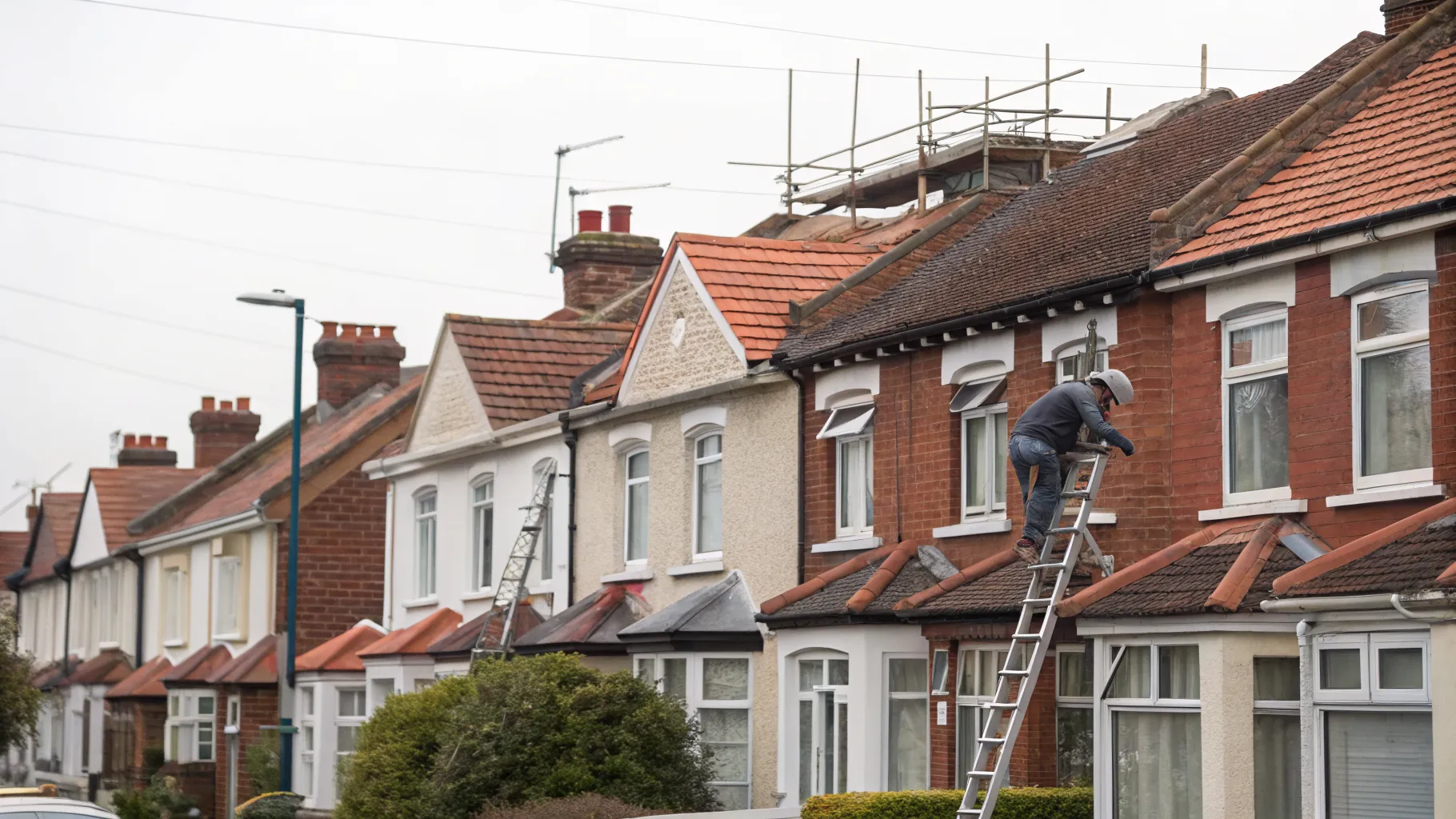
How Much Does a New Roof Cost in the UK in 2026?
What a new roof really costs in the UK in 2026, broken down by house size, material and the hidden extras, plus how to check you are being quoted fairly.
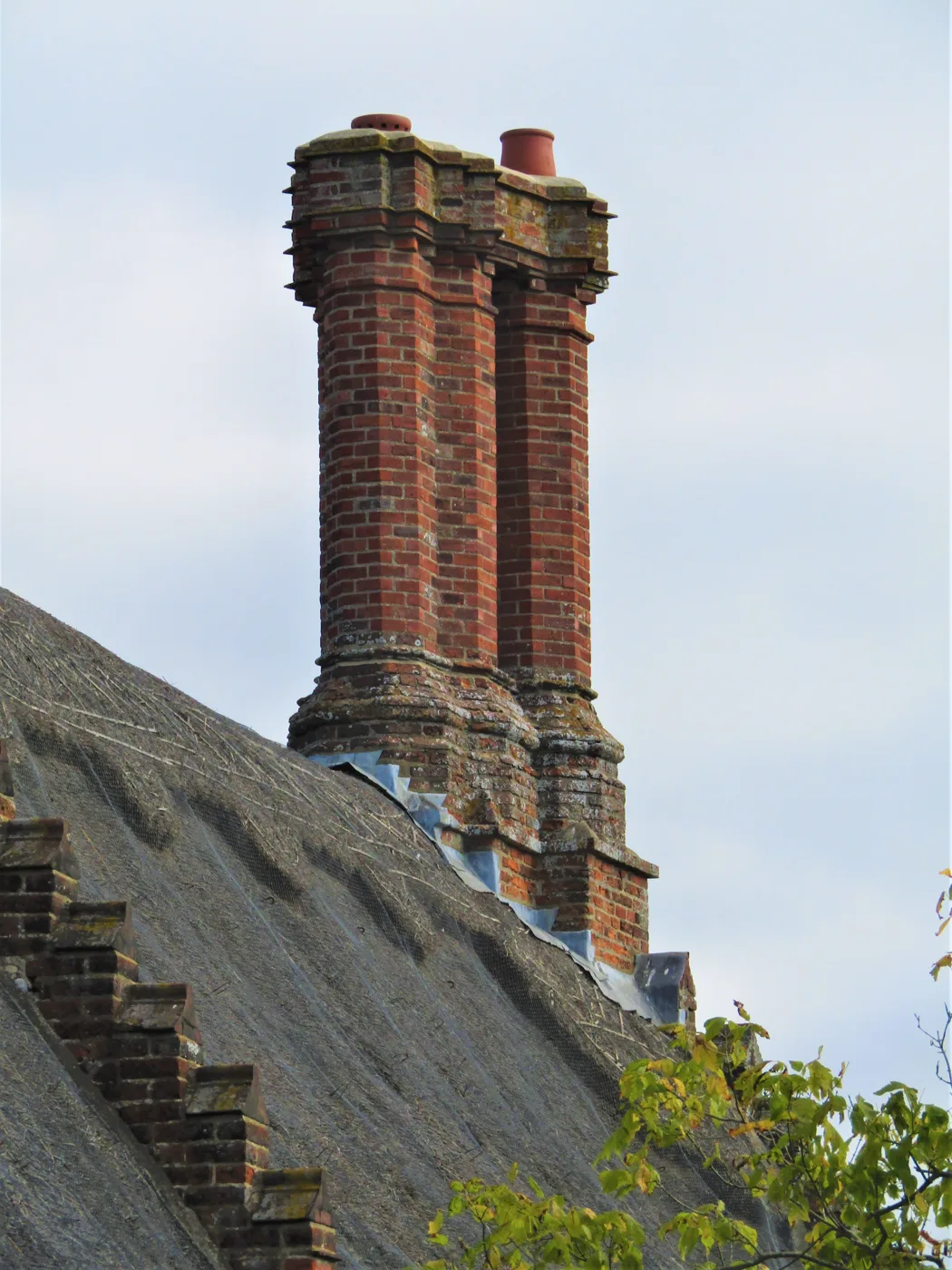
Chimney Repointing and Repair Cost UK (2026)
What chimney repointing cost is in the UK in 2026, why scaffolding drives the price, and how repointing compares to rebuilding, flashing and pot repairs.
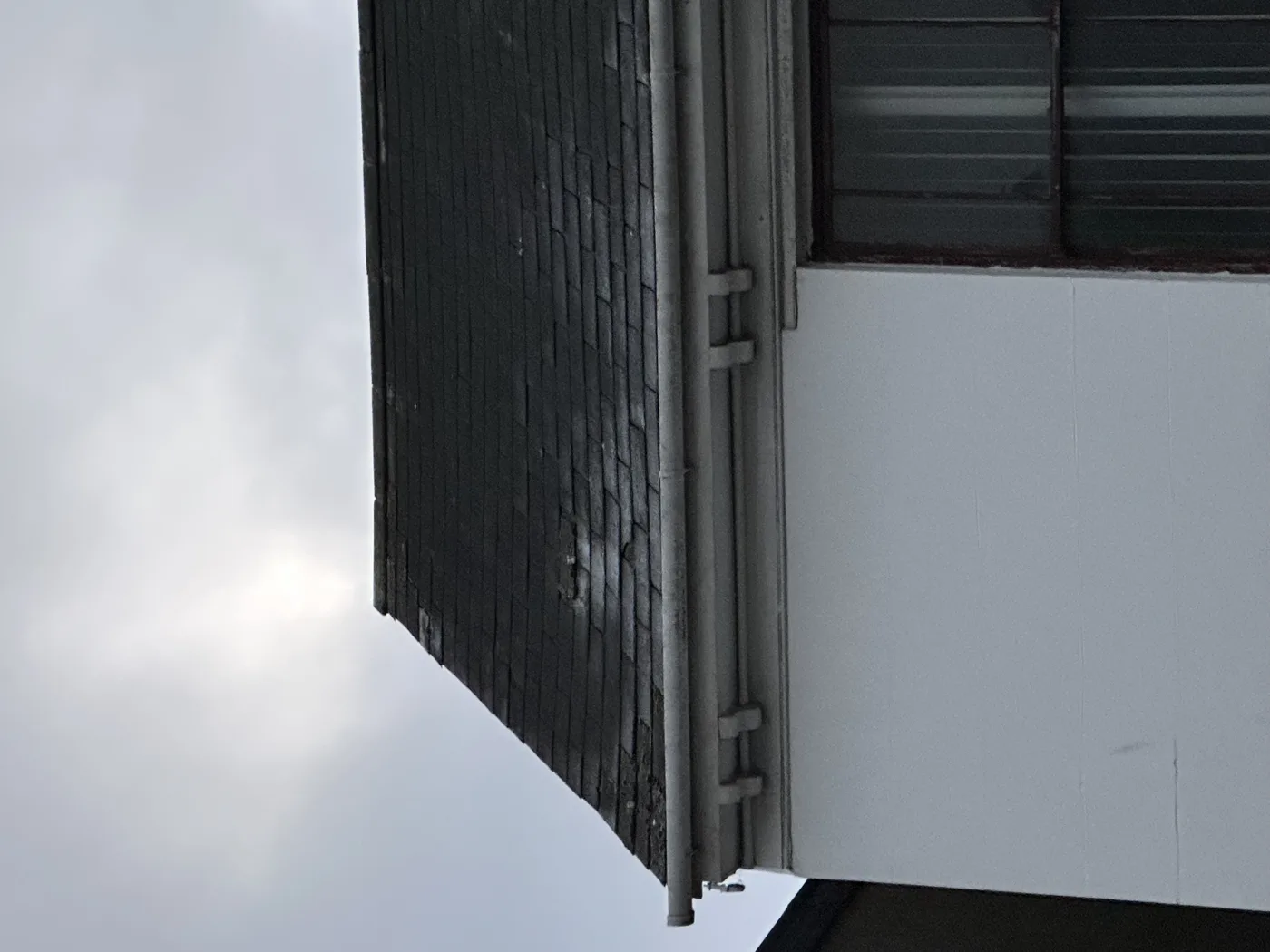
Roof Inspection and Survey Cost UK: What's Checked and the Price
Roof inspection cost UK 2026: what a ground, ladder or drone survey checks, typical prices for each, and when a written roof report is worth paying for.