Roof Repair Cost UK 2026: What Common Repairs Actually Cost
By the Professional Roofers team
Updated 2026 · Independent cost guide
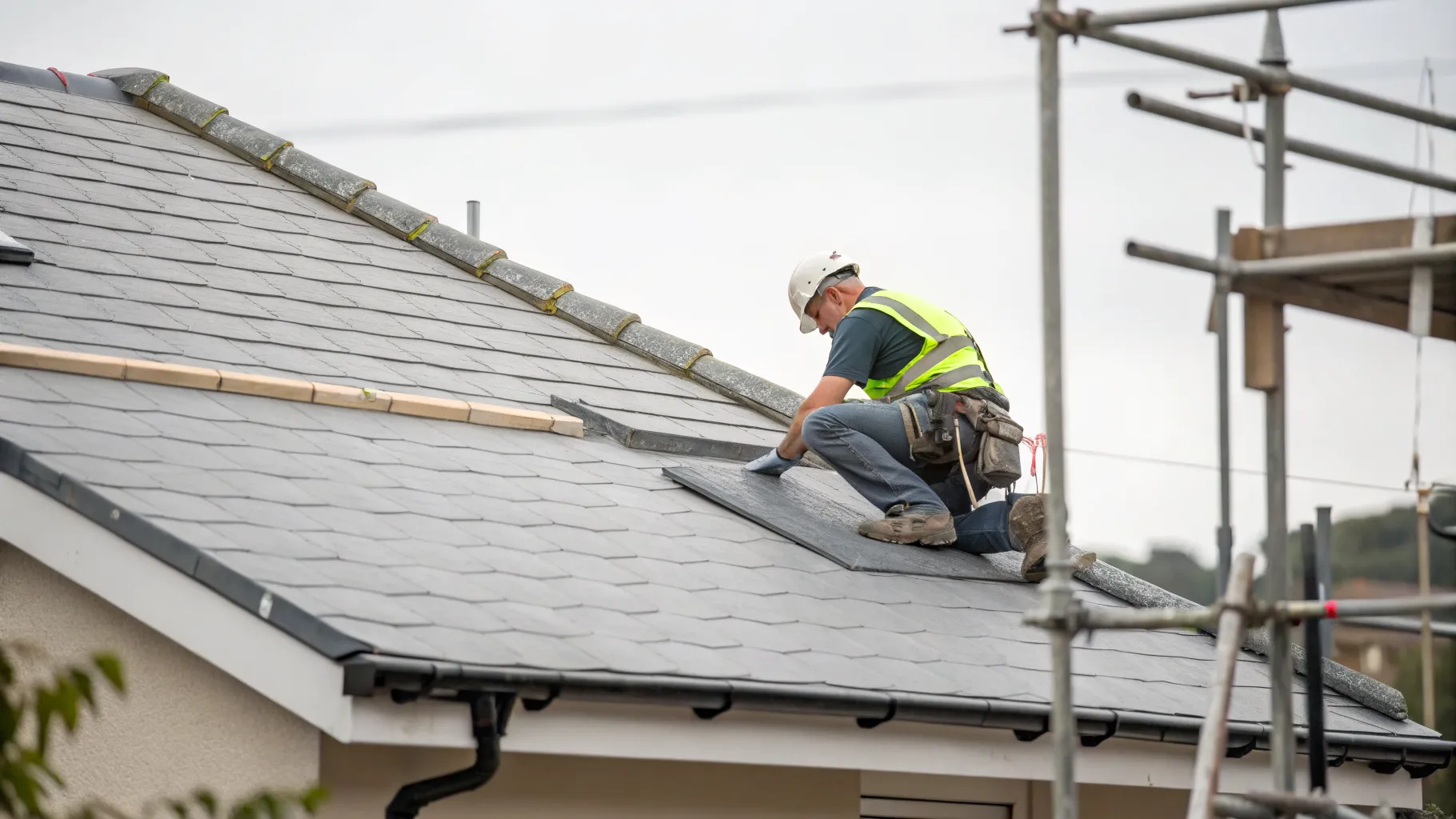
Most roof repairs in the UK cost between £150 and £500, and the average roof repair cost in the UK lands around £500 to £530. Replacing a few slipped or cracked tiles sits at the lower end; tracing a stubborn leak or fixing chimney flashing pushes higher. The full spread runs from about £150 for a single accessible tile up to £3,000 or more for sagging timbers. The figure you actually pay depends on four things: access, roof pitch, the material on your roof, and where you live. London and the South East tend to run 10 to 25 per cent above the national average.
These are indicative ranges. No honest roofer prices a repair without seeing the roof, so treat the numbers below as a way to sanity-check a quote, not a substitute for one.
Roof repair cost by type of repair
Here is what the common jobs cost in 2026. All figures are typical ranges for a standard two-storey house with reasonable access.
| Repair | Typical cost range |
|---|---|
| Replace 1 to 5 slipped or broken concrete/clay tiles | £150 to £400 |
| Single tile replacement (labour and making good) | £80 to £150 per tile |
| Slate replacement | Higher end of tile pricing |
| Roof leak repair (minor, accessible) | £150 to £500 |
| Roof leak repair (hard to trace or structural) | £800 to £1,500+ |
| Flashing repair or repoint | £200 to £600 |
| Full lead flashing replacement around a chimney | £400 to £800 |
| Repoint or re-bed ridge tiles | £150 to £800 |
| Flat roof small repair (GRP or EPDM) | £150 to £400 |
| Sagging roof repair (rafters and timbers) | £1,000 to £3,000+ |
A couple of things worth knowing. Slate costs more than concrete or clay because slate is brittle, slower to work, and each slate has to be nailed or hooked individually rather than hung on a nail like a tile. And ridge work splits into two jobs: a simple repoint (raking out and refilling the mortar) is cheaper than removing the ridge tiles and re-bedding them on fresh mortar, but the re-bed lasts far longer, so the cheaper option is often a false economy.
Why your £200 repair can become a £900 job
The single biggest thing the thin cost guides bury is access. A “tile from £150” headline assumes a roofer can reach the spot from a ladder. The moment a repair needs scaffolding, the bill changes shape.
Scaffolding for a standard two-storey house typically costs £600 to £1,200 to erect, with hire usually running on a minimum term of six to eight weeks. On a third storey, around a chimney, or anywhere the access is awkward, expect it to add £400 to £800 on top of the repair itself. So a £200 tile job at high level can quietly become a £900 visit once the scaffold goes up.
This is not roofers padding the bill. The Work at Height Regulations 2005 require a proper risk assessment for working at height, and for chimney work or a full roof section, scaffolding is usually the only access method that passes that assessment. A ladder is fine for an inspection or a single low-level tile; it is not fine for a day spent re-leading a stack. If you have several repairs due, group them into one scaffold visit. For a fuller breakdown see our guide to roof scaffolding cost.
Roof leak repair cost and how leaks are traced
Full breakdown: roof leak repair cost, with prices by cause, leak detection charges and what a temporary fix costs.
The average roof leak repair cost is around £375. A minor leak with an obvious, accessible source falls in the £150 to £500 band. The cost climbs to £800 to £1,500 or more when the leak is hard to locate or when water has been getting in long enough to rot the underlay or timbers.
The reason leaks are expensive to trace is that water rarely drips directly below where it gets in. It runs along rafters and battens before it falls, so the wet patch on your ceiling can be a metre or more from the actual fault. A roofer will usually start with a loft inspection, looking for dark or damp sheathing with a torch, then confirm the source with a controlled water test using a garden hose, working from the bottom of the roof upwards so each section can be ruled out in turn.
If you catch a leak early, you are paying for a patch. Leave it, and you are paying for the patch plus replacement underlay, timber treatment, and possibly a ceiling repair inside. Damp that has spread also tends to need scaffolding for a proper fix rather than a quick ladder job.
Roof leak repair cost by what is actually causing it
“Roof leak repair cost” is not one number, because a leak is a symptom rather than a job. What you pay is set by the fault the roofer finds once the source is traced, and the spread between the cheapest and dearest cause is more than tenfold.
| What is causing the leak | Typical repair cost | How common |
|---|---|---|
| One or two slipped or cracked tiles | £150 to £400 | Very common |
| Failed or lifted flashing at an abutment | £200 to £600 | Very common |
| Lead flashing around a chimney, full replacement | £400 to £800 | Common |
| Cracked mortar on ridge or hip tiles | £150 to £800 | Common |
| A split or blistered flat roof covering | £150 to £400 for a patch | Common |
| Leak that cannot be traced from the loft | £800 to £1,500+ | Less common |
| Rotted underlay or battens behind the leak | £800 to £1,500+ | Less common |
| Sagging or rotten rafters under a long-standing leak | £1,000 to £3,000+ | Rare |
Two patterns fall out of that table. The great majority of leaks are cheap faults: a tile, a length of flashing, some mortar, all in the £150 to £800 band. And almost everything above £800 is a leak that was left. The expensive line items are not harder leaks, they are older ones, where water has had a winter or two to reach the underlay, the battens and eventually the rafters.
Should you claim on insurance for a roof leak?
Usually not, and the arithmetic is why. A typical buildings insurance excess sits in the same £150 to £500 range as a straightforward leak repair, so a claim on a slipped tile or a length of flashing buys you nothing and costs you your no-claims position at renewal. It is worth claiming when a single storm has done sudden, accidental damage of the sort that runs into four figures.
The other reason to check before you call the insurer is what buildings cover excludes. Gradual wear and tear, poor maintenance and simple age are not covered, which is why claims on roofs over ten to fifteen years old are so often refused. A leak that has been staining a ceiling for two winters reads as maintenance, not as an event.
What to do before the roofer arrives
Move what is under the leak and put a bucket down, then, if a ceiling is bulging with trapped water, pierce it deliberately at the lowest point with a screwdriver and let it drain into the bucket. A controlled hole is a filler-and-paint job; a collapsed ceiling is a plasterer. Photograph everything, inside and out, with dates, because that is the evidence an insurer asks for and it is also how you show a roofer what the leak does in heavy rain rather than on the dry day they visit.
Flat roof repairs: patch or re-cover?
Small flat roof repairs in GRP fibreglass or EPDM rubber run £150 to £400. The bigger decision is whether to patch or re-cover, and that comes down to what your flat roof is made of and how old it is.
- Felt (built-up bitumen): lasts roughly 10 to 20 years. If a felt roof is leaking and near the end of that window, repeated patching is throwing money at it.
- EPDM rubber: lasts 25 to 50 years and copes well with UV, ozone and freeze-thaw, with warranties often 20 years plus.
- GRP fibreglass: lasts 25 to 40 years and is laid as a single continuous skin, so there are no joins to fail.
If your felt roof is 15 years old and leaking in two places, re-covering in EPDM or GRP usually makes more sense than a third patch. If a newer EPDM roof has a single puncture, patch it. Our comparison of flat roof vs pitched roof cost goes into the trade-offs if you are weighing up a bigger change.
Repair or replace? The 50% rule
Repair while the damage is localised. Once you are replacing 50 per cent or more of a roof covering, two things happen: the cost approaches that of a full re-roof, and you have to notify Local Authority Building Control (LABC), because work at that scale falls under the Building Regulations.
At that point it is worth getting a re-roof quote alongside the repair quote. If your tiles are sound but a section has failed, repair. If the covering is at the end of its life and you are patching every winter, replacing can be the cheaper option over five years. Our new roof cost UK 2026 guide has the full numbers, and how long does a roof last helps you judge where yours sits.
When the work does cross the Building Regulations threshold, you can use a roofer registered with the NFRC Competent Person Scheme, the only roofing competent person scheme in England and Wales. A registered contractor can self-certify the work to Building Regs and arrange a Building Regulation Compliance Certificate plus a 10-year insurance-backed guarantee, which saves you applying to building control separately.
What drives the price up or down
- Access and pitch: steep roofs and high-level work are slower and need scaffolding.
- Material: slate and natural stone cost more to work than concrete tiles or felt.
- Scale: a single tile is a half-hour job; a leaking valley is a day.
- Region: London and the South East run noticeably higher than the rest of the UK.
- Hidden damage: rotten timber or wet underlay found mid-job adds cost.
Roofer day rates sit around £200 to £360 per person per day, so a repair that takes two hours is mostly call-out and materials, while anything spanning a full day is mostly labour.
Frequently asked questions
How much does it cost to fix a roof leak in the UK? A roof leak repair averages around £375. A minor, accessible leak typically costs £150 to £500. If the leak is hard to trace or water has damaged the underlay or timbers, the cost can run to £1,500 or more.
How much does it cost to trace a roof leak? Tracing is usually part of the repair rather than a separate charge: the roofer inspects the loft with a torch and confirms the source with a hose test. Where the source cannot be found from inside, the job moves into the £800 to £1,500 band because the roof has to be opened up in sections.
Does home insurance cover roof repairs? Buildings insurance generally covers sudden, accidental damage such as storm damage or a fallen tree. It does not cover gradual wear and tear, poor maintenance, or roofs that have simply aged out, which is why claims on roofs over 10 to 15 years old are often refused. Keep dated records of maintenance and inspections, as insurers ask for them.
Do I need scaffolding for a roof repair? Not always. A single low-level tile or an inspection can often be done safely from a ladder. Chimney work, a full roof section, or any awkward high-level access usually needs scaffolding, because the Work at Height Regulations 2005 require a safe, justified access method for the job.
How long does a roof repair take? A minor fix such as replacing a few tiles takes a few hours to half a day. Tracing and fixing a leak typically takes one to three days, partly because the source has to be found first. Structural work on sagging timbers usually runs two to four days.
Is it cheaper to repair or replace a roof? Repair while the damage is contained to one area. Once you are replacing 50 per cent or more of the covering, the work triggers Building Regulations and the cost approaches a full re-roof, so at that point it is worth comparing both quotes. The age and material of your roof are the deciding factors.
How do you find where a roof is leaking? A roofer inspects the loft with a torch, looking for dark or damp sheathing, then confirms the source with a garden-hose water test, wetting the roof from the bottom upwards in stages. Because water travels along the timbers before it drips, the leak is rarely directly above the wet patch on your ceiling.
Want costs like this each month?
Join the Roofline brief for current UK prices and quote-reading tips.
More from Professional Roofers
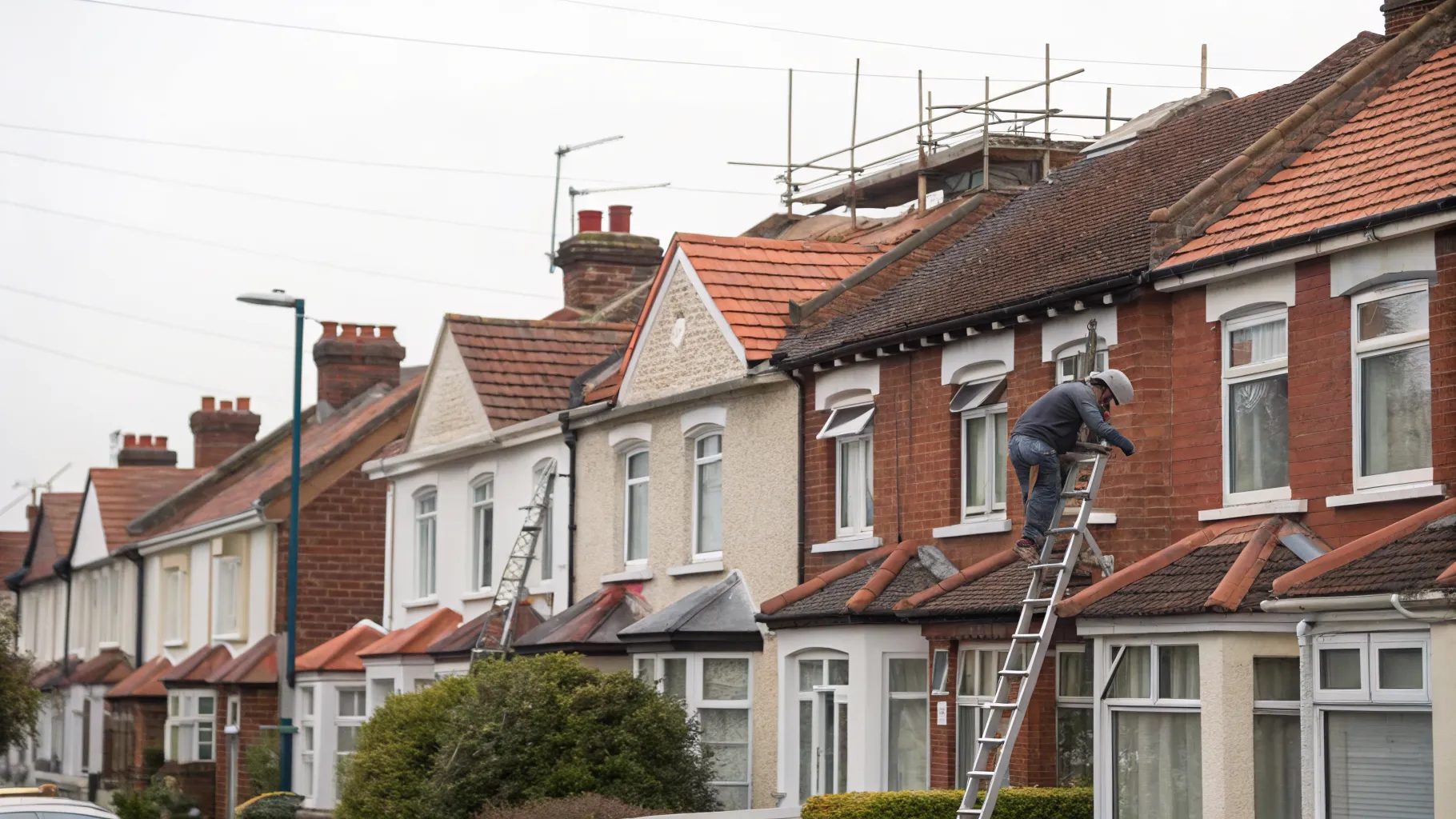
How Much Does a New Roof Cost in the UK in 2026?
What a new roof really costs in the UK in 2026, broken down by house size, material and the hidden extras, plus how to check you are being quoted fairly.
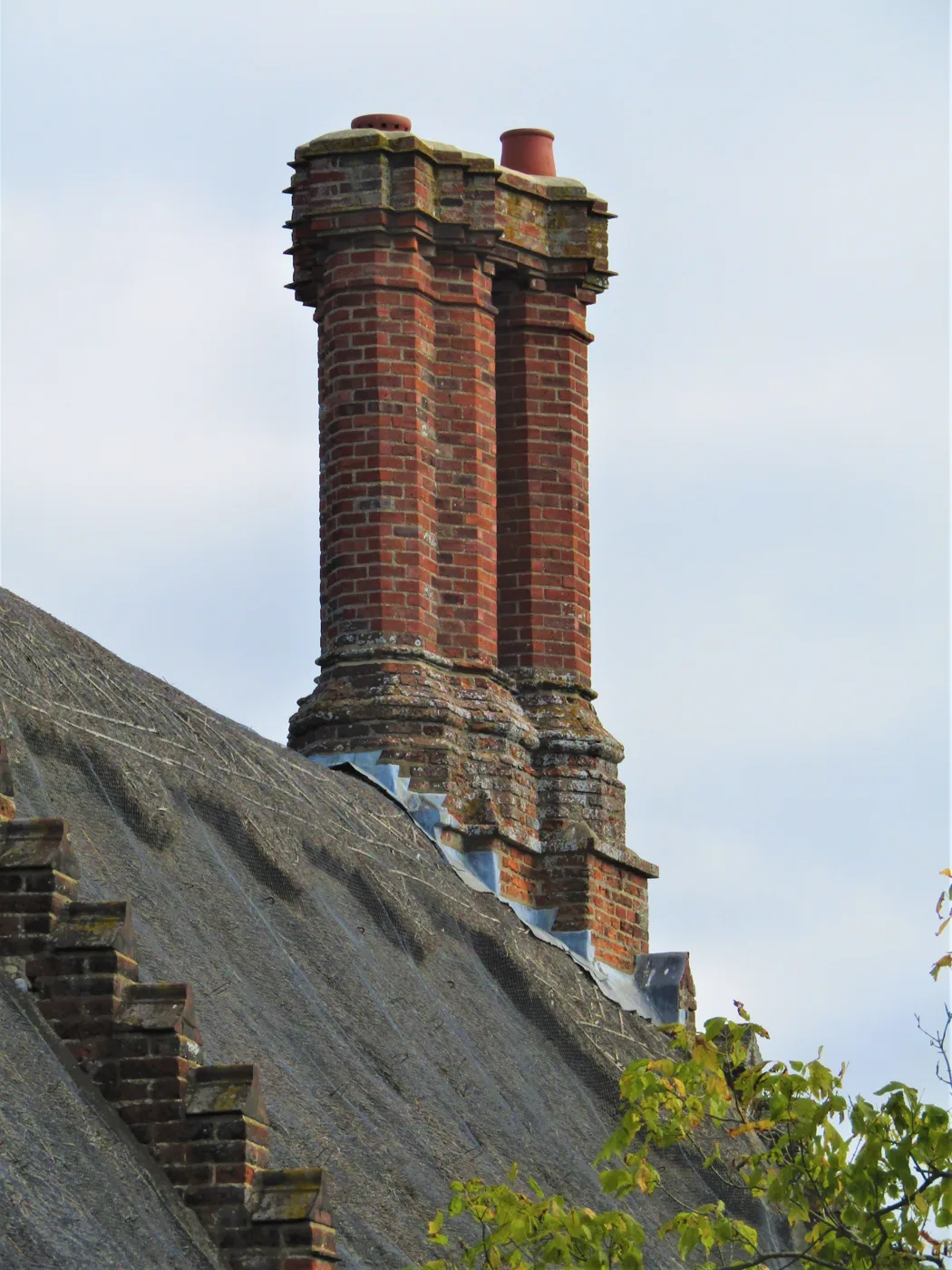
Chimney Repointing and Repair Cost UK (2026)
What chimney repointing cost is in the UK in 2026, why scaffolding drives the price, and how repointing compares to rebuilding, flashing and pot repairs.
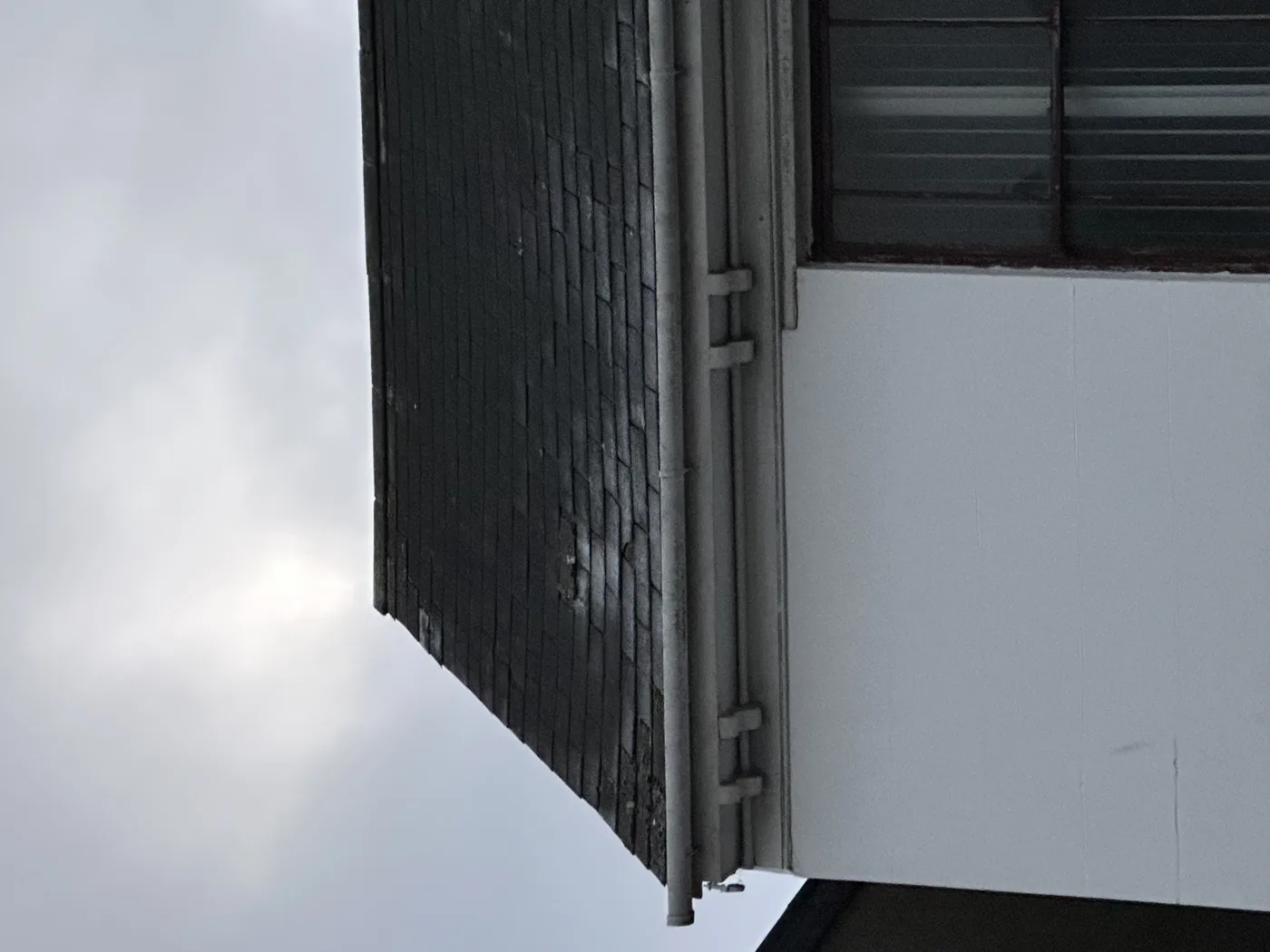
Roof Inspection and Survey Cost UK: What's Checked and the Price
Roof inspection cost UK 2026: what a ground, ladder or drone survey checks, typical prices for each, and when a written roof report is worth paying for.