Hip Tile Repair Cost: Re-Bed or Dry Hip, and the 2015 Rule
By the Professional Roofers team
Updated 2026 · Independent cost guide
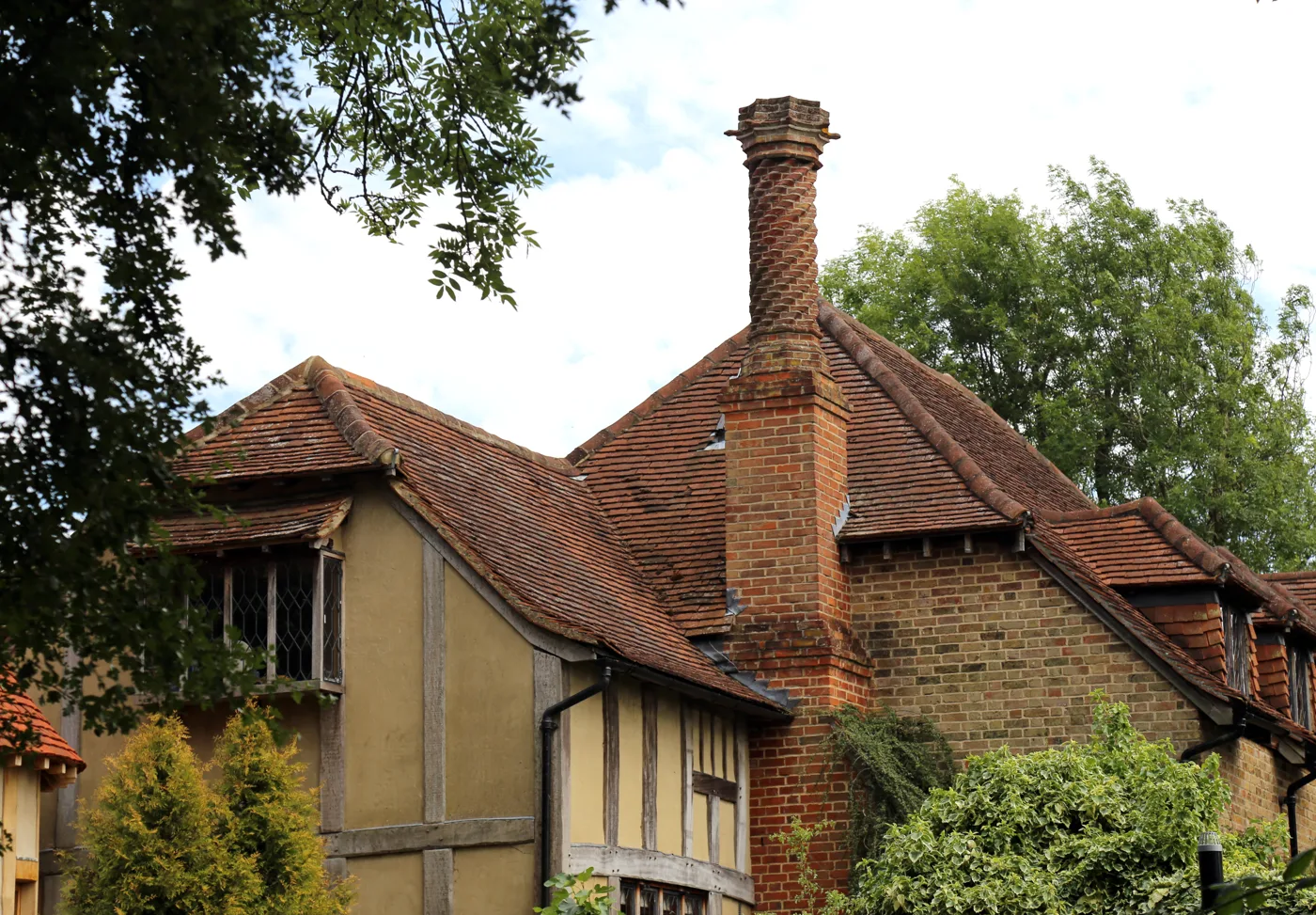
The hip tile repair cost on your quote is driven by three things more than by the tiles themselves: how many metres of hip there are, how the roofer gets up there, and whether the hip is re-bedded in mortar or converted to a dry hip system. Published price guides put hip or ridge re-pointing and re-bedding somewhere between about £250 and £1,200 before any scaffolding, which is too wide a range to be useful on its own. This page explains what sits behind that range so you can tell whether a quote is fair.
The short version: hips fail more often than ridges, a hipped roof has far more metres of them than most people realise, and since 2015 every hip tile has to be mechanically fixed, so a mortar-only repair is no longer a compliant job.
Why hip tiles come loose
A hip is the sloping external corner where two roof slopes meet, running from the ridge down to the eaves. The tiles that cap it sit on a slope, which is the root of most problems:
- Mortar washes downhill. On a ridge, rain runs off both sides. On a hip, it runs along the line of tiles, so the bedding erodes faster, especially at the bottom.
- The tiles want to slide. Gravity pulls every hip tile towards the eaves. Once the bottom tile moves, the ones above follow.
- The cut tiles underneath are small. Where the main roof tiles meet the hip they are cut at an angle, and the little triangular pieces are the hardest to fix securely. If they slip, water gets under the hip tiles.
- Thermal movement. Mortar is rigid and the roof timbers move with the seasons, so the bed cracks away from the tiles over time.
Hip irons: the small part that holds the run
At the foot of a traditional hip, a hip iron is screwed to the hip rafter. It is a short strip of galvanised steel with a scrolled end, and its only job is to stop the bottom hip tile, and everything above it, from sliding off the roof.
Hip irons rust and work loose, and on older roofs they are often missing altogether. If the bottom tile of your hip has slipped, the iron is the first thing to check. A replacement is cheap; the cost is the access to fit it. Any quote for re-bedding a hip on a traditional roof should say whether a new hip iron is included.
Mortar re-bed or dry hip?
| Mortar re-bed | Dry hip system | |
|---|---|---|
| How it works | Hip tiles lifted, old mortar cleared, tiles re-bedded on fresh mortar | Tiles clipped and screwed to a batten or hip rafter over a sealing roll or support trays, no mortar |
| BS 5534 compliance | Only if each hip tile is also mechanically fixed | Compliant when the kit meets BS 8612 and is fitted to the instructions |
| Weather on the day | Needs dry weather and mild temperatures to cure | Can be fitted in most conditions |
| Maintenance | Mortar eventually cracks and needs repointing | No mortar to weather |
| Best suited to | Heritage roofs, plain clay bonnet hips, conservation areas | Most concrete interlocking tile roofs |
The 2015 rule. Since 1 March 2015, BS 5534 has required every ridge and hip tile to be mechanically fixed. Mortar is now only a bedding material. A roofer can still re-bed in mortar, but each hip tile must also be screwed, nailed or clipped, so a “lift and re-bed in sand and cement” quote with no mention of fixings describes work that does not meet the current standard. Our guide to BS 5534 tile fixing sets out the full requirements.
The products. Since 2018 dry-fix hip kits have had to meet BS 8612, which tests fixing strength, weather-tightness and durability. The main UK manufacturers sell compliant systems, including the Marley Dry Hip System and Universal HipFast, Redland’s Dry Hip and Continuous Dry Hip, and the Klober Roll-Fix Universal Hip Seal Kit. Ask for the product name on the quote. A generic “dry hip” line could mean a tested kit or a cheap imitation.
Plain clay roofs are different. On plain-tile roofs, hips are often finished with bonnet hip tiles that are coursed in with the main tiling, or with purpose-made arris hip tiles. These are traditional details, and on a listed building or in a conservation area a dry system may not be acceptable. Expect a specialist and a mortar-and-fixings repair.
What sets the price
Length of hip. This is the factor most homeowners underestimate. On a house 8 metres deep with a 35° roof, each hip runs about 6.3 metres from ridge to eaves. A fully hipped roof has four of them, so around 25 metres of hip, against a ridge that may be only 2 or 3 metres long. Re-bedding “the ridge and hips” on a hipped bungalow or detached house is mostly a hip job.
Access. One hip on a bungalow can often be done from a roof ladder. A two-storey hip usually needs a tower or scaffold, and that can cost as much as the repair. Price guides put scaffolding at roughly £500 to £1,200 on top. If several jobs need the same access, do them on one visit.
Whole hip or a few tiles. Re-fixing the bottom two or three tiles and fitting a new hip iron is a much smaller job than lifting and re-bedding the full run. A roofer should tell you which one your hip needs, and why.
The cut tiles under the hip. If the small cut tiles along the hip have slipped or were never fixed, they need fixing too, which BS 5534 allows with clips, nails or a suitable adhesive on the smallest pieces. This adds labour, and it is the part most often skipped.
Matching tiles. Broken hip tiles on an older roof can be hard to match. Reclaimed tiles may be the only option, which adds cost and time.
Region. London and the South East commonly run 20 to 30 per cent above the rest of the country.
Reading a hip repair quote
A fair quote for hip work should state:
- Which hips, and whether it is the whole run or named tiles.
- The method: mortar re-bed with mechanical fixings, or a named dry hip system.
- The fixings: screws, clips or hip tile fixings for every tile.
- Hip iron: checked, replaced or not applicable.
- Cut tiles: whether the slipped cuts along the hip are re-fixed.
- Access: ladder, tower or scaffold, and who supplies it.
- Disposal of old mortar and broken tiles.
- Guarantee: how long, and what it covers.
Our page on how to read a roofing quote covers the other lines it should contain.
When to repair and when to wait
Get a hip looked at promptly if you see mortar in the gutter or on the ground below the hip, a gap under the hip tiles, a slipped bottom tile, or a damp patch in the loft along the line of the hip. These usually start small, and a slipped hip tile in a winter storm becomes a falling hazard as well as a leak.
If the ridge is failing too, do both in one visit. The costs for ridge work are in our ridge tile repair cost guide, and the case for converting both to a dry system is in dry ridge vs mortar ridge.
Frequently asked questions
How much does hip tile repair cost? Published UK price guides put hip or ridge re-pointing and re-bedding at about £250 to £1,200 before scaffolding, with scaffolding adding roughly £500 to £1,200. Where you land depends on the length of the hip, access, and whether it is re-bedded or converted to a dry hip system.
Is a dry hip better than mortar? For most concrete-tile roofs, yes: there is no mortar to crack and wash out, and a BS 8612 kit is tested for fixing strength and weather-tightness. On plain clay roofs, listed buildings and conservation areas, a mortar bed with mechanical fixings is often the right answer.
Can hip tiles just be bedded in mortar? Not on their own. Since 1 March 2015, BS 5534 has required every hip and ridge tile to be mechanically fixed. Mortar can still be used as bedding, but each tile must also be screwed, nailed or clipped.
What is a hip iron and do I need one? A galvanised steel strip with a scrolled end, screwed to the hip rafter at the eaves, which stops the bottom hip tile and the run above it from sliding off. Traditional mortar-bedded hips should have one; many dry hip systems use their own end piece instead.
Why do hip tiles fail before ridge tiles? Because they sit on a slope. Rain runs along the hip and erodes the mortar faster, gravity pulls the tiles towards the eaves, and the small cut tiles under the hip are hard to fix securely.
Do I need scaffolding to repair a hip? On a bungalow or single-storey hip, a roof ladder may be enough. On a two-storey house, a tower or scaffold is usually needed for safe access, and that can cost as much as the repair itself.
Sources
BS 5534 and BS 8612 as summarised by BSI and the roof tile manufacturers; Marley, Redland (BMI) and Klober product pages for dry hip systems; price ranges from BestBuilders and Fantastic Services 2026 roof repair cost guides. Hip lengths are our own calculation for an 8 metre deep house with a 35° roof pitch. Checked 12 October 2026.
Want costs like this each month?
Join the Roofline brief for current UK prices and quote-reading tips.
More from Professional Roofers
How Much Does a New Roof Cost in the UK in 2026?
What a new roof really costs in the UK in 2026, broken down by house size, material and the hidden extras, plus how to check you are being quoted fairly.
Chimney Repointing and Repair Cost UK (2026)
What chimney repointing cost is in the UK in 2026, why scaffolding drives the price, and how repointing compares to rebuilding, flashing and pot repairs.
Roof Inspection and Survey Cost UK: What's Checked and the Price
Roof inspection cost UK 2026: what a ground, ladder or drone survey checks, typical prices for each, and when a written roof report is worth paying for.