Shared Roof on a Terraced House: Who Pays for Repairs?
By the Professional Roofers team
Updated 2026 · Independent cost guide

Work out who pays for a shared roof on a terraced house and you have solved one of the most common and most miserable disputes in British roofing. The covering runs continuously over three or six houses, water is getting in somewhere near the boundary, and the neighbour will not contribute. Or a parapet between two houses is failing, and neither owner accepts it is theirs.
Almost everything written about this online points straight at the Party Wall etc. Act 1996, and a good deal of it is wrong. The Act helps in some of these situations and is completely irrelevant to others. This page sets out which is which, working from the Act itself and from the Building Act 1984, so you know what you can actually make happen.
This is general information about how the legislation works, not legal advice on your specific property. Your deeds or lease can change the answer, and for anything contested you want a solicitor or a party wall surveyor.
What you actually own on a terrace
Start here, because the answer to “who pays” follows from it.
In a normal freehold terrace, each house owns its own roof covering: the tiles or slates, the battens, the felt, the rafters above its own walls. The roof looks continuous from the street, but ownership is not. Your neighbour’s slipped slate is your neighbour’s slate, and no legislation makes it yours.
What is genuinely shared is the party wall between the houses, and on many terraces that wall continues up through the roof, either as a parapet with a flashing or cover flashing each side, or as a wall finishing under the roof covering. Section 20 of the Party Wall etc. Act 1996 defines a “party structure” as “a party wall and also a floor partition or other structure separating buildings or parts of buildings approached solely by separate staircases or separate entrances”. A party wall is one that “forms part of a building and stands on lands of different owners” or that “separates buildings belonging to different owners”.
Read that carefully and the practical rule falls out: the wall is a party structure, the roof covering over your half is not.
Two grey areas come up repeatedly. A shared valley gutter between two roof slopes usually sits over the boundary and serves both houses, and whether it is a party structure depends on how it is built and what the deeds say. A shared parapet with a common coping almost always is. If you are unsure, this is the point at which a party wall surveyor earns their fee, because getting it wrong sends you down the wrong route entirely.
When the Party Wall etc. Act 1996 does apply
If the work is to the party wall or parapet, the Act gives you rights you would not otherwise have. Section 2(2) lists them, and the ones that matter on a terrace are:
- 2(2)(b) to “make good, repair, or demolish and rebuild, a party structure or party fence wall in a case where such work is necessary on account of defect or want of repair”. This is the one that covers rebuilding a failing parapet.
- 2(2)(f) to cut into a party structure for any purpose, which includes inserting a damp proof course.
- 2(2)(j) to “cut into the wall of an adjoining owner’s building in order to insert a flashing or other weather-proofing of a wall”. This is the section that lets you chase a flashing into next door’s wall where your roof abuts it, which is otherwise trespass. Our lead flashing and leadwork guide covers the detailing.
- 2(2)(n) to expose a party wall that was previously enclosed, subject to providing adequate weathering. This is the one that bites when a neighbour demolishes an outrigger and leaves your flank wall bare.
Crucially, these are rights to do work, exercisable by serving notice. They are not powers to make a neighbour do work.
The notice procedure, and the timetable people get wrong
If you are exercising a section 2 right, you serve a party structure notice under section 3. The Act is specific:
- The notice states your name and address, the nature and particulars of the proposed work, and the date the work will begin.
- It must be served at least two months before the work starts.
- It ceases to have effect if the work has not begun within twelve months of service, or if it is not prosecuted with due diligence.
Then section 5 does the thing that catches everyone out. If the adjoining owner does not serve a notice consenting within fourteen days, they are “deemed to have dissented” and a dispute is deemed to have arisen. Silence is not agreement. A neighbour who ignores your letter has, in law, put you into a formal dispute, and the Act then routes you to section 10 and the appointment of surveyors, either one agreed surveyor or one each plus a third.
Two months plus fourteen days is why you cannot serve a notice in September and expect scaffolding in October. Build it into the programme. There is one exception in section 3(3): you do not need to serve a notice if you have the written consent of the adjoining owners and occupiers, or where you are complying with a notice served under statutory provisions on dangerous or neglected structures.
Who pays under the Act
Section 11 sets the default: “Except as provided under this section expenses of work under this Act shall be defrayed by the building owner.” In plain terms, if you want the work, you pay for it.
The exception is the one that matters on a terrace. Where the work is repair of a party structure needed because of a defect or want of repair, the expenses are apportioned between the owners having regard to two things: the use which each owner makes or may make of the structure, and responsibility for the defect or want of repair.
That is a genuine cost-sharing mechanism, and on a failing shared parapet it is normally the route to a 50/50 split, or to a larger share for whoever caused the defect. It is decided by the surveyors under section 10, not by argument across the fence. Section 11 also lets an adjoining owner who suffers damage require the cost of making good to be determined and paid to them in cash rather than having the building owner carry out the repair, and section 11(11) makes an adjoining owner contribute their share later if they subsequently make use of work you originally paid for in full.
What the Act will not do for you
This is the part that gets left out, and it is usually the answer to the actual question.
It cannot make your neighbour repair their own roof. If their slates are slipping, their gutter is blocked and water is tracking into your loft over the party wall, the Party Wall etc. Act gives you nothing. It is a framework for a building owner carrying out work, not a duty of repair.
It cannot force a contribution to work that is not on a party structure. Re-roofing your own half of a continuous terrace roof is your cost, however sensible it would be to do the whole terrace at once. The only way to share it is agreement.
It does not override your deeds or lease. Many terraces, and virtually all flats, carry express repairing covenants that already say who does what. Those come first.
So what do you do instead?
If the property is leasehold, or a converted house in flats. The roof is almost always retained by the freeholder, who is obliged to repair it under the lease and recovers the cost through the service charge. The route is a written demand to the freeholder or managing agent under the lease, not a party wall notice to the neighbour. Where a lease is short and residential, the landlord’s statutory repairing obligation may apply on top of the lease terms.
If the neighbour’s roof is actually dangerous. The Building Act 1984 gives the council real powers. Under section 77, where a building or part of it “is in such a condition, or is used to carry such loads, as to be dangerous”, the local authority can apply to the court, which may order the owner to carry out works or demolish. If the owner does not comply, the authority can do the work and recover its reasonable expenses from them. Under section 79, where a building is “seriously detrimental to the amenities of the neighbourhood” through being ruinous or dilapidated, the authority can serve notice requiring repair, restoration or demolition. Reporting a genuinely dangerous roof to the council’s building control team is free and is often far faster than a civil claim.
If their disrepair is damaging your house. That is a private civil matter in nuisance or negligence, and it starts with photographs, dates, a written letter, and a roofer’s report. Our roof inspection and survey guide explains what a proper report should contain. It is also the moment to read your policy: see home insurance and roof cover.
The order to work through
- Establish what is failing and where the boundary is. Get a roofer up there and get it photographed. Half of these disputes evaporate when it turns out the leak is a cracked verge or a failed flashing on one side, not a shared anything. See roof verge repair and flashing repair.
- Read the deeds, or the lease. Look for repairing covenants, rights of support, and anything about shared gutters or parapets.
- Decide which regime you are in. Party structure, your own roof, or a landlord’s obligation. Getting this right saves months.
- Write to the neighbour, in writing, once, politely, with the roofer’s report attached. Most neighbours refuse because they think you are inventing the problem or gold-plating the fix. Evidence changes that more often than a solicitor’s letter does.
- If it is a party structure, serve the notice properly and expect the two months plus fourteen days. Consider proposing a single agreed surveyor, which is cheaper for both of you than one each.
- If it is dangerous, call building control. Do not wait to be polite about a parapet that could come down.
- Quote the whole terrace anyway. Even without a legal duty, a shared scaffold and a single visit is materially cheaper per house than two separate jobs, and that argument persuades neighbours when the law does not. Our guide to roof replacement costs for a terrace has the comparison, and how to read a roofing quote will help you present it.
If you need someone to look at a shared parapet or valley before it becomes a legal question, our how to find a good roofer and questions to ask a roofer pages set out what to ask for.
Frequently asked questions
Is the roof of a terraced house a party wall? No. The party wall is the wall between the houses, and it often continues up through the roof as a parapet or an upstand. The roof covering above your own house is yours alone. That distinction decides whether the Party Wall etc. Act 1996 applies at all.
Can I force my neighbour to pay towards a shared roof repair? Only where the work is to a party structure, such as a shared parapet, and is needed because of a defect or want of repair. Section 11 of the Act then apportions the cost by the use each owner makes of the structure and by responsibility for the defect. For your own roof covering, there is no mechanism to compel a contribution.
How much notice do I have to give under the Party Wall etc. Act? A party structure notice must be served at least two months before work begins, and it lapses if work has not started within twelve months. If the neighbour does not consent in writing within fourteen days, a dispute is deemed to have arisen and surveyors are appointed under section 10.
What if my neighbour ignores the party wall notice? Silence counts as dissent, not consent. Under section 5, failing to consent within fourteen days puts you into a deemed dispute, and the matter goes to surveyors. You can appoint a surveyor on their behalf if they will not appoint one.
My neighbour’s roof is leaking into my house. What can I do? The Party Wall etc. Act does not help, because it does not impose a duty to repair. Document everything with dates and photographs, get a roofer’s report, and write to them formally. If the roof is dangerous or seriously dilapidated, report it to the council under sections 77 and 79 of the Building Act 1984, which allow the authority to require works and recover its costs from the owner.
Who repairs the roof on a house converted into flats? Normally the freeholder, under the terms of the leases, with the cost recovered through the service charge. Individual leaseholders usually have no right to instruct roof works themselves, so the correct step is a written request to the freeholder or managing agent rather than a party wall notice.
Sources
Want costs like this each month?
Join the Roofline brief for current UK prices and quote-reading tips.
More from Professional Roofers
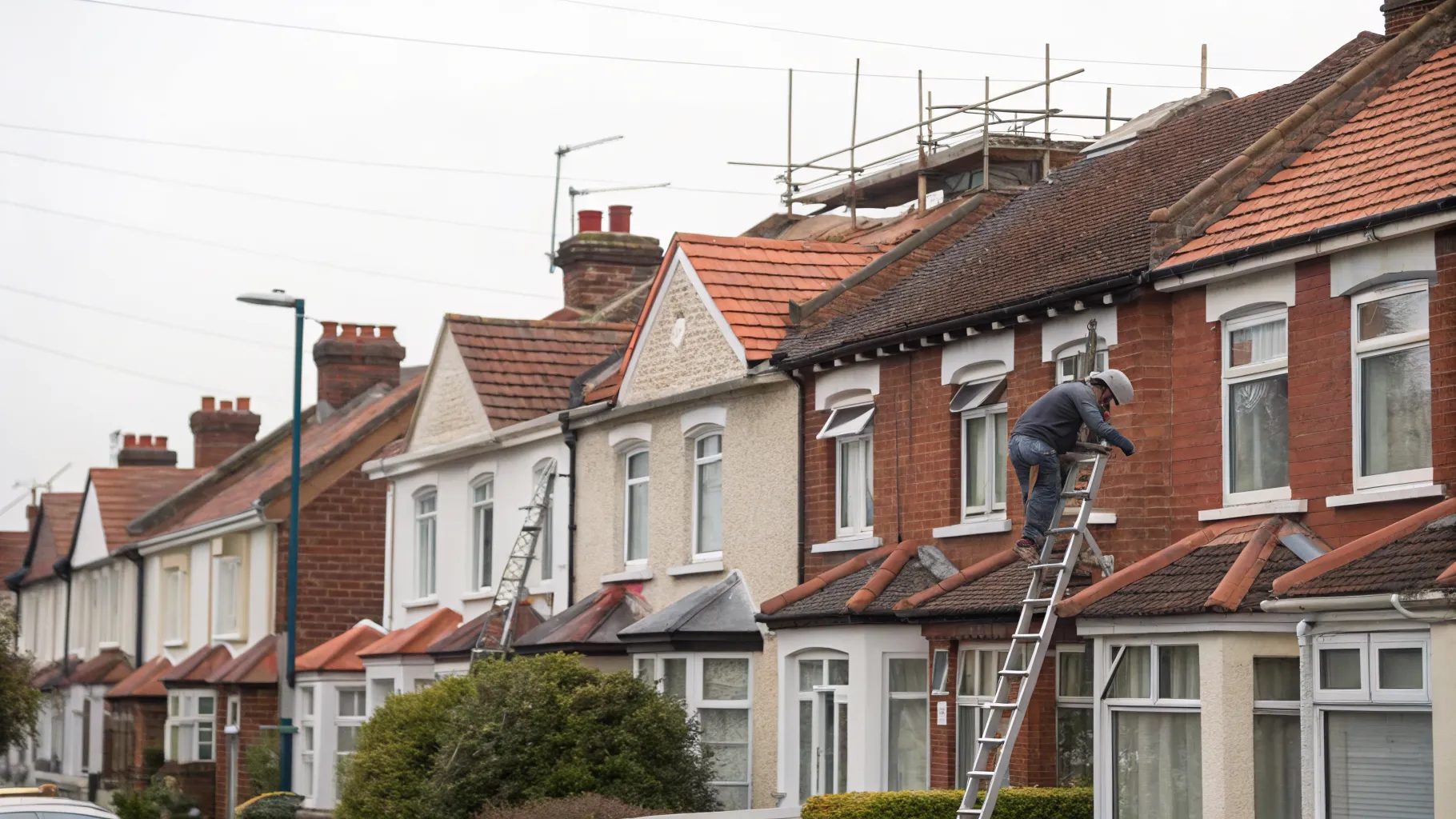
How Much Does a New Roof Cost in the UK in 2026?
What a new roof really costs in the UK in 2026, broken down by house size, material and the hidden extras, plus how to check you are being quoted fairly.
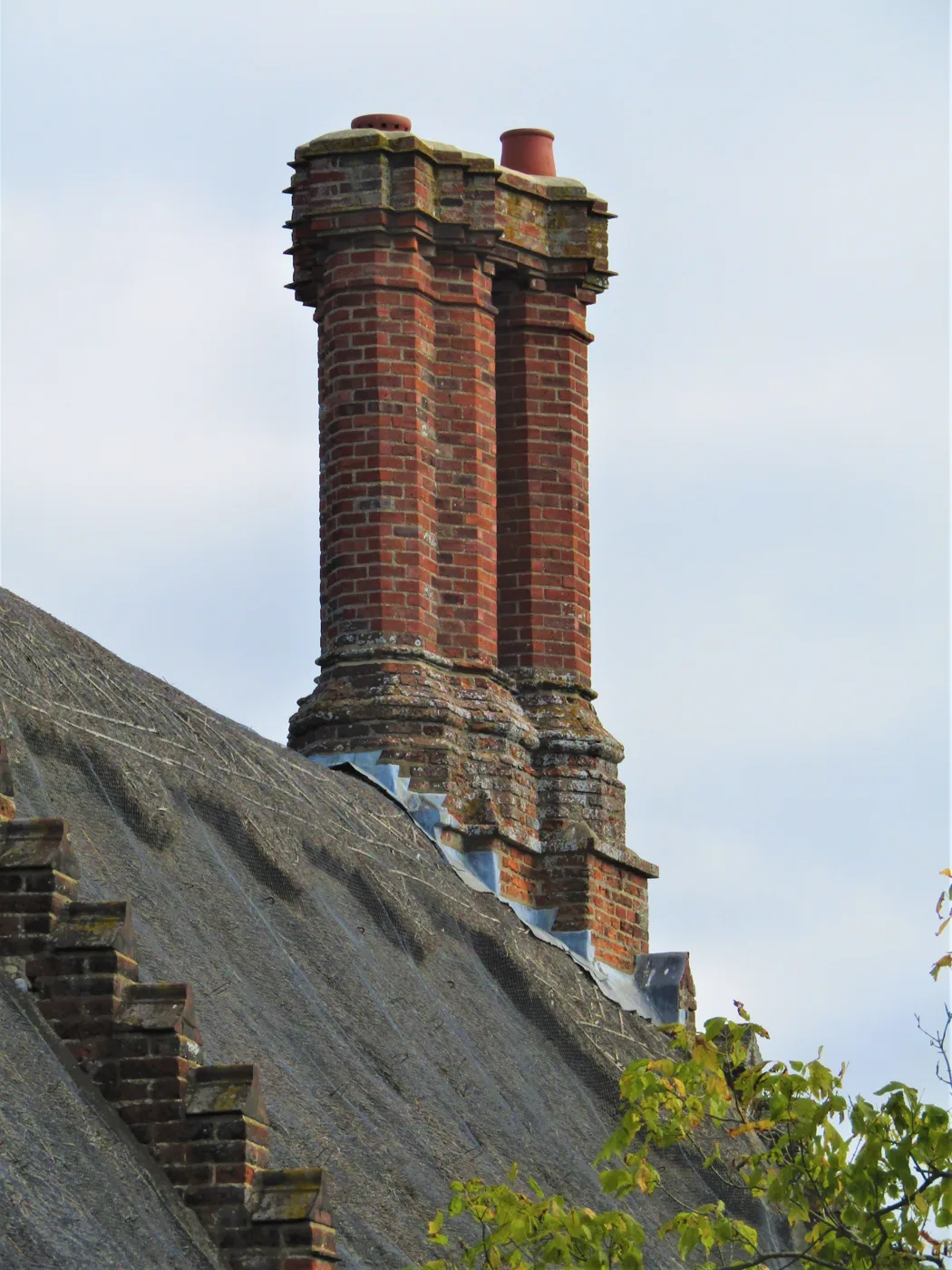
Chimney Repointing and Repair Cost UK (2026)
What chimney repointing cost is in the UK in 2026, why scaffolding drives the price, and how repointing compares to rebuilding, flashing and pot repairs.
Roof Inspection and Survey Cost UK: What's Checked and the Price
Roof inspection cost UK 2026: what a ground, ladder or drone survey checks, typical prices for each, and when a written roof report is worth paying for.