How to Find a Good Roofer: 9 Checks Before You Pay a Penny
By the Professional Roofers team
Updated 2026 · Independent cost guide
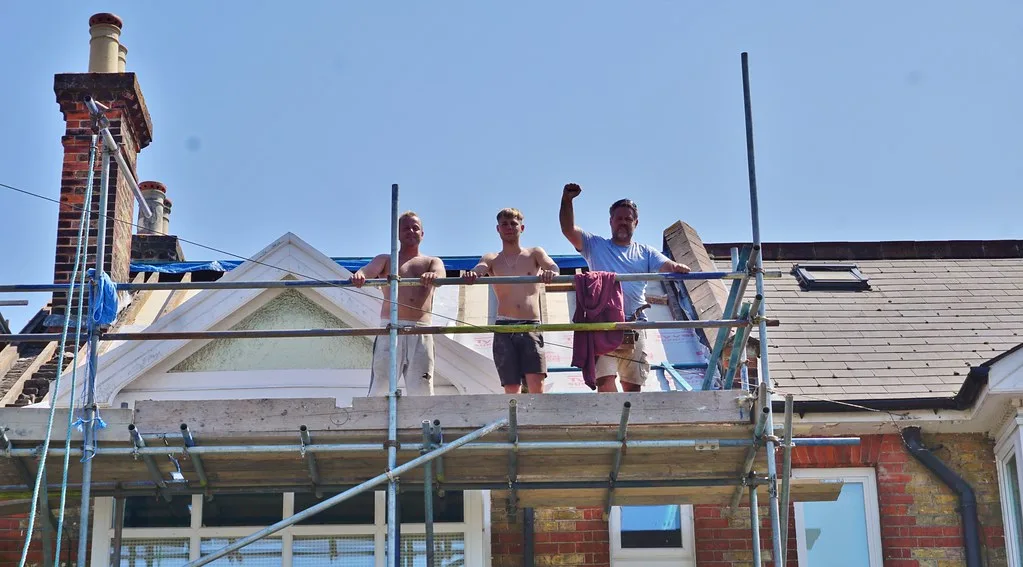
Everyone knows how to find a good roofer in theory: get three quotes and check the reviews. In practice that filters out almost nobody, because reviews are easy to buy and three quotes from three unvetted firms is just three chances to pick badly. The checks that actually sort a competent roofing contractor from a chancer are duller and more specific, and most of them are things you can verify in an afternoon before anyone climbs a ladder.
The nine below are ordered by how much they protect you. The first three are the ones that decide whether you end up with a compliant, sellable roof or a problem you discover at conveyancing.
1. Work out whether your job is notifiable before you get quotes
This determines almost everything else, so establish it first.
Replacing or refurbishing more than 25% of a roof’s area counts as a material alteration under the Building Regulations, which makes the work notifiable. Under that threshold, generally not. It also becomes notifiable if you change the roof covering to a different material, because that alters the weight the structure carries and the thermal performance.
The consequence people find out about too late: if more than 25% of your roof was replaced without a Building Regulations Compliance Certificate, you can hit a wall when you try to sell. Solicitors ask for it. Our page on planning permission and building regs for a new roof covers the thresholds in detail.
So before you speak to anyone, know roughly what proportion of the roof is coming off. Then ask every roofer how they intend to certify the work. A good one will answer immediately.
2. Ask whether they can self-certify, and check the register
There are two routes to compliance. Either you make a building control application to the council and pay their fee and wait for inspections, or the roofer is registered with a government-licensed competent person scheme and self-certifies.
For roofing that scheme is the NFRC Competent Person Scheme, previously branded CompetentRoofer, run by the National Federation of Roofing Contractors under government licence for England and Wales. A registered contractor notifies the scheme, the scheme issues your compliance certificate, and you skip the separate building control application entirely.
Two things to do here. Ask for the registration number, and then check it on the scheme’s own register rather than believing a logo on a van or a website. Logos are a graphics file. Membership is a database entry, and the second is the one that means something.
This single check does more work than any other. Scheme registration involves an assessment of the business, its work and its paperwork, so it filters out a large proportion of the firms you would not want on your roof anyway.
3. Verify insurance, in writing, with dates
Ask for the public liability insurance certificate as a document, not a claim. Read three things on it: the company name, whether it matches the company quoting you, and the expiry date.
A roof job puts people at height above your property and often above a neighbour’s. If something goes through a conservatory, or worse, an uninsured trader means the claim lands on you. Ask about employers’ liability too if more than one person will be on site.
4. Check the company actually exists as it claims
Take the company name and number off the quote and look it up on Companies House. It is free and takes two minutes. You are looking for whether the company exists, how long it has traded, whether it is in liquidation, and whether the name on the quote is the same legal entity as the one being paid.
A frequent pattern with poor contractors is a chain of dissolved companies at the same address. A company incorporated three months ago is not automatically a problem, but it changes what a ten-year guarantee is actually worth.
5. Establish what the guarantee is, and who honours it
“Twenty-five year guarantee” from a firm with two years of trading history is worth roughly nothing, because the guarantee dies with the company. Ask specifically:
- Is it an insurance-backed guarantee, underwritten by a third party and honoured even if the firm ceases trading, or a promise from the company?
- Does it cover workmanship, materials, or both? These are usually different lengths, and the manufacturer’s material warranty often depends on installation by an approved contractor.
- Do you get the paperwork on completion, and from whom?
6. Get a written quotation, not a price
A verbal figure or a one-line text is not a quotation and gives you nothing to argue from later. A proper quote specifies:
- The work area and what is being stripped
- Materials by manufacturer and product name, not “tiles”
- Whether the underlay, battens, ridge, flashings and guttering are included or extra
- Scaffolding: who supplies it, who pays for it, and how long it is hired for, which is a common source of extra cost. See our scaffolding cost guide
- Waste removal and skip permits
- How building regulations compliance will be certified
- Payment schedule and VAT position
Then be alert to the two directions a quote can be wrong. Substantially cheapest is usually cheapest for a reason: thinner battens, reused ridge tiles, felt where a breathable membrane should be, no allowance for the timber that turns out to be rotten. Substantially dearest is not automatically better either. Our new roof cost guide gives you the range to judge against.
7. Insist on a proper inspection before the quote
A roofer who quotes from the pavement, or from a photograph, is guessing. A serious one goes up, or sends a drone, and looks at the battens, the underlay condition, the timbers, the flashings and the state of the chimney.
The reason this matters is variations. The most common mid-job price increase is “the timbers are rotten”, and while that is sometimes genuinely a surprise, it is far more often something a proper inspection would have flagged. Ask what they found and what they expect might be underneath. A good answer includes uncertainty, honestly stated, with a price attached to the likely scenario.
8. Know your 14-day cancellation right, and use the leverage it gives you
This is the check almost nobody knows about, and it is genuinely powerful.
If you agree a contract for roofing work at your home, rather than at the trader’s premises, it is an off-premises contract under the Consumer Contracts (Information, Cancellation and Additional Charges) Regulations 2013. You get a 14-day cancellation period, and the trader must give you written notice of that right, on paper or another durable medium, before you are bound.
The part that matters: if the trader does not give you that cancellation information, regulation 31 extends your cancellation period by up to 12 months. If they provide it late but within that window, you get 14 days from when you receive it.
Work should not start during the cancellation period unless you have expressly asked for it to. Any trader pressing you to sign and start on the same visit is either ignorant of this or relying on you being. Either way it tells you something.
9. Ask for recent local work, and go and look at it
Reviews are gameable. A street address is not. Ask for two or three jobs done in the last year within a few miles, and drive past. You are looking at ridge lines, the neatness of the verges, whether the lead work looks like lead work or like a folded sheet, and whether the mortar is cracked already.
If you can, speak to the householder. The question that gets the honest answer is not “were you happy” but “did the price change, and did they come back when you called”.
The shortlist, in order
- Establish whether the job is over the 25% threshold.
- Ask each roofer how they will certify compliance.
- Check scheme registration on the register, not the logo.
- Get the insurance certificate and check the dates.
- Look the company up on Companies House.
- Get three written quotes specifying materials and scaffolding.
- Confirm what the guarantee is and who backs it.
- Check they gave you written cancellation rights.
- Go and look at recent local work.
If you are preparing for the conversation itself, our list of questions to ask before a roof replacement and the step-by-step of what actually happens on site will make you a considerably harder customer to fob off. And if this is storm-related and urgent, storm damage roof repair covers the insurance sequence, because the order you do things in there affects what you can claim.
Frequently asked questions
How do I check if a roofer is legitimate? Get the company name and number from the quote and look it up on Companies House, ask for the public liability insurance certificate and check the name and expiry date on it, and verify any trade scheme membership on that scheme’s own register rather than trusting a logo. Those three checks take under half an hour and filter out most problem traders.
Do I need building regulations approval for a new roof? If you are replacing or refurbishing more than 25% of the roof area, or changing to a different covering material, yes, the work is notifiable. Either the council’s building control signs it off or a roofer registered with the NFRC Competent Person Scheme self-certifies it. You need the compliance certificate, because buyers’ solicitors ask for it when you sell.
What is CompetentRoofer? It is the government-licensed competent person scheme for roofing in England and Wales, now branded the NFRC Competent Person Scheme and run by the National Federation of Roofing Contractors. Registered contractors can self-certify their refurbishment work as compliant with the Building Regulations, which saves you a separate building control application and its fee.
Can I cancel a roofing contract after signing? If you agreed it at your home, you have 14 days to cancel under the Consumer Contracts Regulations 2013, and the trader must give you written notice of that right before you are bound. If they fail to provide that notice, your cancellation period can extend by up to 12 months.
Should I always take the cheapest roofing quote? No, and a quote well below the others is usually cheap for identifiable reasons: reused ridge tiles, thinner battens, felt instead of a breathable membrane, or no allowance for replacing rotten timber. Compare what each quote specifies rather than the totals, and make sure scaffolding and waste removal are treated the same way in each.
How many quotes should I get for roofing work? Three, but only from firms that have already passed the scheme, insurance and Companies House checks. Three quotes from unvetted contractors tells you about price and nothing about competence, which is the thing that actually determines whether the roof lasts.
Want costs like this each month?
Join the Roofline brief for current UK prices and quote-reading tips.
More from Professional Roofers
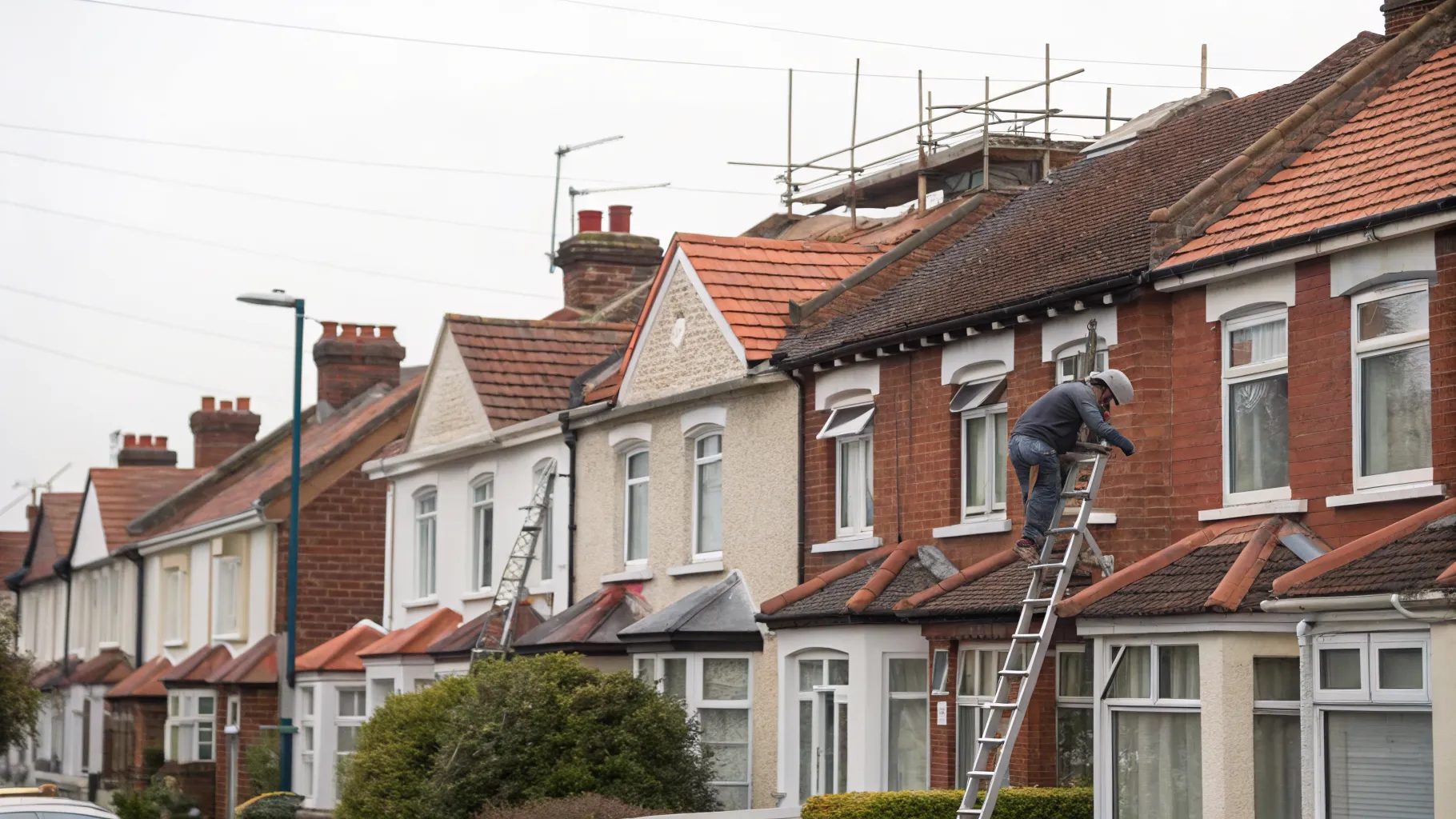
How Much Does a New Roof Cost in the UK in 2026?
What a new roof really costs in the UK in 2026, broken down by house size, material and the hidden extras, plus how to check you are being quoted fairly.
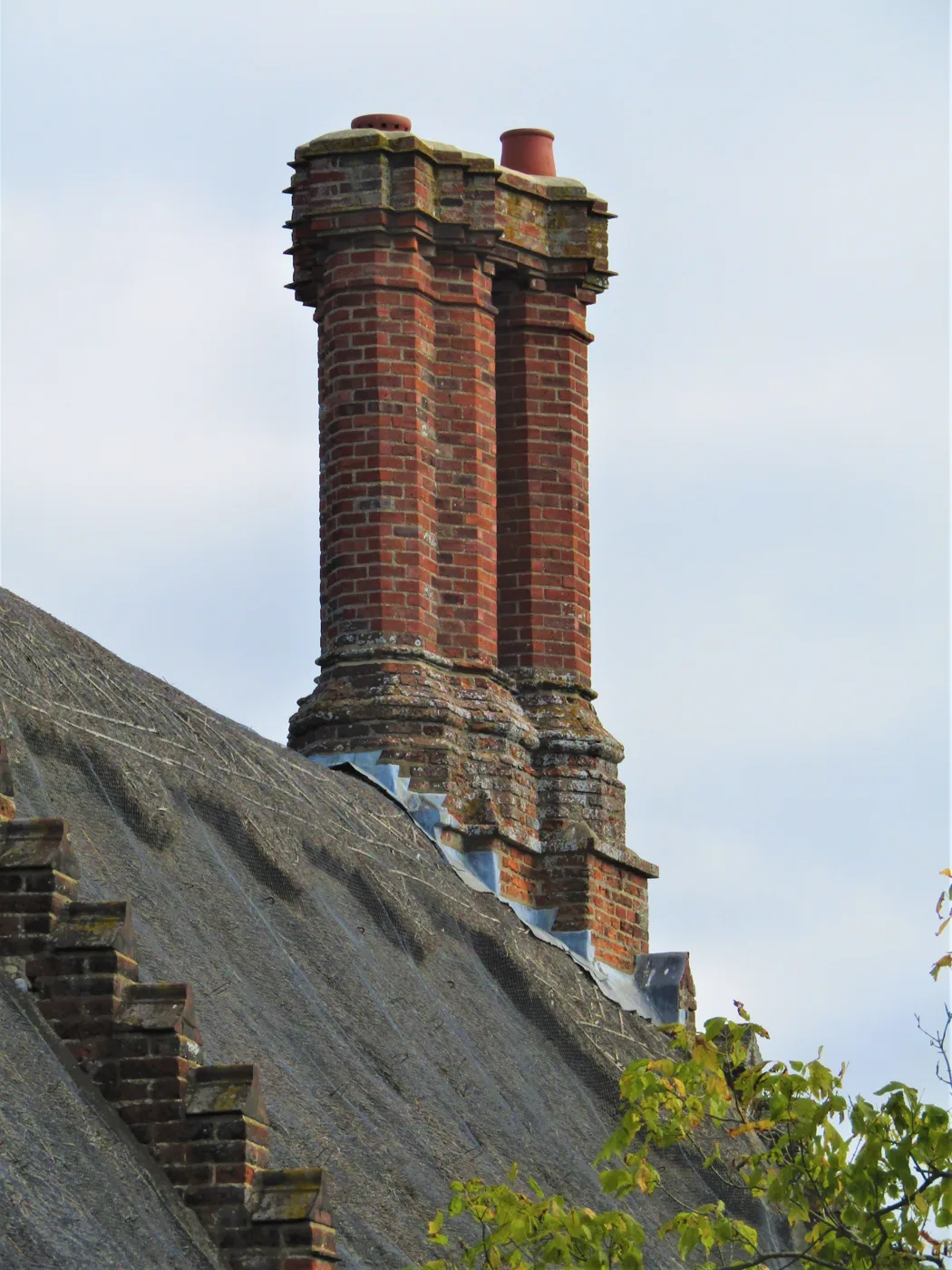
Chimney Repointing and Repair Cost UK (2026)
What chimney repointing cost is in the UK in 2026, why scaffolding drives the price, and how repointing compares to rebuilding, flashing and pot repairs.
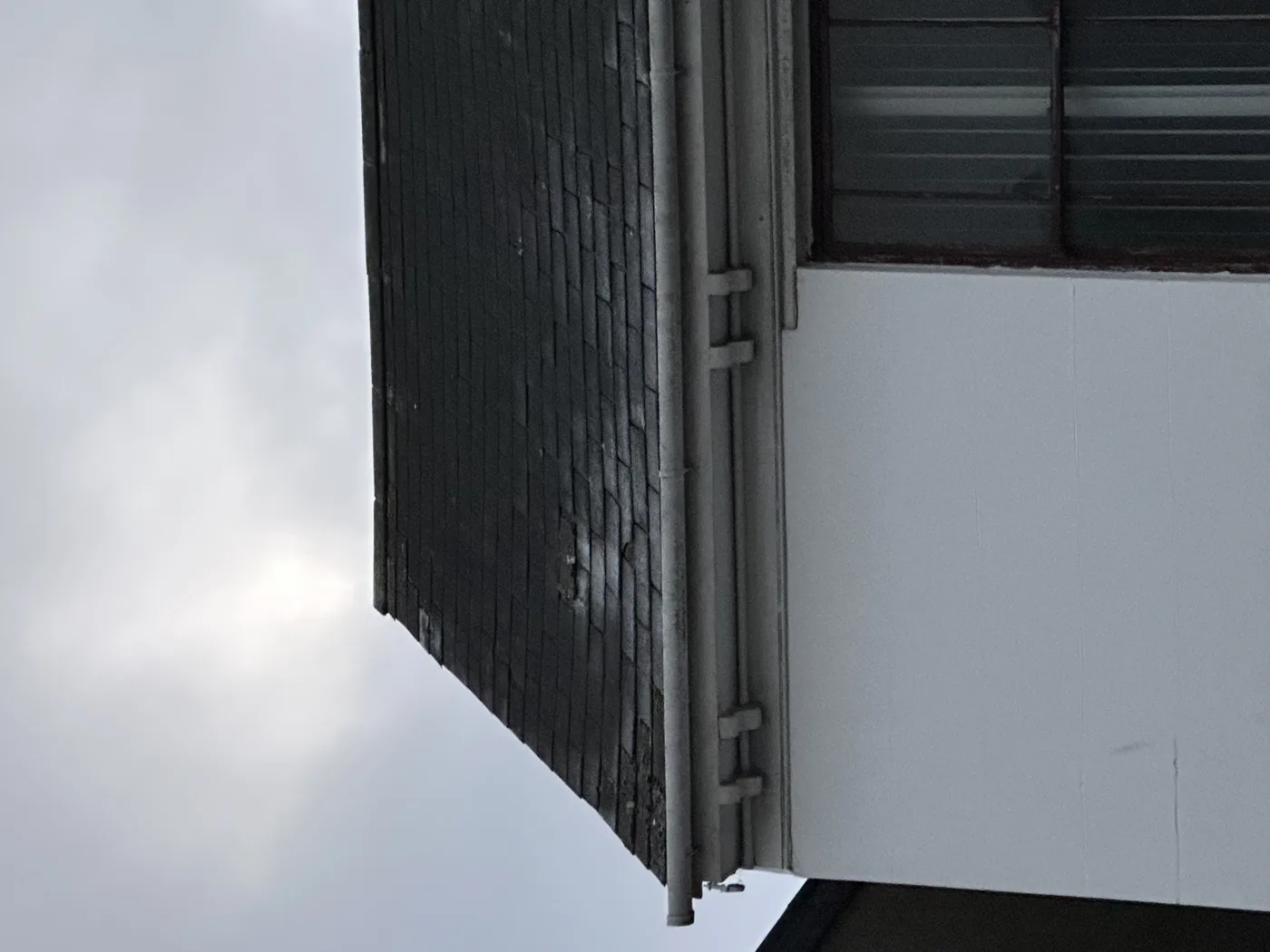
Roof Inspection and Survey Cost UK: What's Checked and the Price
Roof inspection cost UK 2026: what a ground, ladder or drone survey checks, typical prices for each, and when a written roof report is worth paying for.