Box Gutter Leaking? The 6 Faults and Which Fix Each Needs
By the Professional Roofers team
Updated 2026 · Independent cost guide
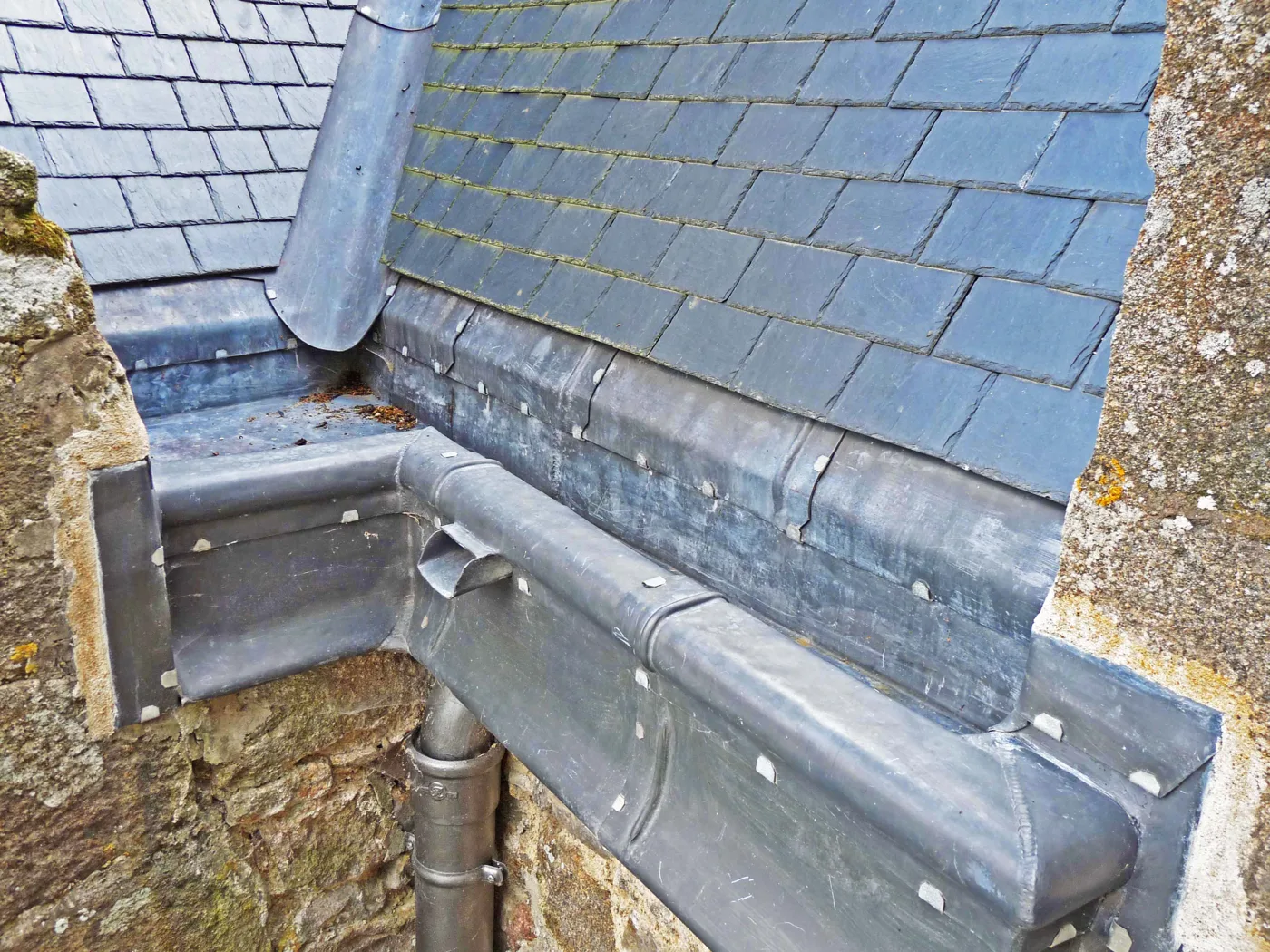
A box gutter leaking into the house is one of the most common roof calls on Victorian terraces, and one of the most misdiagnosed. Box gutters (also called parapet gutters or valley gutters, depending on where they sit) run inside the line of the walls rather than hanging off the eaves. When a hanging gutter overflows, water spills down the outside of the house. When a box gutter overflows or splits, the water goes straight into the ceiling below. That is why a small fault shows up as a brown stain on a bedroom ceiling, and why it pays to find the actual cause before anyone quotes for a new gutter.
Nearly every leaking box gutter comes down to one of six faults. Some take an hour to put right; others mean relining the gutter. This page explains how to tell them apart.
Where box gutters are, and why they fail
You will find a box gutter in three places on a typical British house:
- Behind a parapet wall at the front of a Victorian or Edwardian terrace, where the roof slope runs down to a gutter hidden behind the brickwork.
- Between two roof slopes in a “butterfly” or “London” roof, where the valley in the middle is a flat-bottomed gutter running front to back.
- Along a party wall between two terraced houses, often shared by both. Our page on terraced roofs and the party wall covers who pays when it is shared.
Most were originally lined in lead, laid on timber boards in short lengths with steps between them. The design works for a century if it is built and maintained properly. It has two built-in weaknesses: water has only one way out, through an outlet at the low end, and the lining sits directly over the inside of the house.
The six faults that cause almost every leak
| Fault | What you see | Typical fix |
|---|---|---|
| Blocked outlet or downpipe | Leak only in heavy rain; water standing in the gutter | Clear it; fit a leaf guard |
| Split or cracked lead | Leak in any rain, often at the same spot | Patch short term; replace the bay |
| Failed drip or joint | Leak just below a step in the gutter | Re-dress or remake the drip |
| No fall, ponding water | Puddles that stay after rain; leak at joints | Re-fall the boards and reline |
| Condensation under the lead | Damp and staining with no rain at all | Ventilate the void; reline |
| No overflow | Water over the top into the roof when the outlet blocks | Add an overflow |
1. A blocked outlet or downpipe
This is the most common cause and the cheapest to fix. Leaves, moss, a dead pigeon or a tennis ball in the outlet, and the gutter fills like a bath. Once the water rises above the drips and the upstand at the sides, it runs into the roof. The giveaway is a leak that appears only in heavy or prolonged rain, and a line of silt or a tide mark inside the gutter after it has drained.
Clear the outlet and the downpipe all the way down, not just the top, and fit a wire balloon or leaf guard over the outlet. Then put the gutter on a cleaning schedule. Our gutter cleaning cost page covers what that involves. If the leak stops, you have your answer.
2. Split or cracked lead
Lead expands in the sun and contracts at night. If a single piece is too long, or it is nailed down too tightly, that movement eventually tears it, usually along a crease or near a fixing. Old lead also thins over decades where water runs across it, and foot traffic from window cleaners and aerial fitters dents it.
A leak in any rain, always in the same place, points to a split. Look along the gutter bed for hairline cracks, especially at folds, corners and around the outlet. A specialist repair tape or a lead-welded patch will hold for a while, but a split usually means the bay was too long or the lead too thin in the first place, and it will crack again beside the repair. The lasting fix is to replace that bay in properly sized pieces. Our page on lead code numbers explains why gutters need a heavier code than flashings.
3. A failed drip
Because lead cannot be laid in one long length, a lead gutter is built in a series of short bays, each one stepping down onto the next at a “drip”. The upper bay laps over the step onto the lower one, so water runs over the joint rather than through it. The Lead Sheet Training Academy describes the purpose of drips plainly: they break up the lengths of lead so thermal expansion stays within limits for each piece.
Drips fail when the step is too shallow, when the lap has been hammered flat or lifted, or when someone has sealed over the joint with mastic (which traps water rather than shedding it). The leak appears just below the step. A roofer can usually re-dress or remake a drip without relining the whole gutter.
Where there is no height for proper drips, some gutters use neoprene expansion joints instead. The Lead Sheet Training Academy’s advice is to use those only as a last resort, and to install them so they can be renewed later, because the neoprene perishes long before the lead does.
4. No fall, so water ponds
The Lead Sheet Training Academy, in its top ten dos and don’ts of rolled lead sheet, says all lead sheet must be laid on a fall of at least 1:80, just over one degree, because most lead joints are only weathertight, not waterproof under standing water. When the boards under the gutter sag, rot, or were never laid to a fall, puddles sit against the joints and work through.
If water is still standing in the gutter a day after the rain stops, this is your fault. It cannot be fixed from the surface. The lining has to come up, the boards replaced or packed to a proper fall, and a new lining laid.
5. Condensation under the lead
This one catches people out because the “leak” happens in dry weather. Warm, moist air from the house rises into the void under the gutter, meets the cold underside of the lead, and condenses. Over years that moisture corrodes the lead from below, leaving a white powdery residue on the underside, and it wets the timber and the ceiling.
The Lead Sheet Training Academy’s guidance is that lead should be laid over a through-ventilated deck with at least a 50mm ventilated void under it, and that breather membrane should never be used as an underlay beneath lead. Gutters relined in a hurry, or boxed in during a loft conversion, often lose that ventilation. The fix is to restore the airflow, which usually means taking up the lining.
6. No overflow
An eaves gutter that blocks simply spills over the outside edge. A box gutter has nowhere to go but inwards. Modern drainage design (BS EN 12056-3) calls for gutters that sit within the building to have an emergency overflow, so a blockage sends water out through the wall rather than into the room below. Many older terraces have no overflow at all.
Adding one, typically a lead-lined weir or a pipe through the parapet set just below the top of the gutter’s upstand, will not stop the outlet blocking, but it turns a ceiling collapse into a visible stream of water down the front of the house that tells you to clear it.
How to narrow it down yourself
You do not need to go on the roof to collect useful clues. Note:
- When it leaks. Only in heavy rain points to a blockage or an overflow problem. In any rain points to a split or failed joint. In dry, cold weather points to condensation.
- Where the stain is, measured from the front wall and the party wall. A roofer can match that against the outlet and the drips.
- Whether the gutter holds water. From an upstairs window or a neighbour’s, look for standing water a day after rain.
Do not walk along a parapet gutter yourself. The lining is easy to puncture, and parapets are a fall hazard. A roofer with a camera on a pole can often see the gutter bed from a ladder.
Repair or reline?
Repair makes sense when the fault is local: a blocked outlet, one split bay, one failed drip. These are hours of work, not days.
Relining makes sense when the gutter has no fall, the lead is thin and cracked in several places, or condensation has rotted the boards. At that point you choose the lining:
- Lead, done properly. The traditional answer and the right one for listed buildings and conservation areas. Expect proper bay lengths, drips, a ventilated deck and the right code. Done to the Lead Sheet Training Academy’s manual, lead can last 80 years or more. Our leadwork guide explains what good work looks like.
- GRP (fibreglass). One seamless lining with no joints to fail, laid over new boards. Good for awkward shapes and quick to install, but it needs dry weather and a competent installer. See our GRP roofing guide.
- Single-ply or EPDM membrane. Also seamless, flexible enough to cope with movement in old timber, and well suited to long gutters. See single-ply membrane roofing and EPDM rubber roofing.
Whatever the lining, the same rules apply underneath: sound boards, a proper fall to the outlet, ventilation below, an outlet sized for the roof area it drains, and an overflow. A new lining over a sagging deck will pond and fail again.
If the gutter sits between two slopes, our roof valley types compared page explains how a box valley differs from an open or closed valley.
Frequently asked questions
Why is my box gutter leaking only in heavy rain? Almost always because the outlet or downpipe is partly blocked, so the gutter fills faster than it drains and water rises above the drips and side upstands. Clear the outlet and downpipe and fit a leaf guard. If there is no overflow, add one.
Can a leaking lead box gutter be repaired, or does it need replacing? A single split, a blocked outlet or one failed drip can be repaired. If the lead is cracked in several places, the gutter holds standing water, or the boards are rotten, it needs relining, because patches on a gutter with no fall or ventilation will fail again.
What is a drip in a box gutter? A drip is a step down between two lengths of lead. The upper piece laps over the step onto the lower one, so water runs over the joint and each piece of lead can expand and contract on its own. A drip that is too shallow, flattened or sealed with mastic is a common leak point.
Why is there damp under my box gutter when it has not rained? Condensation. Warm, moist air from the house is reaching the cold underside of the lining. The lead should sit over a ventilated void of at least 50mm, according to the Lead Sheet Training Academy. Restoring the ventilation usually means lifting the lining.
Is GRP or lead better for relining a box gutter? Lead is the traditional choice and is expected on listed buildings. GRP and single-ply membranes give a seamless lining with no joints to fail and are often used on unlisted terraces. Either works if the deck underneath is sound, laid to a fall and ventilated.
Who is responsible for a box gutter between two terraced houses? Usually both owners, if the gutter sits on the party wall and serves both roofs. Check your deeds, talk to your neighbour before work starts, and read our page on terraced roofs and the party wall for when the Party Wall Act applies.
Want costs like this each month?
Join the Roofline brief for current UK prices and quote-reading tips.
More from Professional Roofers

How Much Does a New Roof Cost in the UK in 2026?
What a new roof really costs in the UK in 2026, broken down by house size, material and the hidden extras, plus how to check you are being quoted fairly.
Chimney Repointing and Repair Cost UK (2026)
What chimney repointing cost is in the UK in 2026, why scaffolding drives the price, and how repointing compares to rebuilding, flashing and pot repairs.
Roof Inspection and Survey Cost UK: What's Checked and the Price
Roof inspection cost UK 2026: what a ground, ladder or drone survey checks, typical prices for each, and when a written roof report is worth paying for.