Snow on Roof UK: 30cm of Wet Snow Weighs 120kg a m²
By the Professional Roofers team
Updated 2026 · Independent cost guide
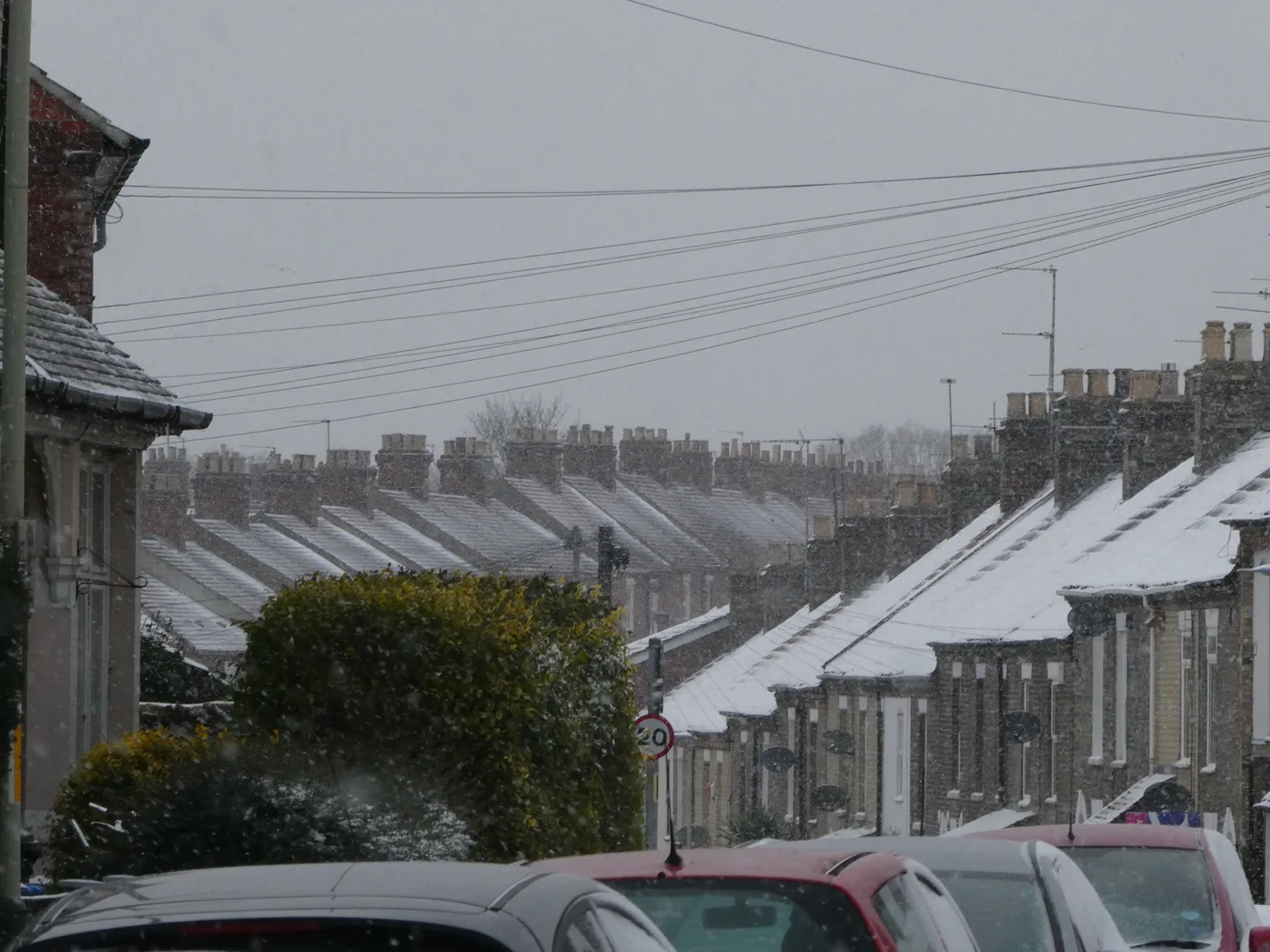
Most snow on a roof in the UK is best left exactly where it is. A pitched tiled or slate roof in reasonable condition is designed to carry the snow British winters normally bring, and the snow does no harm sitting there. The real risks are elsewhere: lightweight roofs such as conservatories, carports and old flat roofs, powder snow blown into the loft, gutters dragged down by sliding snow, and leaks when it all melts.
This page explains how much snow a roof is built to take, which roofs to watch, why climbing up or raking it off is the wrong move, and what to check once the thaw starts.
How much snow a UK roof is designed for
Roofs in the UK are designed to the Eurocode for snow loads, BS EN 1991-1-3, with the UK National Annex setting the figures. The National Annex gives a characteristic ground snow load from a zone map plus a height adjustment:
- The lowest zone is 0.30 kN/m² at 100m above sea level, rising zone by zone across the map.
- Every extra 100m of altitude adds about 0.19 kN/m² (the formula adds the height above 100m divided by 525).
- Sites below 100m use the 100m figure.
For a pitched roof up to 30°, the roof load is taken as 80% of the ground load, and it falls away as the pitch steepens because snow slides off. On top of that, the design applies safety factors, and timber and fixings have margin built in.
What that means in real snow
Snow weight depends far more on how wet it is than how deep it is. The Eurocode’s own figures for the weight of a cubic metre of snow are about 1.0 kN for fresh snow, 2.0 kN once it has settled for a few days, and 4.0 kN for wet snow.
| 30cm of snow on a roof | Approximate weight per square metre |
|---|---|
| Fresh, powdery | 30kg |
| Settled for a few days | 60kg |
| Wet, or snow with rain on it | 120kg |
That is the pattern to watch: a deep, wet, heavy fall that sits for days, or rain falling on to lying snow, is the case that loads a roof. A dusting of dry snow on a sound roof is nothing to worry about.
Roofs that are actually at risk
Conservatories and lean-tos. Polycarbonate roofs on older or budget conservatories are the most common snow casualty. Watch for the sheets bowing between glazing bars. Do not stand under a sagging roof, and do not push snow off from inside with a broom handle, which can split the sheet.
Carports, canopies, pergolas with covers, gazebos and greenhouses. Often not designed for any real snow load. Clear them from the ground with a soft brush on a long pole if you can do it safely, or accept the risk.
Flat roofs. Snow drifts against parapets and taller walls, and melting snow can freeze in outlets and gutters so the water has nowhere to go. A flat roof that already ponds after rain is the one to keep an eye on. Our page on flat roof outlets and drainage explains why blocked outlets matter.
Roofs with a known weakness. A roof that already sags, has spread, or has had structural timbers cut during a loft conversion should be inspected before winter, not during it. See sagging roof causes.
Valleys and roofs beside taller walls. Snow drifts into valleys and against the wall of a taller building, so the load there can be several times the average.
Do not climb up or rake it off
Every winter people are hurt falling from roofs and ladders while clearing snow. A snow-covered roof is slippery, ladders slide on icy ground, and you cannot see a cracked tile or rotten board under the snow. The Health and Safety Executive’s working at height guidance is aimed at employers, but its basic point applies at home: avoid working at height if you can.
Raking snow off a tiled roof also causes damage of its own. Metal rakes and shovels crack and dislodge tiles and slates, rip away ridge and verge mortar, and can leave the roof less waterproof than the snow found it. Uneven clearing, one side cleared and the other left loaded, can also be worse for the roof than leaving it all alone.
If a roof is genuinely failing (new cracking noises, ceilings bowing, internal doors suddenly sticking), get people out of the rooms beneath and call a roofer or structural engineer. That is an emergency roof repair, not a DIY job.
Snow in the loft: the problem people miss
Fine, powdery snow blown by strong wind can get through gaps at the ridge, verges, under tiles and through vents into the loft, especially on older roofs with no underlay or with gaps in it. It then melts when the weather turns and comes through the ceiling, often days after the snow has stopped.
After a windy snowfall:
- Go into the loft with a torch and look for drifts of snow on the insulation, especially near the eaves and gable ends.
- Scoop it into buckets and carry it out before it melts. Lay old towels or plastic where it is wet.
- Note where it came in. That is a gap worth fixing in spring, often at the ridge, verge or a torn underlay at the eaves. Our page on dry ridge versus mortar ridge covers one common cause.
Gutters and ice
Snow sliding off a roof in one sheet can bend or pull down gutters, particularly older plastic gutters on brackets that have worked loose. Ice inside a gutter adds weight and stops water draining, so melt water spills over and soaks the wall below.
You cannot do much while it is happening. Keep people and cars away from eaves where snow is likely to slide, and once it is gone, check the gutter brackets and joints. If the run needs replacing, our guttering replacement cost page has the figures.
Leaks after the thaw
Leaks that show up as snow melts usually come from one of three places:
- Snow blown into the loft melting through the ceiling (see above).
- Melt water backing up behind snow or ice at the eaves, in a valley or behind a chimney, and getting under tiles or flashings that would shed normal rain.
- Damage done by the snow or by clearing it: cracked tiles, slipped slates, lifted flashings.
Photograph the stain and the weather, catch the water, and book an inspection once the roof is clear and dry. A roofer cannot safely or usefully inspect a snow-covered roof. Our guide to why a roof leaks helps narrow down the cause.
Will home insurance pay for snow damage?
Often, but not always. Many buildings policies cover snow under their storm section, and some list weight of snow as a separate cause. The Association of British Insurers’ storm definition, which many insurers use, includes snow at least 30cm deep in 24 hours. When Which? checked 133 policies from 67 insurers in November 2025, it found around half only cover rain, hail or snow damage where high winds were also involved, so read your own wording.
Claims tend to fail where the insurer says the damage came from wear and tear or poor maintenance rather than the snow itself. Evidence helps: photos of the snow depth, the date, the Met Office warnings in force, and a roofer’s report on what failed. Our home insurance and roof cover page explains the three questions insurers and the ombudsman ask, and storm damage roof repair covers the claim process.
Before the snow arrives
- Clear gutters, valleys and flat roof outlets in autumn so melt water can drain.
- Have a roofer replace slipped or cracked tiles, and fix loose ridge or verge, before winter.
- Check the loft hatch is accessible and you have a torch and buckets.
- Watch Met Office weather warnings for snow followed by rain or a quick thaw, the combination that causes most trouble.
Frequently asked questions
Should I remove snow from my roof in the UK? Usually not. A sound pitched roof is designed for normal UK snowfall. Climbing up or raking snow off risks a fall and damages tiles. The exceptions are lightweight structures such as carports and some conservatories, which you can clear from the ground with a soft brush if it is safe.
How much snow can a UK roof hold? It depends on the location and design, but UK roofs are designed for a ground snow load of at least 0.30 kN/m², more on higher ground and in snowier zones, with safety factors on top. Wet snow is about four times heavier than fresh powder, so the type of snow matters more than the depth.
Can snow make my roof leak? Yes, usually in two ways: fine snow blown into the loft that later melts through the ceiling, and melt water backing up under tiles or flashings at the eaves, valleys or chimney. Check the loft after any windy snowfall.
Is snow damage to a roof covered by insurance? Often, under storm or weight of snow cover, but wording varies and some insurers require high winds as well. Insurers reject claims they attribute to wear and tear, so photos and a roofer’s report help.
Is it safe to stand under a conservatory roof with snow on it? If the roof panels are bowing or cracking, no. Keep people out of the conservatory until the snow has melted or been cleared from outside.
When can a roofer check my roof after snow? Once the roof is clear and dry. Inspecting or repairing a snow or ice-covered roof is dangerous and cannot show the damage properly, so expect to wait until the thaw.
Sources
- BSI, National Annex to BS EN 1991-1-3:2003, Eurocode 1, snow loads: ground snow load map and Equation NA.1, and adoption of Annex E snow densities.
- Health and Safety Executive, Working at height.
- Association of British Insurers storm definition, as quoted by Which?, “Why your home insurance could leave you out in the cold this winter”, 20 November 2025.
Want costs like this each month?
Join the Roofline brief for current UK prices and quote-reading tips.
More from Professional Roofers
How Much Does a New Roof Cost in the UK in 2026?
What a new roof really costs in the UK in 2026, broken down by house size, material and the hidden extras, plus how to check you are being quoted fairly.
Chimney Repointing and Repair Cost UK (2026)
What chimney repointing cost is in the UK in 2026, why scaffolding drives the price, and how repointing compares to rebuilding, flashing and pot repairs.
Roof Inspection and Survey Cost UK: What's Checked and the Price
Roof inspection cost UK 2026: what a ground, ladder or drone survey checks, typical prices for each, and when a written roof report is worth paying for.