Roof Repair Grants UK: What Exists in 2026, and What Doesn't
By the Professional Roofers team
Updated 2026 · Independent cost guide
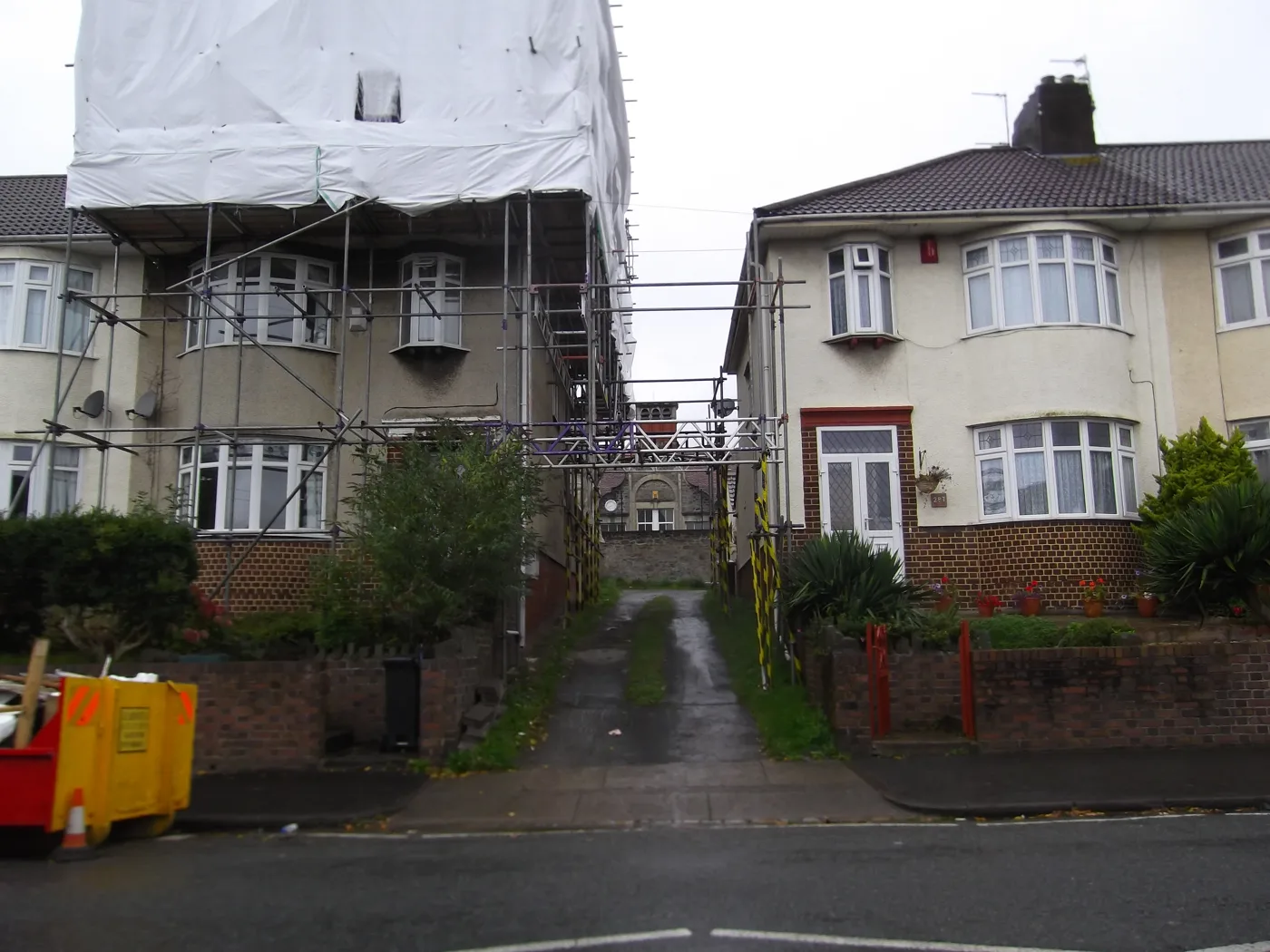
The honest starting point on roof repair grants in the UK is that there is no national roof repair grant. No government scheme exists that you can apply to for money to fix a leaking roof, and any company telling you otherwise is either confused or selling something.
What does exist is four separate routes, none of them designed for roofs, that can end up paying for roof work in the right circumstances. Most people never try the one most likely to work. This page covers all four, who genuinely qualifies, and the dates that matter before the end of 2026.
Route 1: your council’s discretionary housing assistance
This is the one that gets missed, and it is the only route whose actual purpose includes repairing houses.
Since 2002, English and Welsh councils have had a broad discretionary power to give financial help for home repair and improvement, under the Regulatory Reform (Housing Assistance) (England and Wales) Order 2002. The old prescribed grant system was scrapped and replaced with a general power, which means each council writes its own policy and decides what it will fund, how much, and on what terms.
The consequence is that “does my council do roof repair grants” has 300-odd different answers. Some councils run a straightforward repair grant with a cap. Some offer an interest-free or low-interest loan secured against the property. Some offer an equity release arrangement repayable when the house is sold. Some do nothing at all. Almost all of them target the same groups: older homeowners, disabled people, people on means-tested benefits, and houses with a Category 1 hazard under the Housing Health and Safety Rating System, which a roof letting water into a home very often is.
What to do: search your council’s website for “housing assistance policy” or “home repair assistance”, not “roof grant”. Then phone the private sector housing team rather than the general switchboard. Ask three specific questions. Do you offer assistance for essential repairs to owner-occupied homes, is it a grant or a loan, and what are the eligibility conditions. That call takes ten minutes and is the single highest-value thing on this page.
Many councils deliver this through a Home Improvement Agency, sometimes branded as Care and Repair or Staying Put. HIAs will also do the surveying and manage the contractor for you, which is worth having if you are worried about rogue roofers.
Route 2: Disabled Facilities Grant
A Disabled Facilities Grant is not a repair grant, and it will not pay to re-roof a house because the roof is old. It will pay for roof work that forms part of an adaptation, most commonly where a ground-floor extension is built to provide an accessible bedroom or bathroom, and that extension needs a roof.
The figures, from gov.uk’s Disabled Facilities Grant guidance, are a maximum of £30,000 in England, £36,000 in Wales and £25,000 in Northern Ireland. It is means-tested on household income and on savings over £6,000, so you may have to contribute. Two important exceptions: disabled children under 18 can get a grant without their parents’ income being counted, and landlords are assessed without their income and savings being taken into account.
Apply through your council. Scotland runs a different system through local authority adaptation funding rather than a DFG.
Route 3: energy schemes, which fund the roof only as enabling work
This is where most confusion comes from, because insulation schemes are advertised heavily and roofs are involved.
ECO4 runs until 31 December 2026. Ofgem confirms on its Energy Company Obligation page that the scheme applies to measures installed from 1 April 2022 and now runs to the end of December 2026 following a nine-month extension. If you are going to use it, that is a real deadline: work has to be installed, not just applied for.
The Great British Insulation Scheme has closed. The gov.uk application service states that the eligibility checker has closed and that installations had to be complete by 31 March 2026, when the scheme ended. Any company still advertising GBIS to you in late 2026 is out of date.
The Warm Homes: Local Grant is open in England. Per gov.uk, your home must be in England, privately owned, and rated D to G on its EPC, and household income must usually be £36,000 a year or less, with exceptions in certain postcodes or where someone receives qualifying benefits. It covers wall, loft and underfloor insulation, air source heat pumps, smart controls and solar. You apply online and your council usually contacts you within 10 working days to arrange a survey. There is a helpline on 0800 098 7950. Not every council has signed up, so check yours is participating before you build a plan around it.
Now the part that matters for a roof. None of these schemes exist to repair your roof, and a bad roof can stop you getting insulation funded rather than getting your roof funded. Retrofit assessments look at the condition of the building fabric first, because putting insulation into a loft under a roof that leaks creates a damp problem rather than solving a heat problem. If the assessor finds an active leak, missing tiles or failed flashing, the usual outcome is that the insulation is deferred until the roof is fixed at your expense. Some schemes will pay for limited enabling works; many will not, and none will re-roof a house.
So if your goal is insulation and your roof is doubtful, deal with the roof first. Our loft and roof insulation guide covers the order of work.
One tax point worth knowing while you are there: the installation of energy-saving materials, including roof and loft insulation, is zero-rated for VAT in Great Britain from 1 May 2023 until 31 March 2027, after which it reverts to 5 per cent. The detail is in HMRC Notice 708/6. That is not a grant, but on an insulation job it is a genuine saving with a deadline attached.
Route 4: insurance, which is not a grant but pays like one
If your roof was damaged by a storm, this is the route that actually pays, and it is the one people give up on first.
Buildings insurance covers sudden damage, not wear and tear, and the whole argument turns on which of those the insurer thinks it is. A slipped tile in a gale on a 60-year-old roof is very often declined as gradual deterioration. Whether that decision stands up is a separate question, and it frequently does not. We go through the tests that actually get applied in home insurance and roof cover and storm damage roof repair.
Two practical things: photograph the damage before anything is touched, and get the date and wind speed recorded, because the insurer will check the weather at your postcode on the day you claim.
Scotland, Wales and Northern Ireland
Scotland. Home Energy Scotland is the front door for both the grant and loan package and for Warmer Homes Scotland, the fully funded scheme for lower-income households. Scottish councils also run their own scheme of assistance for repairs, which is the Scottish equivalent of route 1 and works the same way: ring the council.
Wales. Nest is the Welsh Government’s fully funded home energy scheme for eligible lower-income households. Welsh councils hold the same discretionary repair powers under the 2002 Order as English ones.
Northern Ireland. The Housing Executive administers the grant system, including the Affordable Warmth Scheme and the statutory grants. Start at NIHE’s grants pages.
Listed buildings and places of worship
If your roof is on a listed building, the picture changes. Grant funding for repairs to historic fabric does exist, but it is competitive, project-based and slow, and it is aimed at buildings of significance rather than at householders. Historic England and the National Lottery Heritage Fund are the main routes in England, and the relevant national bodies in the other nations. Places of worship have their own arrangements, which change from year to year, so check the current position rather than relying on an article.
Expect any of these to want a specification from a conservation-accredited surveyor before they will look at you, and expect a timescale measured in months.
What to do if none of this applies
Most people reading this will not qualify for anything, which is worth saying plainly rather than sending you round the houses.
If that is you, the useful moves are about cost rather than grants. Repair rather than replace where the roof structure is sound: a genuinely failed roof needs replacing, but a lot of quotes for full replacement are for roofs that need specific repairs. Get three quotes and compare like for like, using our questions to ask a roofer. Be very careful with any firm that knocks on your door claiming your roof needs urgent work and that a grant is available, because that combination is the standard opening of a roofing scam.
Your council may also administer hardship support that is not a repair grant but can free up money elsewhere, and Home Improvement Agencies often run handyperson schemes for small jobs at low cost for older and disabled residents. Both are worth asking about on the same phone call as route 1.
Frequently asked questions
Is there a government grant for roof repairs in the UK? No. There is no national roof repair grant. The nearest thing is discretionary help from your own council under the Regulatory Reform (Housing Assistance) (England and Wales) Order 2002, which each council designs for itself, so what is available depends entirely on where you live and can be a grant, a loan, or nothing.
Can I get a free roof through ECO4? No. ECO4 funds energy efficiency measures such as insulation and heating, not roof repairs or replacements. In practice a defective roof more often blocks an ECO installation than triggers one, because insulating a loft under a leaking roof causes damp. ECO4 also ends on 31 December 2026, and work must be installed by then.
Is the Great British Insulation Scheme still running? No. The gov.uk eligibility service has closed and installations had to be complete by 31 March 2026, when the scheme ended. Any offer citing GBIS now is out of date.
Who qualifies for the Warm Homes: Local Grant? Homeowners and private tenants in England whose home has an EPC of D to G, where household income is usually £36,000 a year or less, with exceptions for certain postcodes and for households receiving qualifying benefits. It covers insulation, heat pumps, smart controls and solar rather than repairs, and your council must be participating in the scheme.
Can a Disabled Facilities Grant pay for a new roof? Only where the roof work is part of a qualifying adaptation, such as the roof over a new ground-floor bedroom or bathroom extension. It will not fund replacing an existing roof because it is worn out. The caps are £30,000 in England, £36,000 in Wales and £25,000 in Northern Ireland, and it is means-tested on income and on savings above £6,000.
Do pensioners get help with roof repairs? Not automatically, but older homeowners are the group most council discretionary schemes are aimed at, and Home Improvement Agencies exist largely to help older and disabled residents get repairs done. If you are over state pension age, on a means-tested benefit, or your home has a serious hazard, you have a materially better chance on route 1 than the average applicant.
Will my insurance pay for a leaking roof? Only if the leak was caused by a sudden insured event such as a storm, not by age or wear. Insurers decline a large share of roof claims as gradual deterioration, and those decisions can be challenged. Photograph everything before repairs, note the date, and read our guide to home insurance and roof cover before you phone.
Someone knocked on my door and said I qualify for a roof grant. Is that real? Almost certainly not. Genuine council assistance is not sold door to door, and no legitimate scheme requires you to sign for work on the spot. This exact pitch, an urgent roof problem plus an available grant, is one of the most common roofing scams in the UK. Take a name, close the door, and ring your council yourself.
Want costs like this each month?
Join the Roofline brief for current UK prices and quote-reading tips.
More from Professional Roofers
How Much Does a New Roof Cost in the UK in 2026?
What a new roof really costs in the UK in 2026, broken down by house size, material and the hidden extras, plus how to check you are being quoted fairly.
Chimney Repointing and Repair Cost UK (2026)
What chimney repointing cost is in the UK in 2026, why scaffolding drives the price, and how repointing compares to rebuilding, flashing and pot repairs.
Roof Inspection and Survey Cost UK: What's Checked and the Price
Roof inspection cost UK 2026: what a ground, ladder or drone survey checks, typical prices for each, and when a written roof report is worth paying for.