Do You Need Planning Permission or Building Regs for a New Roof?
By the Professional Roofers team
Updated 2026 · Independent cost guide
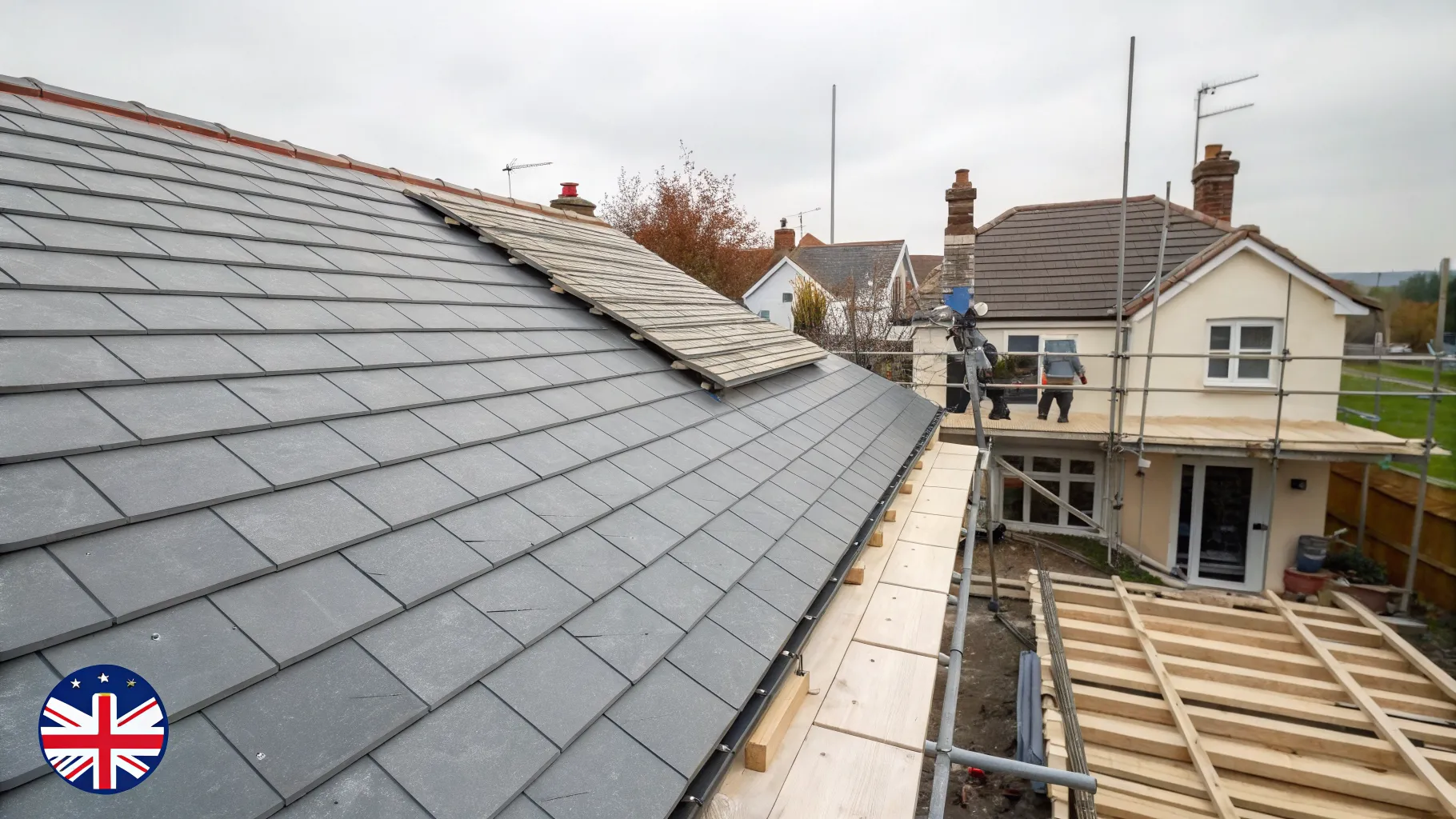
Most homeowners ask the wrong question. They ring up worried about “planning permission for a new roof,” when for a standard like-for-like re-roof the planning side is usually a non-issue, and the thing that actually applies, and that they have never heard of, is Building Regulations. These are two separate legal systems, run by two different departments, checking two different things. A re-roof can need neither, either, or both. Getting this straight is the difference between a clean sale years later and a solicitor’s enquiry that stalls your completion.
This guide covers the rules for England (Wales is broadly similar). Scotland and Northern Ireland operate different systems, so do not take the figures below as UK-wide.
The two regimes, kept apart
| Planning permission | Building Regulations | |
|---|---|---|
| What it controls | External appearance and visual impact | Safety, structure and thermal performance |
| Who runs it | Your council’s planning department | Building Control (council or a registered scheme) |
| The question it asks | “Does this change how the building looks?” | “Is this built properly and warm enough?” |
| Typical re-roof outcome | Usually NOT needed (like-for-like) | Usually IS needed |
| What you get | Planning consent or a lawful development confirmation | A Building Regulations Compliance Certificate |
Keep these rigorously separate as you read on. Planning permission says nothing about whether your roof is safe or insulated, and Building Regulations sign-off says nothing about whether your council is happy with how it looks.
Do you need planning permission for a new roof?
For most houses, a re-roof that does not materially change the external appearance is covered by Permitted Development and needs no planning application. Swapping worn tiles for matching new ones, or replacing a slate roof with closely matching slate, normally falls here.
Permitted Development for roof alterations has firm limits. The work must not exceed the height of the existing highest part of the roof, and it must not project more than 150 millimetres beyond the plane of the existing roof slope. If you add windows to a side-facing roof slope, they must be obscure-glazed, and any opening part must sit at least 1.7 metres above the floor inside. The Planning Portal sets these out in full on its roof planning permission page.
When Permitted Development does NOT apply
Permitted Development rights are a feature of houses. They do not extend to:
- Flats and maisonettes
- Any building that contains flats
- Houses created from a non-residential building under Permitted Development
- New dwellings that were themselves built under Permitted Development
If your property is on that list, roof works will need a planning application even when the result looks identical to what was there before. This catches a lot of people in converted buildings off guard.
Conservation areas, AONBs, National Parks and Article 4
In a conservation area, an Area of Outstanding Natural Beauty, a National Park, or anywhere covered by an Article 4 direction, Permitted Development rights are cut back. Here a change of roofing material, finish, colour, texture or profile can be treated as a material alteration that needs permission, even if the new roof looks broadly similar. Switching from natural slate to concrete tile is a classic trigger. Councils are particularly protective where the original covering is natural Welsh slate, clay tile, or another historically distinctive material. Check with your council before you order anything if you are in one of these areas.
Listed buildings
If the property is listed, Listed Building Consent is always required for roof alterations, whatever the material or the condition of the existing roof. This is separate from, and on top of, planning permission, and it is enforced strictly. Do not start without it.
Do you need Building Regulations approval for a new roof?
Usually, yes. This is the part that catches people out.
Under the Building Regulations, a roof is a “thermal element,” and re-roofing counts as renovating one. The approval trigger is set out in Approved Document L (Conservation of fuel and power, Volume 1: Dwellings, 2021 edition incorporating 2023 amendments). It bites when you renovate:
- More than 50% of an individual roof surface, OR
- More than 25% of the total external building envelope
Almost any full re-roof or re-cover crosses one of those thresholds, which is why Building Regulations sign-off is normally required for a new roof.
The 25% rule and the 50% rule are not the same thing
These two figures get mashed together as “the 25% rule,” which causes confusion.
- The 50% figure applies to a single roof surface. Re-cover more than half of one slope and you are renovating that thermal element.
- The 25% figure applies to the whole external envelope of the building (walls and roof together). Strip back more than a quarter of the total envelope and the trigger fires.
A typical full re-roof on a house will breach the 50% single-surface threshold comfortably, so in practice you are almost always inside the regime.
You may have to add insulation
When the trigger is met, the rule is that the whole roof element should be brought up to the current limiting U-values “where technically, functionally and economically feasible.” For renovation work, Approved Document L Volume 1 sets these targets:
| Roof type | Insulation position | Target U-value (W/m²K) |
|---|---|---|
| Pitched roof | At ceiling level | 0.16 |
| Pitched roof | At rafter level | 0.18 |
| Flat roof (or integral insulation) | n/a | 0.18 |
There is a sensible get-out. If the target U-value genuinely cannot be met for technical or functional reasons, or a simple payback period of 15 years cannot be achieved, you are expected to upgrade the insulation to the best level reasonably achievable rather than the full target. A roofer who understands this will design the build-up around it; one who does not may either over-spec or ignore the requirement entirely.
One more point that is widely missed: even if you are not changing the insulation at all, stripping more than 25% of the roof still means you must notify Building Control. The notification duty does not disappear just because the thermal layer stays the same.
How the work gets notified and signed off
There are two compliant routes, and which one applies depends entirely on your roofer.
Route 1: Local Authority Building Control (LABC). You or your contractor submits a Building Notice or application to the council before work starts. An inspector visits, checks the work, and on completion the council issues your certificate. There is a council fee, which varies by local authority, and it has little effect on the overall timeline.
Route 2: Competent Person Scheme self-certification. A roofer registered with the NFRC Competent Person Scheme can certify their own work as compliant without an LABC inspection, then notify the scheme, which issues the certificate. The scheme is run under government authorisation, is UKAS-accredited, and is the only dedicated competent person scheme for the roofing sector in England and Wales. It was brought in-house by the National Federation of Roofing Contractors and rebranded from “CompetentRoofer” to the NFRC Competent Person Scheme in 2022. It covers refurbishment where 50% or more of the roof is replaced. You can check the scheme on the NFRC Competent Person Scheme site.
The trap to watch for
Only a scheme-registered roofer can self-certify. A roofer who is not registered must use the LABC route. The problem is that some unregistered roofers wrongly tell customers “you don’t need Building Regs for a re-roof” because they cannot self-certify and do not want the hassle of arranging an LABC inspection. The legal responsibility for compliance sits with you, the homeowner, not the contractor. So ask two direct questions before you sign anything:
- Are you registered with the NFRC Competent Person Scheme? (If yes, they self-certify.)
- If not, will you submit a Building Notice to the council so I get a certificate?
If you get a vague answer to both, that is your warning sign. For more on what a properly run job looks like start to finish, see our roof replacement process, step by step.
The Building Regulations Compliance Certificate
When the work is signed off, you receive a Building Regulations Compliance Certificate (BRCC). Treat this as a permanent document. Its real value shows up years later when you sell: the buyer’s solicitor will ask for it, and not having it can hold up a conveyance. File it with your deeds and warranty paperwork the day it arrives.
Selling with no certificate for a past re-roof
This is the situation that drives a lot of these searches: you are selling, the roof was redone before you owned the house or by a roofer who never notified anyone, and there is no certificate. You have two routes.
Regularisation certificate. You apply to the council for a retrospective check of the work against the regulations that were in force when it was done. The council may need to open up parts of the structure to inspect them. This is generally workable for relatively recent work, broadly within the last ten to fifteen years. It is the sounder route because it actually confirms the work is compliant. The HomeOwners Alliance guide to missing Building Regulations walks through the process.
Indemnity insurance. This is a policy that covers the financial risk of the council taking enforcement action. Two limits matter. First, it covers enforcement risk only; it does nothing to confirm the roof is actually safe or compliant. Second, you cannot obtain it if the council already knows about the works, so you must not have approached them first. Conveyancers often reach for indemnity because it is quick and inexpensive, but it papers over the question rather than answering it.
If you have the time, regularisation is the better answer. Indemnity is a fallback, not a fix.
A quick decision flow
Run your project through these questions in order:
- Is it like-for-like, within Permitted Development limits (height and 150mm), and not on a flat or maisonette? If yes, no planning permission needed. If no, check with planning.
- Is the property listed? If yes, Listed Building Consent is required, always.
- Is it in a conservation area, AONB, National Park, or under an Article 4 direction? If yes, a material change (slate to tile, colour, profile) may need permission. Check with the council.
- Are you re-covering more than 50% of a roof surface or more than 25% of the envelope? If yes, Building Regulations apply: notify Building Control and upgrade insulation toward 0.16 / 0.18 W/m²K where feasible.
- Is your roofer NFRC-registered? If yes, they self-certify. If no, make sure an LABC Building Notice is submitted so you get your certificate.
A minor repair, replacing a handful of slipped slates or patching a small area like-for-like, sits below these thresholds and is exempt maintenance. No planning, no Building Regs notification needed.
For the cost side of all this, see our guides on new roof cost in the UK and roof replacement cost for a 3-bed semi, and for timing, how long a new roof takes.
Frequently asked questions
Do I need planning permission to replace my roof? Usually not. A like-for-like re-roof on a house that does not change the external appearance and stays within Permitted Development limits (no higher than the existing roof, no more than 150mm beyond the existing slope) needs no planning application. The exceptions are flats and maisonettes, listed buildings, and properties in conservation areas, AONBs, National Parks or under Article 4 directions, where a change of material, colour or profile can need permission.
Do I need Building Regulations approval for a new roof? Almost always, yes. Re-roofing counts as renovating a thermal element, and the rules apply once you renovate more than 50% of a single roof surface or more than 25% of the whole building envelope. A full re-roof crosses one of those thresholds, so Building Regulations sign-off is normally required even when planning permission is not.
What is the difference between planning permission and Building Regulations? Planning permission is about external appearance and visual impact, decided by your council’s planning department. Building Regulations are about safety, structure and thermal performance, checked by Building Control. They are separate systems with separate paperwork. A re-roof commonly needs Building Regs but not planning, which is the single most misunderstood point.
Does my roofer notify Building Control, or do I? It depends on the roofer. If they are registered with the NFRC Competent Person Scheme, they self-certify the work and arrange your certificate. If they are not registered, they must submit a Building Notice to the council, or you must. The legal responsibility for compliance sits with you as the homeowner, so confirm in advance which route your roofer is using.
How does Building Control sign-off affect the cost and timeline? The Local Authority Building Control route carries a council fee that varies by local authority. The self-certification route through a registered roofer folds the cost into the job. Either way the impact on your timeline is minimal; it does not usually slow the work down.
What is the 25% rule, and how is it different from the 50% rule? The 50% figure applies to a single roof surface: re-cover more than half of one slope and you are renovating that thermal element. The 25% figure applies to the whole external envelope of the building, walls and roof together. Breach either threshold and Building Regulations apply. Most full re-roofs breach the 50% single-surface figure easily.
Do I have to add insulation when I re-roof? If the Building Regulations trigger is met, you should bring the roof up to the current limiting U-values where it is technically, functionally and economically feasible: 0.16 W/m²K for a pitched roof insulated at ceiling level, 0.18 for a pitched roof insulated at rafter level, and 0.18 for a flat roof. If the target cannot be met, or a simple payback of 15 years cannot be achieved, you upgrade to the best level reasonably achievable instead.
Can I change from slate to tile, or change the tile colour? On most houses outside protected areas, yes, this is usually fine under Permitted Development. In a conservation area, AONB, National Park or under an Article 4 direction, changing the material, colour, texture or profile can be treated as a material alteration that needs planning permission, so check with the council first.
Do I need permission for a new roof in a conservation area or on a listed building? In a conservation area, Permitted Development rights are restricted, so a change of roofing material or appearance can need planning permission even if it looks similar. On a listed building, Listed Building Consent is always required for roof alterations, whatever the material, and it is enforced strictly.
Does a flat or maisonette need permission for roof work? Yes. Permitted Development rights apply to houses, not to flats, maisonettes or buildings containing flats. Roof works on these need a planning application even where the result looks identical to the original.
I am selling and have no Building Regulations certificate for the roof. What do I do? You have two routes. You can apply to the council for a regularisation certificate, a retrospective check against the regulations in force at the time, which may involve opening up parts of the structure and is generally suited to work done within the last ten to fifteen years. Or you can take out indemnity insurance, which only covers the risk of enforcement and does nothing to confirm the roof is safe, and which you cannot get if the council already knows about the works. Regularisation is the sounder option where you have time.
Does a small roof repair need approval? No. Minor like-for-like repairs, such as replacing a few slipped slates or patching a small area, fall below the Building Regulations thresholds and count as exempt maintenance. They need no planning permission and no Building Control notification.
Want costs like this each month?
Join the Roofline brief for current UK prices and quote-reading tips.
More from Professional Roofers
How Much Does a New Roof Cost in the UK in 2026?
What a new roof really costs in the UK in 2026, broken down by house size, material and the hidden extras, plus how to check you are being quoted fairly.
Chimney Repointing and Repair Cost UK (2026)
What chimney repointing cost is in the UK in 2026, why scaffolding drives the price, and how repointing compares to rebuilding, flashing and pot repairs.
Roof Inspection and Survey Cost UK: What's Checked and the Price
Roof inspection cost UK 2026: what a ground, ladder or drone survey checks, typical prices for each, and when a written roof report is worth paying for.