Graded Roof Battens: Why Ungraded Timber Fails
By the Professional Roofers team
Updated 2026 · Independent cost guide
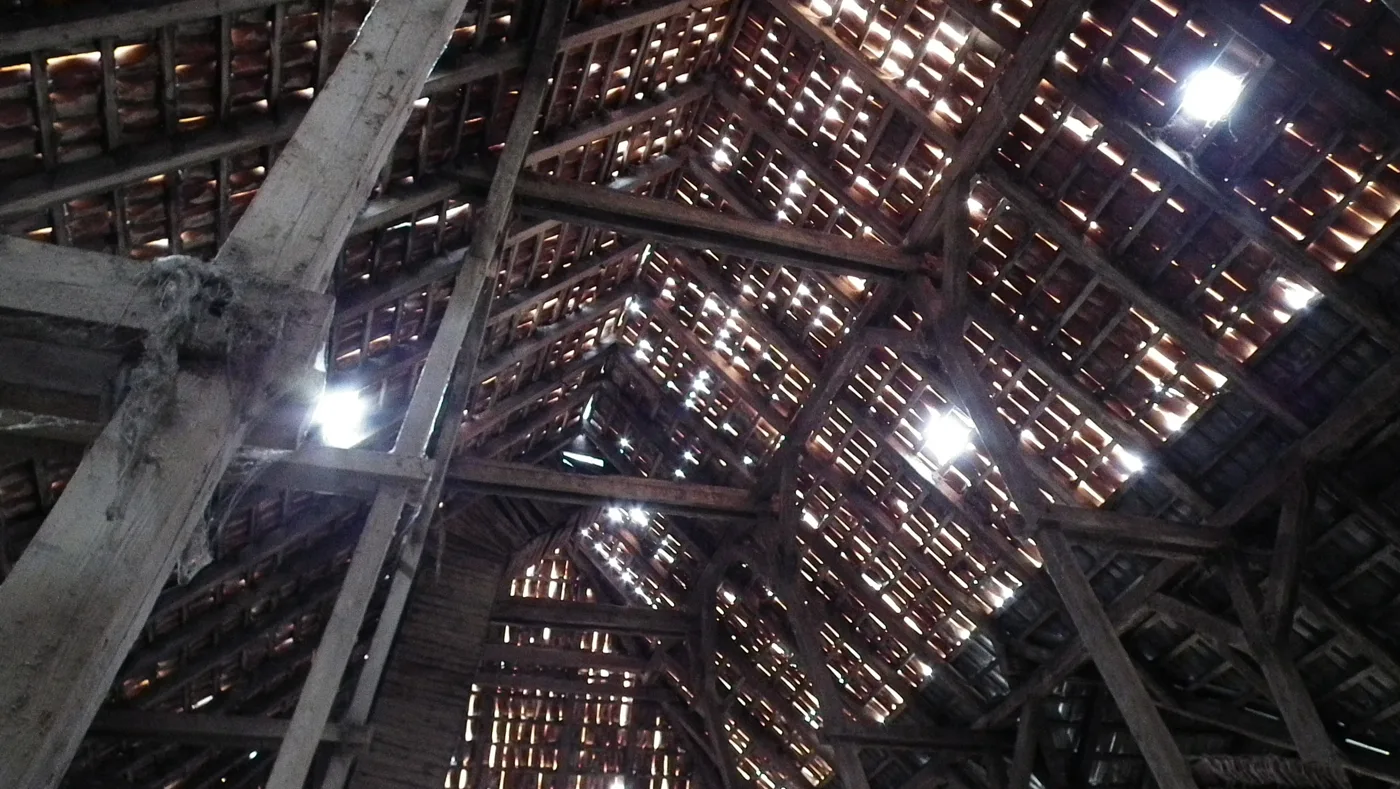
Graded roof battens are the cheapest part of a re-roof and the one most likely to be substituted for something that should not be on a roof at all. The rule is simple enough to check from the ground with a zoom lens: every compliant batten carries four indelible stamps, and a batten with no stamp has no grade, whatever colour it has been dyed.
This is not a paperwork problem. The reason the Health and Safety Executive and the National Federation of Roofing Contractors issued guidance on battens in the first place is that people working on roofs have fallen through them after standing on substandard battens. The timber under your tiles is a structural product, and for most of the last century it was the only structural timber in a British house that nobody graded.
What “graded” actually means
Battens are graded to BS 5534, currently BS 5534:2014+A2:2018, the code of practice for slating and tiling. Grading is not a single measurement. It is an assessment against a list, and a batten fails if it breaks any one of them:
- Dimension across the full length
- Length
- Knots
- Wane, the rounded edge left where the bark was
- Slope of grain
- Distortion
- Species
- Fissures
- Rate of growth
- Decay and insect attack
- Preservative treatment
- Identification and marking
A batten can be perfectly sound timber and still fail. A single knot in the wrong place, a corner that is rounded rather than square, or grain running off at an angle along the length will each put it out of grade, because each of those is where it will snap under a person’s weight.
Grading can be done at the mill or on site. Factory grading is what the standard recommends, produced under a third-party quality assurance scheme. On-site grading is permitted but has to be done by someone trained to do it, and Local Authority Building Control guidance has noted that historically fewer than one in five roofing battens arrived on UK sites already graded, with the rest either graded on site or simply fixed ungraded.
The four stamps to look for
Every compliant batten is indelibly marked, repeatedly along its length, with four things:
- The manufacturer or supplier name
- The timber species code. Common ones are PNSY for imported redwood, WPCA for imported whitewood and WPCS for British spruce.
- BS 5534
- The size, as 25 x 38 or 25 x 50
Many battens also carry third-party certification such as a BRE tickmark or a BBA stamp, and an FSC or PEFC chain-of-custody mark. Those are good signs. They are not substitutes for the four above.
Colour tells you nothing on its own
This is where most homeowners go wrong. Graded battens are often dyed, and the colour is a supplier’s house convention, not a grade. John Brash dye theirs red and SR Timber use gold; blue is common from other suppliers. There is no rule that says red means graded or blue means anything.
A merchant can dye ungraded timber any colour they like. The stamp is the evidence. If the timber is coloured and has no legible marking, treat it as ungraded.
The sizes, and which rafter spacing each is for
| Batten size | Maximum rafter centres | Notes |
|---|---|---|
| 25 x 38mm | 450mm | Single-lap and double-lap tiles |
| 25 x 50mm | 600mm | All tile types, and required for slate |
Two things people get wrong here.
Thickness is 25mm minimum with a one-way tolerance. The permitted tolerance is minus zero, plus 3mm. A batten measuring 23mm is not “within tolerance”, it is out of grade. Width carries a plus or minus 3mm tolerance, thickness does not go below 25mm at all.
Slate needs 50mm width even at 450mm centres, because each slate hangs from fewer fixing points and concentrates more load on the batten than an interlocking tile does. Our roof batten calculator will work out quantities once you have settled the size and gauge, and BS 5534 tile fixing explained covers the wider fixing rules the same standard sets.
Length, spanning and fixings
- Minimum individual batten length is 1.2m, and every batten must span at least three rafters. A short offcut bridging two rafters is not acceptable, and a roof full of them is a warning about everything else that was done up there.
- Fixings: a single 65 x 3.35mm galvanised round wire nail at each rafter crossing, with at least 40mm penetration into the rafter. A nail-gun equivalent of 63 x 3.1mm ring shank galvanised is accepted.
- Treatment: battens must be preservative treated to Use Class 2 under BS 8417, the class for timber at persistent risk of wetting but not in ground contact.
The safety rule that explains all of this
HSE guidance HSG33, Health and Safety in Roof Work, permits a roofer to use battens as a foothold at 600mm rafter centres, but only on conditions: the battens must be a minimum of 50 x 25mm, graded to BS 5534 and NFRC Technical Bulletin 33, at least 1.2m long so they span a minimum of three trusses, and fixed with the recommended nails.
Read that the other way round. If your roofer is working on ungraded battens at 600mm centres, they are standing on something that has never been assessed for whether it will hold them. That is why building control surveyors ask for evidence of grading, and why “we grade them on site” is only an answer if the person doing it has been trained to.
How to spot ungraded battens on your own roof
You can do most of this from photographs, which is worth knowing if the roof is already stripped or has just been covered.
Ask for a photograph of the stamp before the tiles go on. This is the single most useful thing you can do, it costs the roofer thirty seconds, and a contractor who will not do it has told you something. Graded battens are marked repeatedly along their length, so any decent photo of a run of batten should show a legible mark somewhere.
In a photo of exposed battens, look for:
- No marking anywhere along a long run. Bare sawn timber with no stamp is the clearest tell.
- Rounded or bevelled corners instead of a square arris. That is wane, the curve of the outside of the tree, and it fails the grade.
- Knots on an edge, or a knot running right through the width. Knots in the middle of the face are often acceptable; knots at the edge are where the batten breaks.
- Grain running diagonally across the batten rather than along it. Follow a line of grain along a metre of batten: if it wanders off the side, that is excessive slope of grain.
- Lots of short pieces and butt joints, especially anything obviously spanning only two rafters.
- Visible splits radiating from nail holes, or battens that have curled or twisted.
- Inconsistent widths along a run, or timber that looks noticeably thinner than the 25mm it should be.
From inside the loft you can often see the underside of the battens between the rafters near the eaves, which is the easiest place to get a phone camera onto a stamp without going on the roof. If the roof has an underlay membrane you will not see much, which is another reason to ask for the photograph during the works rather than after.
Getting it right in the quote
Specify it. A quote that says “re-batten and re-tile” commits nobody to anything. A quote that says “25 x 50mm battens graded to BS 5534:2014+A2:2018, treated to Use Class 2 under BS 8417, fixed with 65 x 3.35mm galvanised nails” leaves no room for a substitution, and it costs you nothing to ask for that wording. Our guide to reading a roofing quote covers the other lines worth pinning down, and questions to ask a roofer has the rest of the conversation.
Ask to keep the delivery note. Graded battens come with paperwork identifying the supplier and grade, and it is the document a building control surveyor or an insurer will want if there is ever a dispute. Graded battens do cost more per metre than ungraded timber, and the honest argument for them is not only safety: there is far less waste on site and no time lost grading by hand.
If a price looks a long way below everyone else’s, battens are one of the first places the difference tends to come from. Roofing scams and rogue roofers covers the rest of that pattern.
Frequently asked questions
Are blue battens the same as graded battens? No. Colour is a supplier convention with no standing in BS 5534. Different manufacturers dye their graded battens red, gold or blue, and nothing stops ungraded timber being dyed as well. The four indelible stamps, manufacturer, species code, BS 5534 and size, are the only evidence that matters.
Can roof battens be graded on site? Yes, BS 5534 permits it, but it has to be done by someone trained to grade, against the full list of criteria, on every batten. The standard recommends factory grading under a third-party quality assurance scheme instead, and building control will ask what grading was carried out and by whom.
What size batten do I need for 600mm rafter centres? 25 x 50mm. The 25 x 38mm size is only suitable up to 450mm centres, and slate needs 50mm width regardless because of how the load concentrates at each fixing.
Will building control fail a roof for ungraded battens? They can, and evidence of proper grading is exactly what the guidance to building control surveyors asks them to request. It is also a live issue for warranties and for insurance claims, because an ungraded batten is a departure from the code of practice the rest of the roof was designed around.
Can I reuse the old battens when the roof is stripped? Almost never, and no reputable roofer will suggest it. Old battens are usually ungraded, frequently undersized by current standards, often riddled with old nail holes, and may be suffering from nail sickness or rot at the fixings. Re-battening is standard practice on a full strip and re-tile. Our page on nail sickness explains why the fixings fail before the tiles do.
How long should graded roof battens last? Preservative treatment to Use Class 2 under BS 8417 is specified to give a long service life in a ventilated roof space, and in practice battens outlast the covering when the roof is dry and ventilated. The things that shorten it are condensation, blocked ventilation and a failed underlay, which is why roof ventilation and the underlay membrane matter as much as the timber itself.
Sources
Want costs like this each month?
Join the Roofline brief for current UK prices and quote-reading tips.
More from Professional Roofers
How Much Does a New Roof Cost in the UK in 2026?
What a new roof really costs in the UK in 2026, broken down by house size, material and the hidden extras, plus how to check you are being quoted fairly.
Chimney Repointing and Repair Cost UK (2026)
What chimney repointing cost is in the UK in 2026, why scaffolding drives the price, and how repointing compares to rebuilding, flashing and pot repairs.
Roof Inspection and Survey Cost UK: What's Checked and the Price
Roof inspection cost UK 2026: what a ground, ladder or drone survey checks, typical prices for each, and when a written roof report is worth paying for.