Chimney Leaking in Heavy Rain? 4 Ways In, Found by the Stain
By the Professional Roofers team
Updated 2026 · Independent cost guide
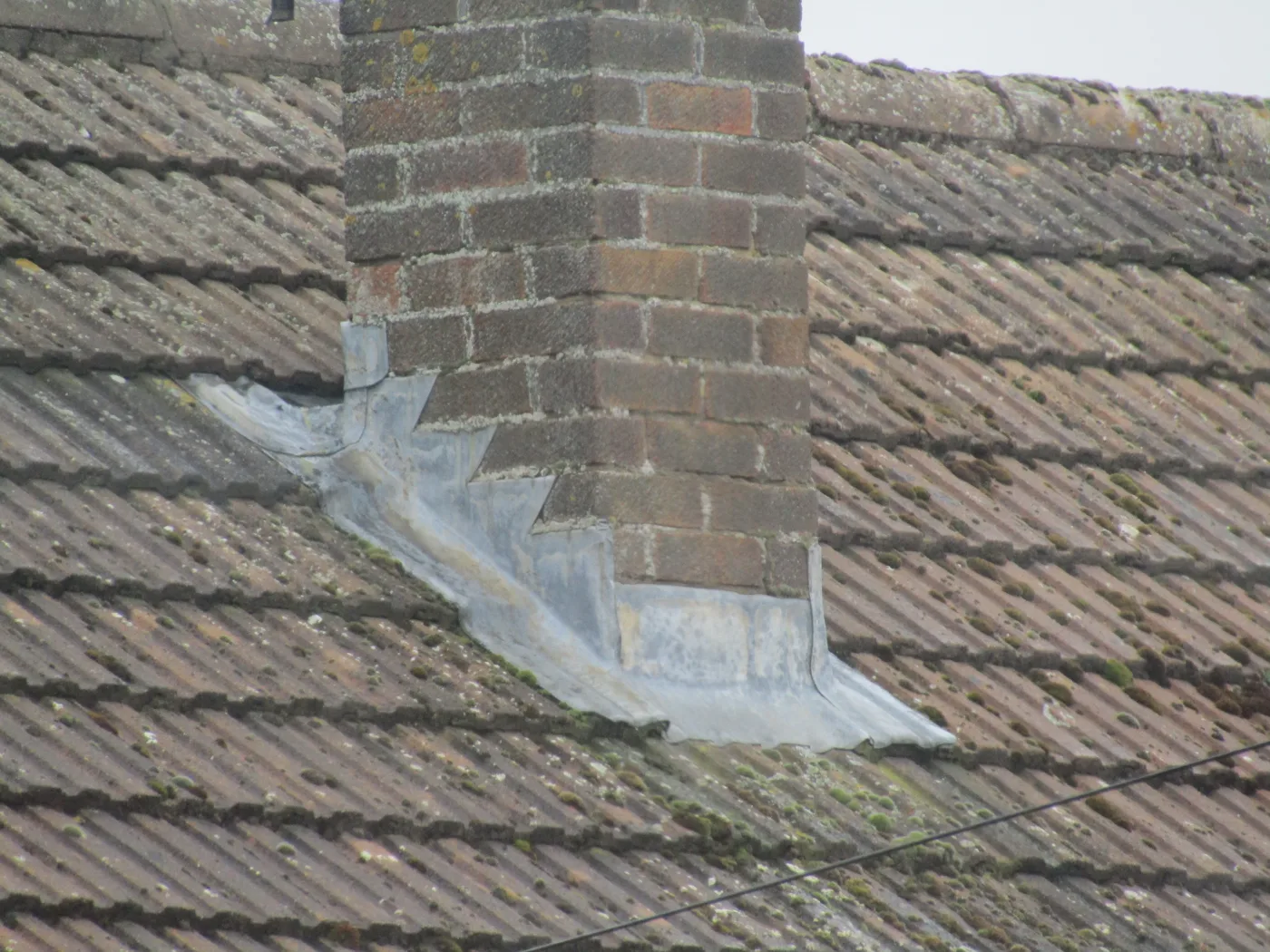
A chimney leaking in heavy rain almost always has one of four causes: failed lead flashings where the stack meets the roof, a blocked or short back gutter behind the stack, cracked flaunching or an open pot letting rain down the flue, or porous brickwork and pointing soaking water through the stack itself. Which one you have shows up in where the damp appears, and how soon after the rain it arrives.
This page is the diagnosis. Work through it before you call a roofer and you can tell them what you think is wrong, check that their quote fixes that, and avoid paying for a full re-flash when the real problem is an uncapped pot on a disused flue.
Is it actually rain?
Before you look at the roof, rule out the two problems that are often mistaken for a chimney leak.
- Brown or yellow stains that come back after redecorating, and get worse in humid weather rather than after rain. These are usually hygroscopic salts left in the brickwork by years of coal or wood fires. The salts draw moisture out of the air, so the patch stays damp in dry spells. The fix is replastering the breast with a salt-resistant plaster, not roof work.
- Damp in a disused flue that has been sealed at both ends. A chimney blocked top and bottom with no airflow traps moisture, which condenses inside the flue and soaks through. Bradford Council’s guidance on chimneys notes that a disused stack can be capped in a way that still allows adequate ventilation, and that is the point: a disused flue needs air moving through it.
If the patch appears during or within a day of heavy rain and dries out in a dry week, it is rain getting in, and one of the four routes below is responsible.
Where the damp shows, and what it points to
| Where you see it | When it appears | Most likely route in |
|---|---|---|
| Loft timbers and ceiling beside the stack, top floor ceiling next to the breast | During or soon after heavy rain | Side step flashings or front apron |
| Loft, behind the stack on the uphill side | Heavy rain, worse when leaves are down | Back gutter blocked, split or too short |
| Inside the fireplace, hearth, or the breast lower down a disused flue | During long or heavy rain | Open pot or cracked flaunching letting rain down the flue |
| Breast in rooms below the roof, spreading patches | A day or more after long, wind-driven rain, worse on the weather side | Porous brick or failed pointing on the stack |
The quickest test is to go into the loft during heavy rain with a torch and look at the timbers and the brick where the stack passes through the roof. Our guide on how to find a roof leak covers doing this safely.
1. Lead flashings: the most common cause
Where a chimney passes through a pitched roof, the joint is sealed by lead. On a typical stack there is an apron across the front (downhill side), stepped flashings up each side tucked into the mortar joints, soakers under the tiles or slates on tiled roofs, and a back gutter across the uphill side.
The faults that let water in during heavy rain:
- Step flashings pulled out of the mortar joints. The lead is wedged into a raked-out joint and pointed. When that pointing cracks, the lead lifts and rain runs behind it.
- Split or cracked lead, often where it has been folded too sharply or fixed so it cannot expand and contract.
- Mastic or bitumen “repairs.” A smear of sealant over cracked lead works for a season and then lets go. If you can see black tar on your flashings, someone has patched rather than fixed them.
- Lead too thin for the job. Code 4 and Code 5 are the normal weights for chimney work. Lighter lead fatigues sooner.
Flashings that leak only in heavy rain or wind-driven rain often have a joint that copes with light rain but is overwhelmed when water runs down the side of the stack in volume. Our lead flashing and leadwork guide explains how each part should be laid, and roof flashing repair cost gives the typical prices: about £200 to £550 for a repair without scaffolding and £800 to £1,500 for a full chimney re-flash.
2. The back gutter: the cause people miss
The back gutter is the lead tray behind the stack, on the uphill side, that catches the rain running down the roof and turns it round the sides of the chimney. It is the one part of the flashing you cannot see from the street, and it takes more water than any other part of the stack.
It leaks in heavy rain for three reasons:
- It is blocked. Leaves, moss and silt build up behind the stack. In light rain the water trickles past; in a downpour it backs up and spills over the upstand at the back, under the tiles, into the loft.
- It is too short. The lead must run far enough up under the tiles or slates above it that water backing up cannot reach its top edge. Short back gutters are a common fault on cheaply re-roofed houses.
- It is split at the corners, where the lead is shaped round the back of the stack.
If the damp in the loft is on the uphill side of the stack, start here. A roofer can clear a blocked back gutter from a ladder on many single-storey roofs, but on most houses it needs roof access, and replacing it means lifting the tiles above it.
3. Flaunching and pots: rain coming down the flue
The flaunching is the sloped mortar cap on top of the stack that holds the pots in place and sheds water off the top. When it cracks, rain gets into the top of the brickwork and runs down inside the stack. An open pot on a disused flue lets rain fall straight down the chimney.
Signs it is the top of the stack:
- Damp or puddles in the fireplace or on the hearth after heavy rain.
- Damp on the chimney breast that starts high and runs down, in a room with a disused or blocked fireplace.
- Visible cracks or missing mortar round the pots, which you can see from the ground with binoculars.
The fixes are straightforward. Cracked flaunching is rebuilt; see our chimney flaunching repair page. A disused pot should be capped with a vented cap or cowl that keeps rain and birds out but still lets air through, with a vent in the chimney breast in the room below so air can move up the flue. Our guide to chimney cowl types shows which cap suits which flue. Never fully cap a flue that is still connected to a working fire, stove or boiler.
4. Porous brickwork and failed pointing
A chimney stack is the most exposed brickwork on the house, standing above the roof in the full force of the wind. Over time the mortar joints wash out and older, softer bricks spall and start to absorb water. In long, wind-driven rain, the stack soaks up water like a sponge and it works its way down inside to the chimney breast.
Signs:
- Patches on the chimney breast that appear a day or more after a long spell of rain, not during a short downpour.
- Worse on the side of the house that faces the prevailing weather, usually the south-west in Britain.
- Open or crumbling joints, or bricks with their faces flaking off, visible from the ground.
The proper fix is repointing, and replacing any badly spalled bricks. Our page on chimney repointing cost puts the typical job at £400 to £1,200, with scaffolding often the biggest part of the bill. On an older house built in lime mortar, the stack should be repointed in lime, not hard cement, which traps water in soft bricks and makes the spalling worse.
Do water repellent creams work on a chimney?
Masonry water repellent creams, such as Safeguard’s Stormdry, soak into brick and mortar and make the surface shed water while still letting water vapour out. Stormdry holds a BBA certificate, number 15/5198, and the maker’s product page gives its application conditions.
They have a place, with limits:
- Use one after the repairs, not instead of them. A cream will not seal open joints, cracked flaunching or failed lead. Repoint first.
- The stack must be dry when it goes on. The maker asks for a dry stack and no rain for at least 8 hours afterwards, preferably 24.
- They are not for every surface. The product sheet says it is not suitable for pure limestone, such as Portland stone.
- Be cautious on old or listed buildings. On soft historic brick and lime mortar, a treatment that changes how the wall handles moisture needs thought first, and a listed building may need consent. Ask a surveyor or your conservation officer.
Used on sound, freshly pointed brick, a cream can reduce how much rain a very exposed stack absorbs. Used on a stack with open joints or failed lead, it just delays the real repair.
What to ask a roofer to check
When you call someone out, ask them to look at all four routes, not just the one they specialise in, and to tell you which they found:
- Step flashings, apron and soakers: lifting, split, patched with mastic?
- Back gutter: blocked, split, or too short under the tiles?
- Flaunching and pots: cracked, open, or uncapped on a disused flue?
- Brickwork and pointing: open joints, spalled bricks?
A good roofer will send photos of what they find. If one quotes for a full re-flash without photos of the lead, or proposes to “seal” the chimney with a coating while the joints are open, get a second opinion. Our page on why your roof is leaking covers the other common leak points if the chimney turns out to be sound.
Frequently asked questions
Why does my chimney only leak in heavy rain? Because the volume of water overwhelms a weak point that copes with light rain. A partly blocked back gutter, a short lead upstand or a lifted step flashing can all stay dry in drizzle and then overflow or let water behind them in a downpour or wind-driven rain.
How can I tell if it is the flashing or the brickwork? Timing and position. Flashing leaks show in the loft or top floor next to the stack during or just after rain. Porous brickwork shows lower down the chimney breast a day or more after a long spell of wind-driven rain, and is worse on the weather side.
Can rain come down a chimney with no cap? Yes. An open pot on a disused flue lets rain fall straight down, and you will usually see damp in the fireplace or low on the breast. A vented cap or cowl keeps rain out while letting the flue breathe.
Should I seal my disused chimney completely? No. A flue sealed at both ends with no airflow traps moisture that condenses and causes damp. Use a vented cap at the top and a vent in the chimney breast below so air moves through.
Is a chimney leak covered by home insurance? The water damage inside may be, but most policies exclude wear and tear and gradual deterioration, which is what failed flashing and pointing usually are. Check your policy wording and keep photos of the cause.
Can I fix a leaking chimney myself? Clearing a back gutter or fitting a cap is possible if you can reach the stack safely, but most chimneys need roof access, and leadwork and flaunching are skilled jobs. Do not climb onto a roof without proper access equipment.
Want costs like this each month?
Join the Roofline brief for current UK prices and quote-reading tips.
More from Professional Roofers
How Much Does a New Roof Cost in the UK in 2026?
What a new roof really costs in the UK in 2026, broken down by house size, material and the hidden extras, plus how to check you are being quoted fairly.
Chimney Repointing and Repair Cost UK (2026)
What chimney repointing cost is in the UK in 2026, why scaffolding drives the price, and how repointing compares to rebuilding, flashing and pot repairs.
Roof Inspection and Survey Cost UK: What's Checked and the Price
Roof inspection cost UK 2026: what a ground, ladder or drone survey checks, typical prices for each, and when a written roof report is worth paying for.