Chimney Flaunching Repair: Patch or Rebuild, Lime or Cement
By the Professional Roofers team
Updated 2026 · Independent cost guide
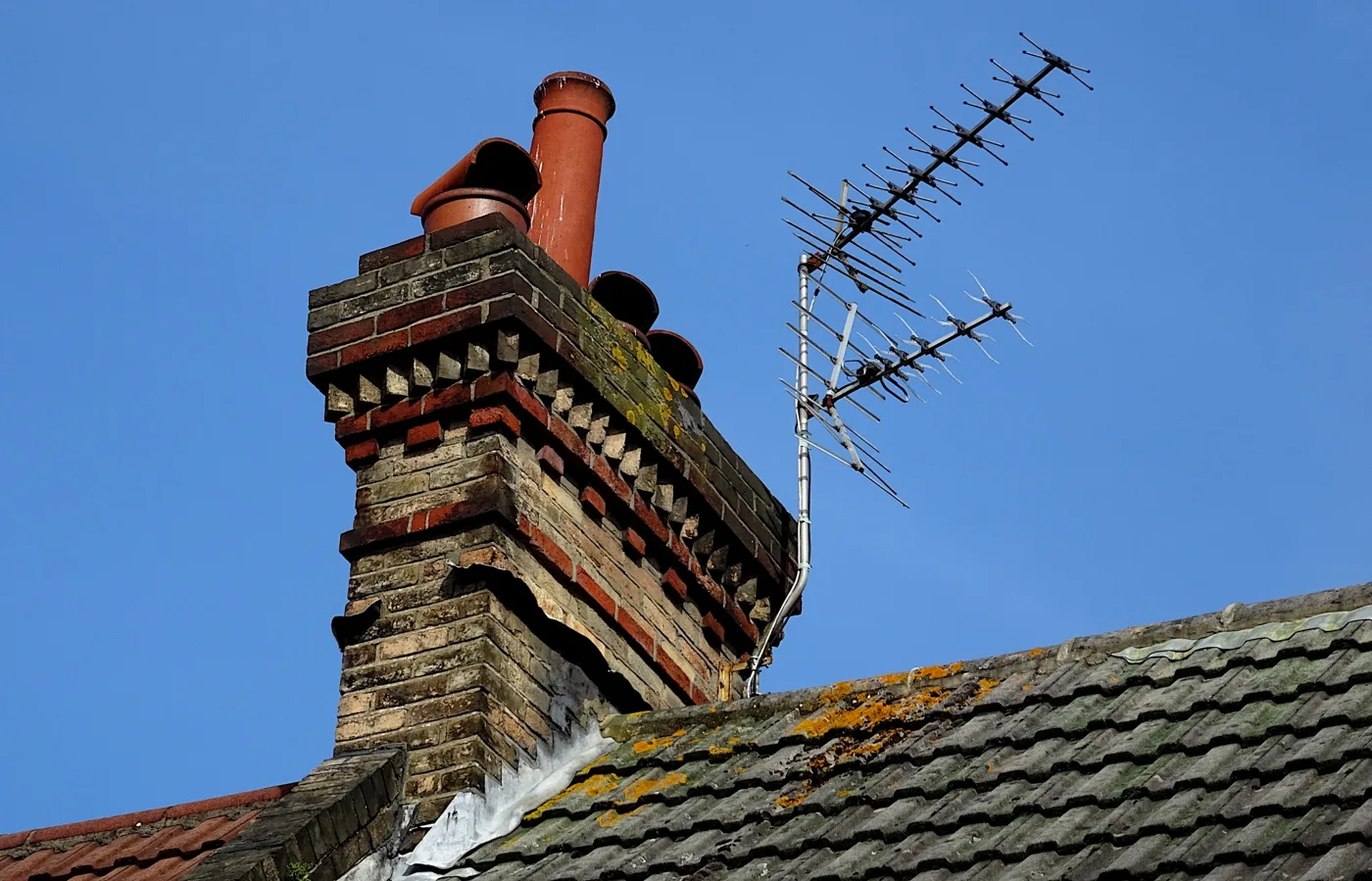
Chimney flaunching repair is one of the most common jobs on an old roof, and one of the most often bodged. The flaunching is the sloped bed of mortar on top of the chimney stack that holds the pots in place and throws rainwater off the top of the brickwork. When it cracks, water gets into the top of the stack, the pots can work loose, and the first sign indoors is often a damp patch on the chimney breast after heavy rain.
This page explains why flaunching fails, what you can see from the ground, when a patch is enough and when the whole top needs re-doing, how a proper repair is carried out, and what to do with pots on flues you no longer use. In Scotland the same thing is usually called haunching.
What flaunching does
The top of a chimney stack is the most exposed masonry on the house. It takes rain, wind and frost from every direction, and on a working flue it also heats up and cools down every time the fire is lit. The flaunching seals the top course of brick or stone and beds each pot, finished to a slope so water runs off rather than sitting on the stack.
Bradford Council’s guidance for owners of older houses puts it bluntly: flaunching “decays quickly”, and if it is loose, cracked or crumbling it “should be carefully cleaned off and the pots re-set in new flaunching”. It is a part that wears out, not a part that lasts the life of the house.
Why it cracks
- Frost. Water gets into hairline cracks, freezes, expands and opens them wider every winter.
- Shrinkage. A mortar mixed too wet, or too rich in cement, shrinks as it cures and cracks away from the pots.
- Heat cycling. On a flue in use, the pot and the top of the stack expand and contract with every fire.
- Pot movement. Wind loading on a tall pot, or a cowl fitted later, rocks the pot in its bed.
- Age. Even good flaunching eventually weathers back and loses its slope.
Signs you can see from the ground
You do not need to go up a ladder to spot most of these. A pair of binoculars on a dry day is enough:
- cracks running across the mortar or around the base of a pot;
- chunks missing, especially at the corners of the stack;
- a pot leaning or sitting at an odd angle;
- lumps of mortar in the gutter, on the roof slope or on the ground below;
- grit or mortar fragments falling into an open fireplace;
- damp, staining or blown plaster on the chimney breast, particularly in a top-floor room after rain.
Damp on the chimney breast has other causes too: failed flashing where the stack meets the roof, porous brickwork, or condensation in a sealed-off flue. A roofer should check all of them on the same visit. Our guides to roof flashing repair and chimney repointing cover the other two common faults, and how to find a roof leak helps narrow it down.
Patch or re-flaunch?
A patch is filling hairline cracks with mortar, a flexible sealant or a brushed-on coating. It can buy a season on flaunching that is otherwise sound and well bonded to the pots. It does not fix flaunching that has come away from the brick, pots that move, or a top that has lost its slope. Many coatings also trap moisture underneath, which makes the next frost worse.
A re-flaunch means hacking off the old mortar back to sound brickwork, lifting and re-bedding the pots, and laying new flaunching to a fresh slope. If the pots are loose or more than a few cracks run right through the mortar, this is the proper repair. Because the scaffold or access is the main cost either way, a full re-flaunch usually makes more sense than paying for access twice.
A partial rebuild is needed when the top courses of brick are loose or frost-damaged under the flaunching. A roofer will usually only know once the old mortar is off, so ask for the quote to say what happens if they find this.
How a proper re-flaunch is done
- Access. Scaffold or a chimney access platform. Ladders alone are not a safe working platform for this job; see our roof scaffolding guide for what a chimney scaffold involves.
- Remove the old flaunching. Carefully chip it away down to the top course, without disturbing sound brickwork, and lift the pots. Clean off dust and loose material.
- Check the stack. Look at the top courses, the pots, the flue openings and the pointing below. Replace cracked pots; many traditional styles are still made.
- Bed the pots. Set each pot in mortar, centred over its flue, plumb and secure.
- Lay the new flaunching. Build it up around the pots and slope it outwards so water runs off and nothing ponds. The edge should finish cleanly at the top of the stack.
- Cure it slowly. Protect it from drying out too fast and from rain for the first few days.
Lime or cement?
The traditional modern flaunching is a strong sand and cement mix, often around 3 parts sharp sand to 1 part cement. It is hard and quick, but on an older stack built in soft brick and lime mortar it can be too rigid: the cement cap stays put while the softer masonry around it moves, and cracks open at the joint.
For older houses, conservation guidance favours lime. East Ayrshire Council’s specification for re-haunching chimney pots, written for a historic town centre scheme, calls for a hydraulic lime mortar (such as HL5) mixed at 1 part binder to 2 parts sharp sand, with the old perished mortar chipped away first, the profile shaped to shed water, and the new mortar protected from drying out or rain for the first 72 hours. Ready-mixed lime chimney mortars are also sold for this job.
As a rule of thumb: on a pre-1919 house with lime mortar in the stack, ask for lime. On a newer stack built in cement mortar, a cement-based flaunching is normal. Either way, the mix should not be wet and sloppy, which shrinks and cracks.
Pots on disused flues
If a flue is no longer used, do not just fill the pot with mortar or slap a slab on top. A sealed flue traps moist air rising from the house, which condenses on the cold brickwork inside the stack and comes through as damp on the chimney breast.
The usual approach is to keep the flue ventilated top and bottom:
- At the top: fit a rain-excluding cap or cowl that still lets air through. Bradford Council’s guidance notes that discreet capping is possible “which allows adequate ventilation”.
- At the bottom: leave a small vent in the chimney breast or fireplace board so air can move.
Pots and stacks are part of the character of conservation areas, so check with your council before removing pots or shortening a stack on a listed building or in a conservation area. Our guide to chimney removal covers the bigger version of this decision.
If a flue still serves a gas fire or boiler, any cap or cowl must suit that appliance. Ask a Gas Safe registered engineer to check the flue after the roofing work is done.
What drives the cost
The repair itself is a short job; getting to it is what costs money. The main factors are:
- the access needed: a scaffold to a stack on a three-storey terrace costs far more than a tower on a bungalow;
- the number of pots and flues;
- whether pots need replacing, and what kind;
- whether the top courses of brick need rebuilding once the old flaunching is off;
- whether repointing or new flashing is done under the same scaffold, which is usually the best value.
For typical figures on related chimney work, see our chimney repointing cost and roofline and chimney services pages. Home insurance rarely pays for flaunching that has simply worn out; our page on what roof damage insurance covers explains why.
Frequently asked questions
What is chimney flaunching? The sloped bed of mortar on top of a chimney stack that holds the pots in place and sheds rainwater off the top of the brickwork.
How do I know if my flaunching needs repair? Look with binoculars for cracks, missing chunks or leaning pots, and check for mortar debris in the gutters or fireplace. Damp on the chimney breast after rain is a common sign indoors.
Can cracked flaunching be patched? Hairline cracks in otherwise sound flaunching can be filled to buy time. If the mortar has come away from the brick or the pots move, it needs hacking off and re-doing.
Should flaunching be lime or cement? On older houses built with lime mortar, a hydraulic lime mix is usually better because it moves with the soft brickwork. Newer stacks built in cement mortar normally get a sand and cement flaunching.
Should I cap a chimney I no longer use? Yes, but with a ventilated cap or cowl rather than a solid seal, and with a vent at the bottom of the flue, so moist air does not condense inside the stack.
Is flaunching repair covered by home insurance? Usually not, because cracked flaunching is treated as wear and tear. Sudden storm damage may be a different matter.
Sources
Want costs like this each month?
Join the Roofline brief for current UK prices and quote-reading tips.
More from Professional Roofers
How Much Does a New Roof Cost in the UK in 2026?
What a new roof really costs in the UK in 2026, broken down by house size, material and the hidden extras, plus how to check you are being quoted fairly.
Chimney Repointing and Repair Cost UK (2026)
What chimney repointing cost is in the UK in 2026, why scaffolding drives the price, and how repointing compares to rebuilding, flashing and pot repairs.
Roof Inspection and Survey Cost UK: What's Checked and the Price
Roof inspection cost UK 2026: what a ground, ladder or drone survey checks, typical prices for each, and when a written roof report is worth paying for.