Rust Stains on a Slate Roof: Pyrite or Rusting Nails?
By the Professional Roofers team
Updated 2026 · Independent cost guide
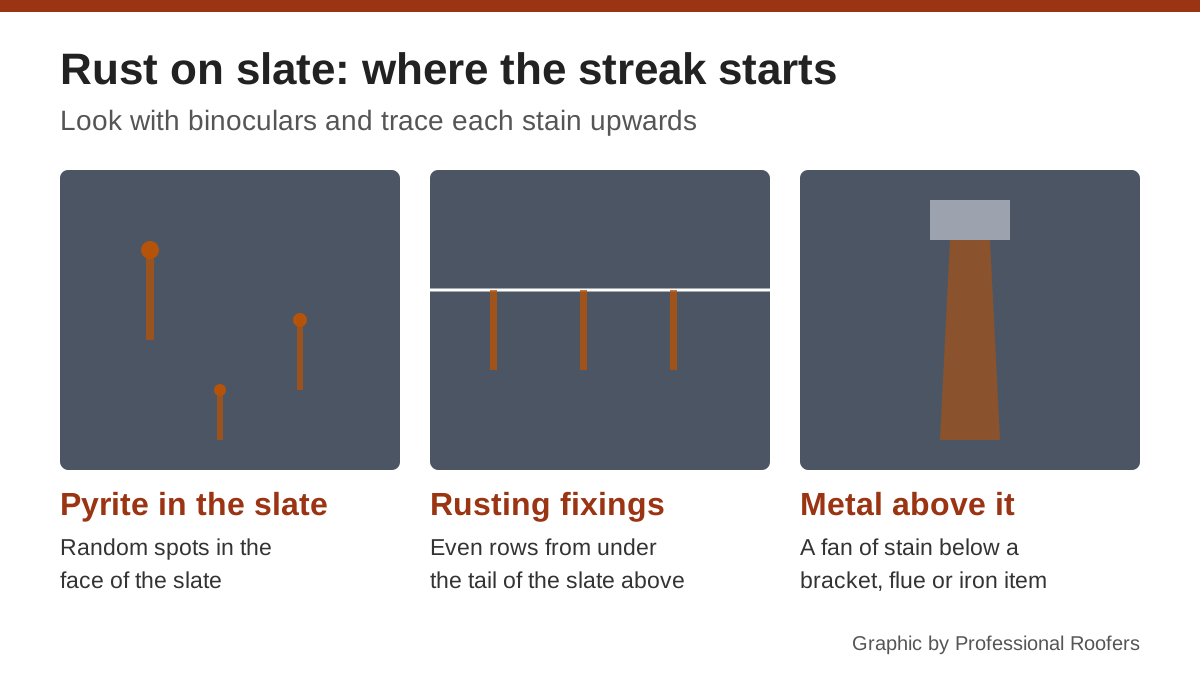
Rust stains on a slate roof have one of three causes, and only one of them is a problem with the slate itself. Orange or brown streaks that start from spots in the middle of a slate are almost always pyrite, an iron mineral in the stone, rusting in the weather. Streaks that run in neat rows from under the bottom edge of the slates above point to rusting fixings. A fan of staining below a satellite bracket, a flue or an old iron gutter is coming from that metal, not from the roof.
The difference matters because the fixes are completely different, and because pyrite staining is sometimes only cosmetic and sometimes the first sign that slates will hole and leak. This page shows how to tell the three apart from the ground, how the slate standard grades pyrite, and what a sensible repair looks like.
Tell the cause apart from the ground
Use binoculars on a dry day with the sun behind you, and trace each streak upwards to where it begins.
| What you see | Most likely cause | How worried to be |
|---|---|---|
| Rusty spots or small craters in the face of individual slates, each with a streak running down | Pyrite (iron sulphide) in the slate oxidising | Depends on whether the stone is breaking up around the spot |
| Streaks in regular, evenly spaced rows, coming from under the tails of the slates above | Rusting nails, hooks or clips | Watch for slipped slates; widespread rusting fixings mean a re-slate is coming |
| A broad fan of staining below one point | A rusting bracket, aerial, flue cowl, iron gutter or steel item above | Cosmetic for the slate; deal with the metal |
| An iridescent sheen, like petrol on water, on some slates | Another form of pyrite oxidation | As for pyrite spots |
| Green or blue-green streaks | Copper (nails, tingles or a copper cowl) | Normal weathering of copper, not rust |
Pyrite spots appear at random across the roof, because they are wherever the mineral happens to sit in each slate. Fixing stains follow the setting-out of the roof: every slate in a course is fixed at the same height, so rust from the fixings appears in tidy lines. That pattern is the quickest giveaway.
Pyrite: what it is and why some slates rust
Pyrite is iron sulphide, the brassy mineral sometimes called fool’s gold. Many natural slates contain small metallic inclusions of it. In good slate those inclusions are stable and never change. In poorer slate the pyrite reacts with air and rain, oxidises and leaves a rust-coloured stain that runs down the face. Lucideon, a testing laboratory, investigated staining on a roof of imported Spanish slate and traced it to pyrite; it recorded two forms, a brown rusty stain and an iridescent “petrol on water” stain, appearing within months of the roof going on.
What happens next depends on the stone. Where the reaction stays on the surface, the stain is cosmetic and the slate keeps the weather out. Where it eats into the slate, the mineral expands as it oxidises, the stone around it blisters and flakes, and eventually a hole goes right through. A hole in the part of a slate that lies over the joint of the course below lets water straight onto the underlay.
How the slate standard grades it: T1, T2 and T3
Natural roofing slate sold in the UK is tested to BS EN 12326. One of its tests, the thermal cycle test, exists specifically to show whether the metallic minerals in a slate will oxidise. The result is a code printed on the slate’s declaration of performance:
- T1: no change in appearance, or so little that neither the structure nor the look is affected. This is what to ask for.
- T2: oxidation of metallic minerals causing some discolouration, including rust runs, but no structural change. Stained, but sound.
- T3: oxidation that penetrates the slate and can lead to holes. Slates coded T3 may let water through.
A T2 slate can look exactly like the stained roof you are worried about and still be performing as designed. A T3 slate is the one that fails. The National Building Specification warns that specifying slate only “to BS EN 12326-1” is not enough, because the slates supplied could be at the lowest grade the standard allows. If you are buying a new slate roof, ask for the test results on the specific slate, and ask for T1.
The same standard also grades water absorption (A1 or A2) and, for slates with a carbonate content of 20% or less, resistance to sulphur dioxide (S1 to S3). Those affect frost resistance and durability, not rust staining.
When rust staining means the slates will fail
From the ground or from a ladder at the eaves, these are the signs that the pyrite is structural, not cosmetic:
- small round holes where a rusty spot used to be;
- slates flaking or blistering around the stain;
- cracks running out from the spot;
- damp patches or drips in the loft below stained areas.
If the staining is on a roof under a few years old, treat it as a defect, not wear. Under the Consumer Rights Act 2015, goods must be of satisfactory quality and a service must be carried out with reasonable care and skill. Ask your roofer which slate was used, ask for its declaration of performance, and check whether the roofing guarantee or the slate supplier’s own warranty covers it. A laboratory report on sample slates is what decides most of these disputes.
On an older roof, an isolated stained slate is common and rarely urgent. A roof where stains are spreading and slates are holing year after year has a slate quality problem that patching will not cure.
When it is the fixings: nail sickness
Rows of rust streaks from under the slate tails usually mean the nails, or the hooks on a hook-fixed roof, are corroding. That is nail sickness, and it shows up as slipped slates long before the staining looks dramatic. Older roofs fixed with plain iron nails are the usual victims; modern work should use copper, aluminium alloy or stainless steel fixings, which do not rust. Our page on nail sickness explains how it spreads and when refixing stops making sense.
Replacing individual slates with tingles
A holed or cracked slate can be replaced without lifting the rest of the roof:
- The roofer uses a slate ripper to cut the nails of the damaged slate and slides it out.
- A tingle, a strip of lead, copper or aluminium, is nailed to the batten through the gap between the two slates beneath.
- The new slate slides up into place, and the tail of the tingle is bent up over its bottom edge to hold it.
Done well with a tingle that matches the roof, it is hard to spot from the street. The replacement slate needs to match in size, thickness and colour; reclaimed slate from the same quarry is often the best match on an older roof. Our matching discontinued roof tiles page covers the same problem for slates.
Do not try to clean the stain off with rust remover or a pressure washer. The stain is in the stone, and acid cleaners and high-pressure water can damage the slate surface and the fixings. If you do not like the look, the answer is a replacement slate, not a scrub.
Questions to ask a roofer
- Is the staining on the slate face (pyrite), or coming from the fixings or something above?
- Are any slates holed, cracking or flaking around the stains, and how many?
- Which slates can be replaced individually with tingles, and do you have a good match?
- If this is a newer roof, what slate was used, and can I see its BS EN 12326 test codes?
- Are the fixings rusting elsewhere, and is the roof nearing the point where a re-slate is the better option?
A roofer who climbs up and sends you close-up photographs of the worst slates is worth more than one who quotes for a new roof from the pavement. For more on choosing someone, see how to find a good roofer, and for the wider choice between slate types, our slate roofing guide.
Frequently asked questions
What causes rust stains on a slate roof? Usually pyrite, an iron sulphide mineral in the slate, oxidising in the weather. Rusting nails or hooks, and rust running down from metal items above the roof, cause similar streaks; the pattern of the stains tells you which.
Are rust stains on slate a sign of poor quality slate? Often. Good slate either has no pyrite or only stable pyrite. The BS EN 12326 thermal cycle test grades slate T1, T2 or T3; T2 slate can show rust runs while staying sound, and T3 slate can hole.
Can you remove rust stains from slate? Not reliably. The stain comes from the mineral in the stone, so it returns, and acid rust removers and pressure washing can damage the slate. Replacing badly stained or damaged slates is the practical fix.
Will rusty slates leak? Only if the oxidation goes through the slate and creates holes or cracks over the joints in the course below. Surface staining without holes or flaking is cosmetic.
How do you replace one slate on a roof? The damaged slate’s nails are cut with a slate ripper, a metal tingle is nailed to the batten through the gap below, and the new slate is slid into place and held by bending up the end of the tingle.
What does T1 mean on roofing slate? T1 is the best result in the BS EN 12326 thermal cycle test: the slate shows no change in appearance or structure from oxidising minerals. It is the grade to ask for on a new slate roof.
Sources
- National Building Specification, Roof slates and BS EN 12326.
- Lucideon, natural roofing slate staining case study.
- Historic Environment Scotland and Cadw guidance on nail sickness and slate repair.
Want costs like this each month?
Join the Roofline brief for current UK prices and quote-reading tips.
More from Professional Roofers
How Much Does a New Roof Cost in the UK in 2026?
What a new roof really costs in the UK in 2026, broken down by house size, material and the hidden extras, plus how to check you are being quoted fairly.
Chimney Repointing and Repair Cost UK (2026)
What chimney repointing cost is in the UK in 2026, why scaffolding drives the price, and how repointing compares to rebuilding, flashing and pot repairs.
Roof Inspection and Survey Cost UK: What's Checked and the Price
Roof inspection cost UK 2026: what a ground, ladder or drone survey checks, typical prices for each, and when a written roof report is worth paying for.