Gutter Leaking at the Joint? 5 Causes and the Right Fix
By the Professional Roofers team
Updated 2026 · Independent cost guide
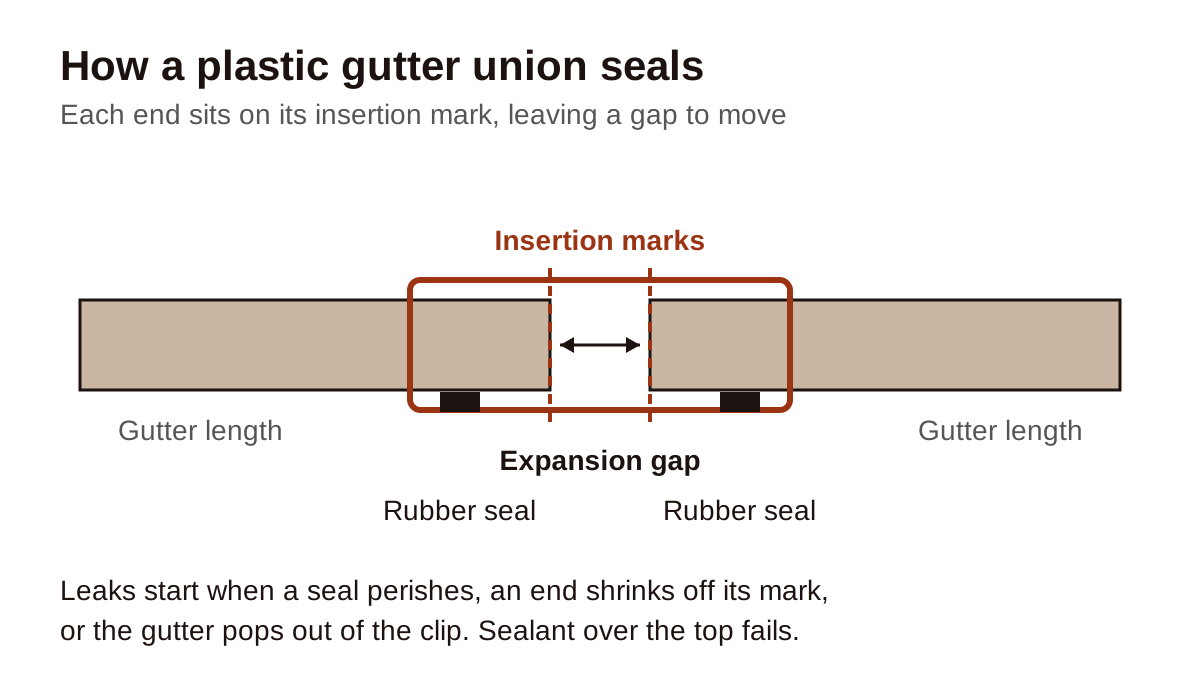
A gutter leaking at the joint is one of the most common small roofing faults in Britain, and one of the most often botched. The usual “fix” is a bead of silicone squeezed over the join, which looks fine for a month and then splits. That is because on a plastic gutter the joint is designed to move, and on a cast-iron gutter the joint needs taking apart, not covering over. Find out which of five causes you have and the repair is usually cheap and permanent.
First, check it really is the joint
Watch the gutter in steady rain, or run a hose into the high end on a dry day.
- Dripping steadily from the underside of the union (the clip that joins two lengths): the joint itself is leaking. Read on.
- Water spilling over the front edge near the joint: the gutter is overflowing, usually because of a blockage or a sag, not a failed seal. Our gutter cleaning cost page covers clearing it.
- Water running down the back of the gutter and the fascia: the gutter may be set too low under the roof edge, or the felt or eaves tray is not dressed into it. Our page on the eaves underlay support tray explains that detail.
How a plastic gutter joint works
On a uPVC system, two lengths of gutter meet inside a union bracket. The union has a rubber seal on each side, and the gutter clips in so the seal presses evenly against its underside. Inside the union are moulded insertion marks. Each gutter end should sit on its mark, leaving a small gap in the middle. That gap matters: PVC grows and shrinks noticeably between a hot July afternoon and a frosty January morning, and the union is designed to let the ends slide in and out across the seal without opening up.
Installation guides from the gutter suppliers are consistent on the rest: brackets no more than about 800mm apart (closer, around 600mm, where heavy snow is likely) and within 150mm of any corner or stop end, a slight fall towards the outlet, and the seals lubricated with silicone spray so the gutter can slide.
The five causes of a leaking gutter joint
1. A perished or dirty seal
Union seals harden and crack with age and sunlight. Grit and moss trapped under the seal stop it sealing as well. This is the most common cause on gutters more than fifteen or twenty years old.
Fix: unclip both gutter ends, clean the gutter where it sits in the union, and fit a new union of the same make and profile. Lubricate the seals and clip the ends back in on their insertion marks. On an old run where every union is going the same way, replace them all at once.
2. The gutter has pulled short of its mark
If the gutter was fitted on a hot day and cut too short, or pushed hard to one end, a length can shrink back in cold weather until its end barely sits on the seal. You will often see the leak start in winter and stop in summer.
Fix: reposition the lengths so each end sits on its insertion mark. If a length is now too short to reach both marks, it needs replacing with a correctly cut one.
3. The gutter has popped out of the clip
A ladder leant against the gutter, a slab of snow sliding off the roof or a branch can push the front edge of the gutter out of the union clip. The seal then only touches part of the gutter.
Fix: clip the gutter back in, back edge first, then press the front down until it snaps home. If the clip is cracked, replace the union.
4. The run has the wrong fall, or a sag
A gutter that is level, or that dips between brackets, lets water sit in the joint. A seal that is permanently under water will find a way through eventually. Loose or missing brackets are the usual cause of a dip.
Fix: check the line with a string from the high end to the outlet. Refix loose brackets and add any that are missing, so the gutter falls steadily towards the outlet. If the whole run is out, it needs taking down and re-setting.
5. The gutter is the wrong size, or the profiles do not match
Two different makes or profiles of gutter joined in the same union will never seal properly, because the seal is shaped to one profile. This often happens where a neighbour has replaced their half of a shared run on a terrace. Our page on terraced roofs and the shared party wall covers the neighbour side of that.
Fix: use a proper adaptor between the two systems, or replace the mismatched lengths so the run is one make.
Why sealant on a plastic union fails
Silicone or mastic over the outside of a uPVC union fights the movement the joint was designed for. As the gutter slides with temperature, it tears the bead away, and water then gets trapped behind the broken sealant. Gutter repair tape is fine as a stopgap to get you through a storm, but treat it as temporary and replace the union.
Cast-iron gutter joints
Cast-iron gutters are joined differently. The lengths overlap at a socket and are bolted together with a small gutter bolt, with a jointing compound between them. When these joints leak, it is usually because the putty or sealant has dried out, or rust has opened up around the bolt.
The conservation advice is clear. Cadw, the Welsh Government’s historic environment service, says in its guidance on rainwater disposal that silicone may be used as a temporary repair, but leaking cast-iron joints should be taken apart, cleaned, de-rusted, reassembled and sealed with traditional linseed oil putty. That is fiddly work at height with heavy sections, so it is usually a job for a roofer or a rainwater specialist, ideally done when the gutters are being painted. On a listed building, replacing cast iron with plastic is generally not acceptable and may need listed building consent.
When to replace the whole run instead
Repair the joint if the rest of the gutter is sound. Replace the run if:
- several unions are leaking at once and the gutter itself is brittle or bowed;
- the gutter has been undersized for the roof and overflows in heavy rain whatever you do;
- brackets are rotting out of a soft fascia, which means the fascia needs attention too; see our fascias and soffits replacement page;
- it is cast iron that has rusted through rather than just failed at the joints.
Our guttering replacement cost page gives typical per-metre and whole-house figures by material.
Safety
Most gutter joints can be reached from a ladder on a bungalow or the back of a two-storey house, but work at height is the commonest cause of serious DIY injuries. Use a ladder stand-off so the ladder does not rest on the gutter, have someone foot it, and do not work from a ladder above a conservatory roof. For a three-storey house or awkward access, get a roofer with the right equipment. If you are getting a quote, our guide on questions to ask a roofer helps you compare them.
Frequently asked questions
Why is my gutter leaking at the joint? On a plastic gutter, it is usually a perished or dirty seal in the union bracket, a gutter end that has shrunk back off its insertion mark, or a gutter that has popped out of the clip. A dip in the run that leaves water sitting in the joint is the next most likely cause.
Can I seal a leaking gutter joint with silicone? Only as a temporary measure. On uPVC, the joint is designed to move with temperature and a sealant bead tears away. The lasting fix is a new union, fitted with the gutter ends on their insertion marks. On cast iron, the joint should be taken apart and resealed.
Why does my gutter joint only leak in winter? PVC gutter shrinks in the cold. If a length was cut slightly short or fitted on a hot day, its end can pull back off the seal in winter and slide back on in summer.
How do I fix a leaking cast-iron gutter joint? Undo the gutter bolt, separate the lengths, clean off the old compound and rust, then reassemble with fresh linseed oil putty and a new bolt. Conservation bodies advise against relying on silicone except as a short-term repair.
Do I need to replace the whole gutter if one joint leaks? Usually not. A single leaking union can be replaced on its own. Replace the run only if several joints are failing, the gutter is brittle or sagging, or it is too small for the roof.
How far apart should gutter brackets be? Installation guides typically say no more than about 800mm apart on standard uPVC gutters, closer in areas with heavy snow, and within 150mm of corners and stop ends. Check the manufacturer’s figure for your profile.
Want costs like this each month?
Join the Roofline brief for current UK prices and quote-reading tips.
More from Professional Roofers

How Much Does a New Roof Cost in the UK in 2026?
What a new roof really costs in the UK in 2026, broken down by house size, material and the hidden extras, plus how to check you are being quoted fairly.
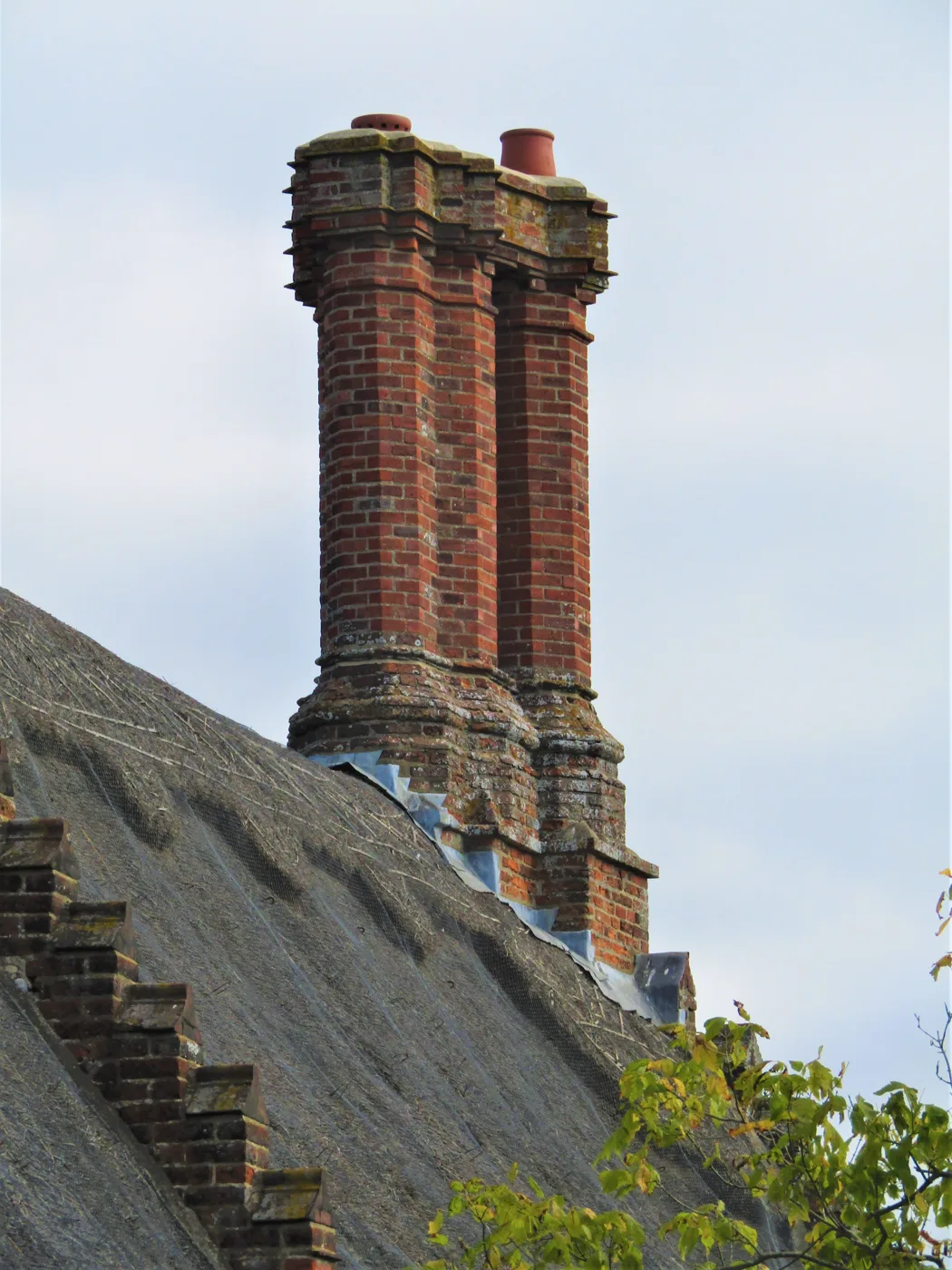
Chimney Repointing and Repair Cost UK (2026)
What chimney repointing cost is in the UK in 2026, why scaffolding drives the price, and how repointing compares to rebuilding, flashing and pot repairs.
Roof Inspection and Survey Cost UK: What's Checked and the Price
Roof inspection cost UK 2026: what a ground, ladder or drone survey checks, typical prices for each, and when a written roof report is worth paying for.