Bay Window Roof Leak? Check the Wall Above Before the Roof
By the Professional Roofers team
Updated 2026 · Independent cost guide
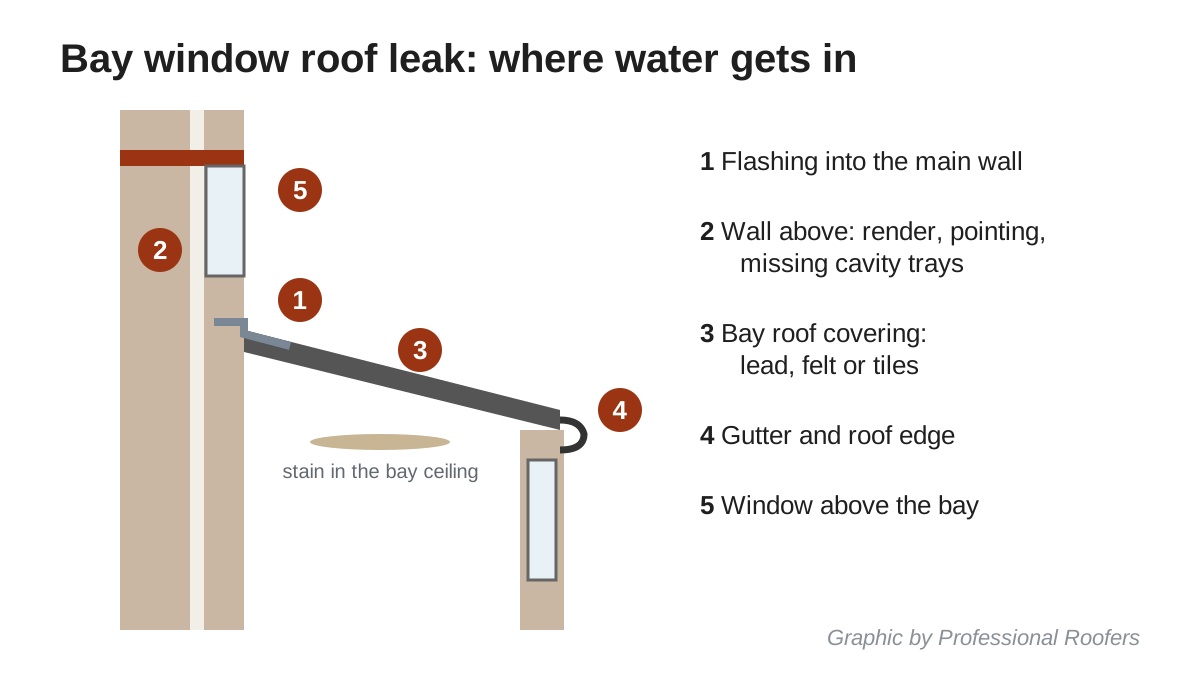
A bay window roof leak usually shows up as a brown stain in the bay ceiling or damp at the top of the window frame, and the natural assumption is that the little roof over the bay has failed. Often it has not. The bay roof is small and fairly simple; the junction where it meets the house wall, and the wall above it, are where water most often gets in. Replacing the bay roof covering without checking those first is the classic wasted repair.
Here are the five places, in the order we check them, and how you can narrow it down from the ground before anyone climbs a ladder.
1. The flashing into the main wall
Where the top of the bay roof meets the house, a strip of lead (or on cheaper jobs, a flashing tape or mortar fillet) is tucked into a mortar joint in the wall and dressed down over the roof covering. This is the single most common source.
What goes wrong:
- The lead has lifted or slipped out of the joint. Lead moves with heat, and if its wedges have worked loose or the pointing over it has cracked, rain runs behind it.
- It was never properly chased in. Flashing stuck to the face of the brick with sealant, or a mortar fillet instead of lead, will crack within a few years.
- Split lead. Long pieces fixed too rigidly split as they expand and contract. Our guide to lead code numbers explains why thickness and piece length matter.
From the ground, binoculars will often show a gap between the top of the lead and the wall, or a line of fresh sealant someone has already tried.
2. The wall above the bay
Rain that soaks into the wall above the bay has to come out somewhere, and the bay ceiling is the first roof it meets on the way down.
- Cracked render or failed pointing above the bay lets water into the wall.
- No cavity trays. In a cavity wall, water that gets into the cavity runs down the inside of the outer leaf. Where a roof abuts the wall, a cavity tray should catch it and direct it out above the flashing. NHBC’s technical guidance on cavity trays to bay windows warns that a single horizontal tray at the top of a pitched bay roof leaves open cavities down each slope, through which water can reach the room below; the fix is stepped trays down each sloping abutment, with stop ends and a weep hole at the lowest one.
This is why some bay leaks only appear in driving rain from one direction, and why a perfect new bay roof can still leak. A missing tray is fixed from the wall, by taking out bricks above the bay and fitting trays, which is a builder’s job as much as a roofer’s.
Solid walls in older houses have no cavity, so there is no tray; the leadwork has to do all the work.
3. The bay roof covering itself
Bay roofs come in three main types, and each fails differently.
| Bay roof type | Typical failure | What you might see |
|---|---|---|
| Lead | Splits at joints or along the length, and lifted or missing clips at the edges | Leak worse in hot-then-cold weather; splits visible from an upstairs window |
| Felt (flat or nearly flat) | Blistering, cracking, and failed laps at the edges | Ponding water that never drains; the leak follows long rain |
| Tiled or slated (pitched) | Slipped tiles and perished underlay at the hips | Leak at the corners of the bay rather than the middle |
You can often see the bay roof clearly from the room above. Look for splits, blisters, ponding and slipped tiles. Our pages on felt roof repair and slipped roof tiles cover those repairs in detail.
4. The gutter and roof edge
A blocked bay gutter fills, overflows backwards and pushes water up under the edge of the roof covering, where it runs into the timber and down the inside of the bay. Missing or badly fitted edge trims on a felt bay do the same. If the stain is at the outer edge of the bay ceiling, near the window head, check the gutter before anything else: it is the cheapest fix there is.
5. The window above the bay
If there is a first-floor window directly above the bay, its sill and the joint between its frame and the wall can let water into the wall, which then appears at the bay. A cracked or back-falling sill, or perished frame sealant, is easy to check from inside and costs little to fix.
Narrow it down before you call anyone
You can save a roofer a lot of guessing with a dry day and a garden hose. Work from the bottom up, and give each step 15 to 20 minutes with someone watching inside:
- Wet the bay roof covering only, keeping water off the wall and flashing. A leak now points to the roof itself.
- Run water along the flashing line where the bay meets the wall.
- Wet the wall above, starting just above the flashing and working up. A delayed leak here, sometimes an hour later, points to the wall or missing trays.
- Run water at the upstairs window sill last.
Also note when it leaks. Only in driving rain from one direction suggests the wall. During any steady rain suggests the roof or flashing. Only when the gutter is overflowing suggests the gutter. Our full guide to finding where a roof leak is coming from has more tests.
Who to call
- Roof covering, flashing, gutter: a roofer. Ask them to check the wall above and say whether the house has cavity trays at the bay before quoting for a new roof.
- Cavity trays, render or pointing: a builder or bricklayer, often working with the roofer.
- Window sill or frame seals: a window fitter.
If you get a quote to re-cover the bay roof, ask what the roofer found at the abutment and in the wall above. Our list of questions to ask a roofer and the lead flashing repair cost guide will help you judge it.
Frequently asked questions
Why is my bay window leaking only in heavy rain? Usually because water is getting into the wall above the bay and only builds up enough to reach the ceiling in prolonged or wind-driven rain. Check the flashing and the wall above, including whether the house has cavity trays over the bay roof.
Can a bay window roof leak be fixed from outside? Most can. Flashing, lead, felt, tiles and gutters are all outside work. Fitting missing cavity trays also happens from outside but means opening up the wall above the bay.
Is water at the top of the bay window frame a roof leak? Not always. It can be the bay roof, the flashing, or water coming down the wall, and occasionally a failed seal at the window head itself. A hose test, working from the bottom up, will usually tell you which.
Should I just seal the flashing with silicone? Only as a stopgap. Sealant on the face of a flashing hides the fault and fails within a season or two. Lead should be properly chased into a mortar joint, wedged and repointed.
Does a leaking bay roof need replacing? Rarely, if the fault is caught early. Splits, failed laps and slipped tiles are repairable. Replacement makes sense when the covering is worn out across the whole bay or the timber underneath has rotted.
Will my home insurance cover a leaking bay window roof? Usually not for gradual wear, though sudden storm damage may be covered. Our page on home insurance and roof cover explains the difference.
Want costs like this each month?
Join the Roofline brief for current UK prices and quote-reading tips.
More from Professional Roofers

How Much Does a New Roof Cost in the UK in 2026?
What a new roof really costs in the UK in 2026, broken down by house size, material and the hidden extras, plus how to check you are being quoted fairly.

Chimney Repointing and Repair Cost UK (2026)
What chimney repointing cost is in the UK in 2026, why scaffolding drives the price, and how repointing compares to rebuilding, flashing and pot repairs.
Roof Inspection and Survey Cost UK: What's Checked and the Price
Roof inspection cost UK 2026: what a ground, ladder or drone survey checks, typical prices for each, and when a written roof report is worth paying for.