Roof Lantern Leaking? The 5 Places Water Gets In
By the Professional Roofers team
Updated 2026 · Independent cost guide
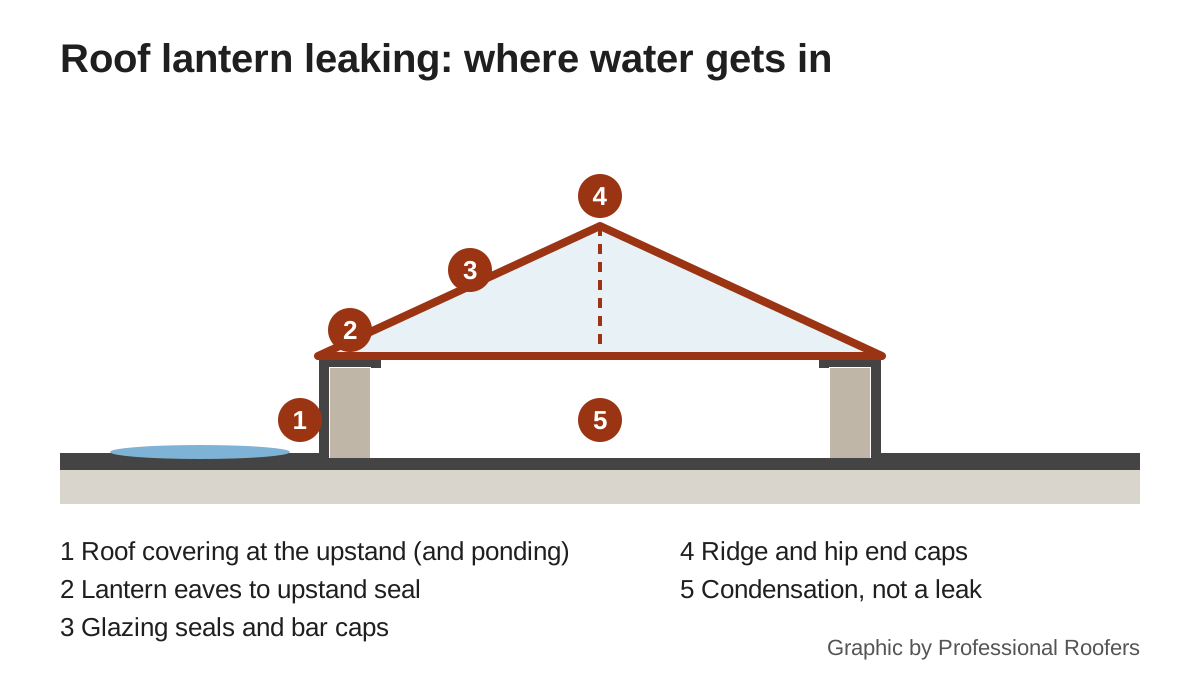
A roof lantern leaking into an extension is usually blamed on the glass, but the glass is rarely the problem. Most leaks start lower down: where the flat roof covering meets the upstand the lantern sits on, or at the seal between the lantern’s frame and that upstand. The rest come from the glazing seals or the ridge, and a good share of “leaks” are not leaks at all but condensation running off the inside of the glass.
Working out which one you have decides who you call. A fault in the roof covering is a job for a flat roofer; a fault in the lantern itself is one for the installer or the lantern maker, and may be under warranty. Here are the five places, in the order we check them, and how to narrow it down before anyone climbs a ladder.
1. The roof covering at the upstand
The lantern sits on a timber or insulated kerb called an upstand. The flat roof covering, whether felt, EPDM rubber or GRP fibreglass, has to run up the side of that upstand and over the top, so the lantern’s frame sits on the waterproofing rather than on bare timber. This junction is where most lantern leaks start.
What goes wrong:
- The upstand is too low. Lantern makers draw the upstand 150mm high; Korniche’s surveying guide shows 150mm above the roof. Below that, rain splashing off the roof, standing water or drifting snow can reach the top of the covering and get under the frame.
- The covering stops short. If the felt or membrane is turned up the side but not dressed over the top, water runs straight down the inside of the upstand.
- Cracked or lifted corners. Corners are where felt splits and EPDM is folded. A small split in an internal corner leaks every time the roof is wet.
- Ponding against the upstand. A flat roof that holds water in a puddle against the kerb keeps that junction permanently wet. Ponding usually points to a fall problem or a blocked outlet: see our page on flat roof outlets and rainwater design.
Signs it is this one: water appears at the edge of the opening, along the plasterboard lining of the upstand, or as staining on the ceiling just outside the lantern. It gets worse in heavy or wind-driven rain and with standing water on the roof.
2. The seal between the lantern and the upstand
Aluminium and uPVC lanterns sit on an eaves beam that is bedded onto the upstand on a bead of sealant. Korniche’s guide asks for an upstand at least 69mm wide, “level and square”, with the eaves bedded to it in sealant. If the upstand was built out of square or the bead was broken, there are gaps at the corners where wind-driven rain gets under the frame.
Signs it is this one: drips from the inside corners of the lantern frame, often in one corner more than the others, and mainly when rain is driven from one direction.
3. The glazing seals and glazing bar caps
Each pane sits in a glazing bar between rubber gaskets, with a cap or cover over the top of the bar. Gaskets shrink and harden with age and sun, caps get knocked loose, and a sealed unit that was not seated properly can let water past. Many lantern glazing bars are designed so that a little water getting past the outer seal is carried down to the eaves and out, which is why sealant smeared over the joints by a well-meaning handyman can make a leak worse by blocking that route.
Misting between the two panes of a double-glazed unit is a failed unit seal, not a roof leak. It spoils the view but does not let rain into the room; the unit needs replacing.
Signs it is this one: drips from a glazing bar partway up the slope, or water tracking down one bar to the eaves.
4. The ridge and hip end caps
At the top of a lantern, the glazing bars meet at a ridge or a central boss, closed with end caps and a ridge cover. Caps that have lifted, cracked or lost their screws let water in at the highest point, and it can then run down a bar and appear somewhere else entirely, which is why ridge leaks are often misdiagnosed.
Signs it is this one: drips near the centre of the lantern, or water appearing on a bar in rain but not when only the base of the lantern is wetted.
5. Condensation, not a leak
A lantern is a large area of glass over a warm room, often a kitchen. Warm, moist air from cooking, a dishwasher or drying washing meets the cold glass and frame, condenses and runs down to the eaves, where it drips. It looks exactly like a leak.
Signs it is condensation: water appears on cold mornings, after cooking or showers, and in dry weather; it is spread evenly along the frame rather than in one spot; and the glass is visibly misted on the inside. Run the kitchen extractor, use trickle vents if the lantern has them, and see whether it stops. Our page on loft condensation causes and fixes covers the same physics in a roof space.
How to find which one: a hose test
You can narrow a lantern leak down in half an hour with a hose and a helper inside. Do it on a dry day, after the roof has dried out.
- Start low. Run the hose gently on the roof surface around the base of the upstand only, for 10 to 15 minutes, keeping water off the lantern. If your helper sees water, it is the covering at the upstand (place 1).
- Then the frame base. Wet the eaves of the lantern where it meets the upstand, one side at a time. Water inside points to the eaves seal (place 2).
- Then the slope. Run water over one glazing bar at a time, working upwards (place 3).
- Finally the top. Wet only the ridge and end caps (place 4).
Always work from the bottom up. Water run over the top of the lantern flows over every joint below it, so starting at the top tells you nothing. Our page on how to find a roof leak covers the same method for other roofs. Only go on the roof if you can do so safely; a flat roof extension is still a fall from height, and the HSE’s work at height guidance applies to anyone doing it for a living. If in doubt, a roofer can do this test for you as part of a call-out.
Who to call
| Where the hose test points | Who to call |
|---|---|
| The roof covering at the upstand, or ponding | A flat roofer who works with your covering (felt, EPDM or GRP) |
| The eaves seal, glazing, caps or ridge | The company that fitted the lantern first, then the lantern maker |
| Condensation | No one: improve ventilation, then see whether it stops |
If the lantern is less than a few years old, check the installer’s guarantee and the lantern maker’s warranty before paying anyone. Most lantern warranties cover the product, while the waterproofing around it is the roofer’s or builder’s responsibility, which is why it pays to know which part is failing before you make a claim.
For a leak at the upstand, a roofer will usually cut back and re-dress the covering around the kerb, and may raise a low upstand. If the whole flat roof is old, it may be time to look at the wider roof: our flat roof problems and repairs page covers when patching stops making sense, and roof leak repair costs gives typical prices.
Frequently asked questions
Why is my roof lantern leaking? Most often because the flat roof covering is not properly dressed up and over the upstand the lantern sits on, or the seal between the lantern frame and the upstand has failed. Glazing seals, ridge caps and condensation account for most of the rest.
How high should a roof lantern upstand be? Lantern makers such as Korniche show 150mm above the roof. A lower upstand lets splashing rain, standing water or snow reach the top of the waterproofing.
Is it a leak or condensation? Condensation appears in dry weather, on cold mornings and after cooking, and is spread along the frame. A leak appears in rain, often in one spot, and gets worse with wind-driven rain.
Can I just put silicone around my roof lantern? It is rarely a lasting fix. Sealant over the glazing bars can block the channels that carry water out at the eaves, and it does nothing for a leak at the upstand, which is where most start.
Who fixes a leaking roof lantern, a roofer or a glazier? It depends where the water gets in. A leak in the roof covering around the upstand is a roofer’s job. A leak through the glazing, seals or ridge is for the lantern installer or maker.
Why does water appear at the bottom of the lantern when the leak is higher up? Water that gets in at the ridge or a glazing bar runs down inside the frame to the lowest point before it drips. That is why the drip position does not always show where the water entered.
Want costs like this each month?
Join the Roofline brief for current UK prices and quote-reading tips.
More from Professional Roofers
How Much Does a New Roof Cost in the UK in 2026?
What a new roof really costs in the UK in 2026, broken down by house size, material and the hidden extras, plus how to check you are being quoted fairly.
Chimney Repointing and Repair Cost UK (2026)
What chimney repointing cost is in the UK in 2026, why scaffolding drives the price, and how repointing compares to rebuilding, flashing and pot repairs.
Roof Inspection and Survey Cost UK: What's Checked and the Price
Roof inspection cost UK 2026: what a ground, ladder or drone survey checks, typical prices for each, and when a written roof report is worth paying for.